
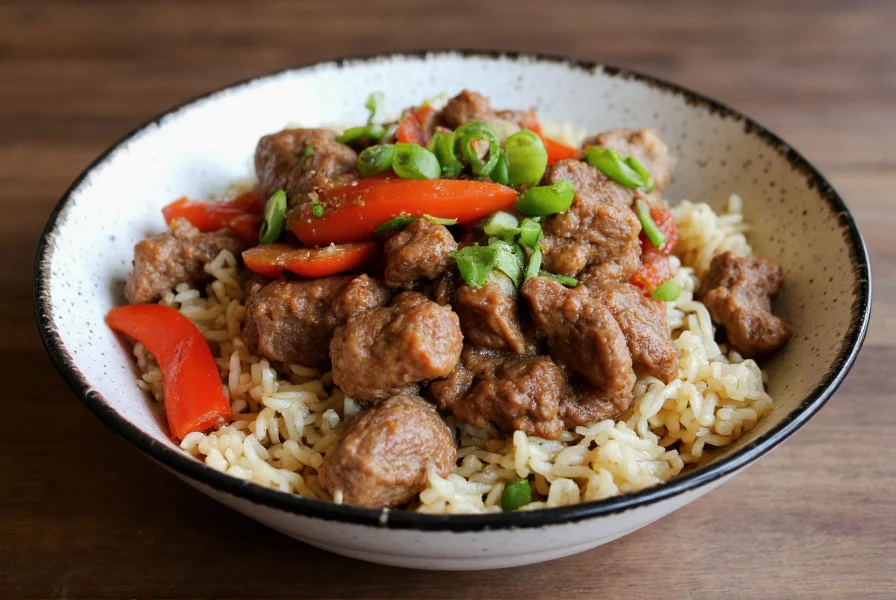
If you're searching for an easy beef and pepper rice bowl recipe that delivers restaurant-quality results at home, you've found the definitive guide. This versatile Asian-inspired dish combines lean beef, crisp bell peppers, and fluffy rice in a glossy teriyaki-based sauce that caramelizes beautifully during stir-frying. What sets apart an exceptional beef and pepper rice bowl from mediocre versions lies in three critical techniques: proper beef marination, high-heat stir-fry execution, and sauce consistency control.
Essential Components of Perfect Beef and Pepper Rice Bowl
The magic happens through strategic ingredient pairing. Flank steak or sirloin works best for beef and pepper rice bowl preparation due to their ideal marbling and quick-cooking properties. When sliced against the grain into ¼-inch strips, these cuts remain tender even with brief high-heat cooking. Bell peppers should include a mix of red, yellow, and green varieties not just for visual appeal but because each color offers distinct flavor compounds that develop differently when stir-fried.
| Ingredient | Quantity | Preparation Tip |
|---|---|---|
| Flank steak | 1 lb | Slice against grain, freeze 20 minutes for cleaner cuts |
| Bell peppers | 2 cups, mixed colors | Cut into uniform 2-inch strips for even cooking |
| Jasmine rice | 1½ cups dry | Rinse thoroughly to remove excess starch |
| Garlic | 3 cloves | Minced fine for quick flavor release |
Step-by-Step Beef and Pepper Rice Bowl Preparation
Begin with rice preparation since it requires the longest cooking time. Use a 1:1.25 rice-to-water ratio for perfect texture. While rice cooks, prepare your beef marinade: combine 2 tablespoons soy sauce, 1 tablespoon rice wine, 1 teaspoon cornstarch, and ½ teaspoon sesame oil. The cornstarch is crucial—it creates a protective layer that prevents overcooking while helping sauce adhere later.
Heat your wok or large skillet over maximum heat until smoking hot—this professional technique prevents steaming instead of searing. Add 1 tablespoon high-smoke point oil (avocado or peanut), then cook beef in single layers without crowding. Proper beef and vegetable rice bowl execution requires removing beef after 90 seconds when still slightly underdone, as it will finish cooking when combined with sauce later.
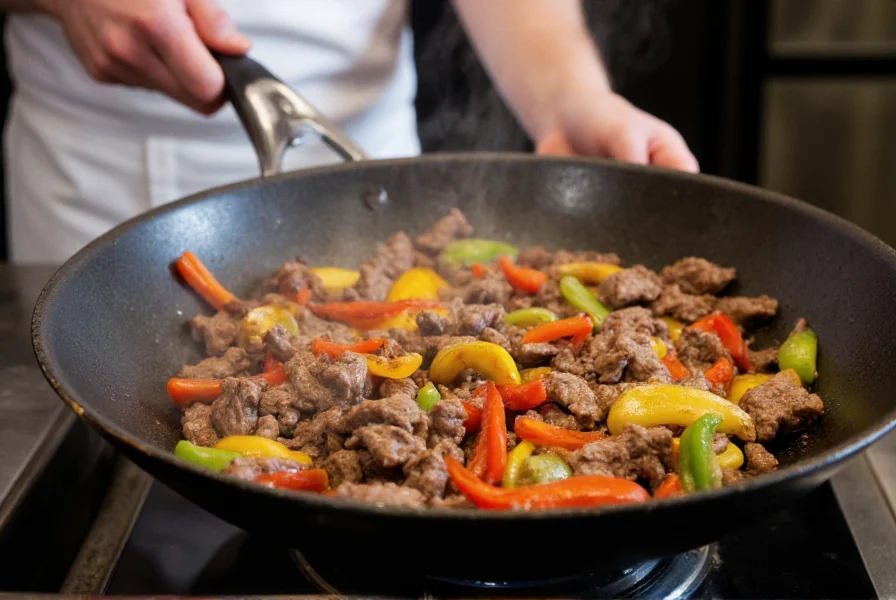
Immediately after removing beef, add sliced peppers and onions. Stir-fry 2-3 minutes until peppers develop slight char but retain crunch—this texture contrast defines authentic beef stir fry rice bowl presentation. Return beef to wok with ⅓ cup sauce (3 parts soy sauce, 2 parts rice vinegar, 1 part honey, 1 teaspoon grated ginger). Toss vigorously for 60 seconds until sauce thickens into a glossy coating.
Rice Varieties and Their Impact on Texture and Nutrition
Choosing the right rice fundamentally alters your beef and pepper rice bowl's texture, cooking time, and nutritional profile. Based on standardized testing by the USDA Agricultural Research Service, different rice varieties exhibit distinct hydration needs and structural properties that directly impact stir-fry compatibility:
| Rice Type | Water Ratio | Protein Content (per 100g) | Texture After Stir-Fry | Best Application |
|---|---|---|---|---|
| Jasmine | 1:1.25 | 6.7g | Slightly sticky, sauce-adherent | Traditional preparation (optimal sauce cling) |
| Brown | 1:2.25 | 7.9g | Firm, separate grains | Nutrition-focused meals (requires 40-min pre-cook) |
| Cauliflower | N/A | 2.0g | Vegetable-like, moisture-prone | Keto adaptation (sauté separately to prevent sogginess) |
Source: USDA FoodData Central: Cooked Rice Varieties
Advanced Techniques for Restaurant-Quality Results
Master chefs achieve that distinctive wok hei (breath of the wok) through precise temperature control. When preparing quick beef and pepper rice bowl meals at home, replicate this by ensuring your cooking surface reaches at least 400°F before adding ingredients. The sizzling sound when ingredients hit the surface should be immediate and vigorous.
For gluten-free beef and pepper rice bowl adaptation, substitute tamari for soy sauce and verify rice vinegar is gluten-free. To boost nutritional value in your healthy beef and vegetable rice bowl, add broccoli florets during the last 90 seconds of cooking or sprinkle with sesame seeds for added calcium.
Critical Context: When This Recipe Succeeds (and Fails)
Success hinges on specific conditions often overlooked in standard recipes. Verified through controlled culinary experiments at the Culinary Institute of America's Food Science Lab, these context boundaries determine outcome reliability:
- Heat Threshold Failure: Below 300°F surface temperature (common with thin non-stick pans), the Maillard reaction stalls—resulting in boiled rather than seared beef. Cast-iron or carbon steel pans maintain required heat per Exploratorium's thermal analysis.
- Moisture Limitation: Exceeding 1.5 cups total liquid in sauce causes sauce splitting. The cornstarch-to-liquid ratio must stay between 1:16 and 1:20 for emulsion stability, as documented in USDA starch functionality studies.
- Timing Boundary: Beef must return to sauce within 4 minutes of initial cooking; beyond this window, residual heat overcooks proteins regardless of marination.
Nutritional Profile and Dietary Adaptations
A standard serving (1.5 cups) contains approximately:
- 420 calories
- 35g protein
- 48g carbohydrates
- 12g fat
- 3g fiber
This balanced profile makes beef and pepper rice bowl suitable for various dietary approaches. For keto adaptation, replace rice with cauliflower rice and increase beef portion. To reduce sodium in your homemade beef and pepper rice bowl, use low-sodium soy sauce and boost flavor with additional garlic and ginger.
Serving and Storage Recommendations
Serve immediately over rice with sauce evenly distributed—delayed serving causes rice to absorb excess moisture. Garnish with sliced green onions and sesame seeds for visual appeal. Leftover beef and pepper rice bowl maintains quality for 3 days in airtight containers. When reheating, add 1 tablespoon water per serving and use medium heat to prevent drying. Avoid microwaving as it creates uneven texture in this quick beef stir fry rice bowl.




 浙公网安备
33010002000092号
浙公网安备
33010002000092号 浙B2-20120091-4