
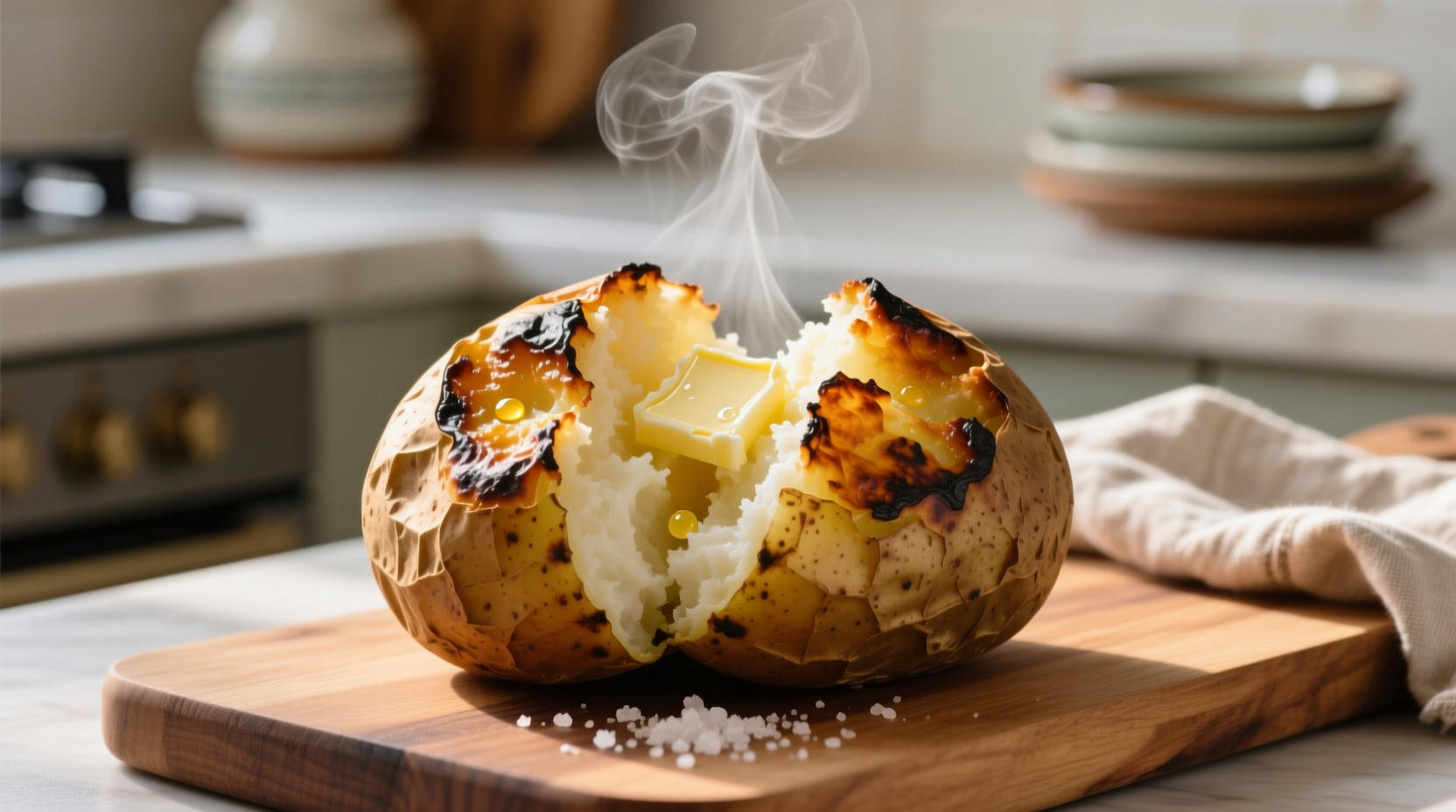
The Ultimate Guide to Baking Potatoes at 425°F
When you're craving that perfect baked potato with crispy skin and fluffy interior, baking at 425°F delivers restaurant-quality results in less time than traditional methods. This higher temperature creates the ideal balance between exterior crispness and interior tenderness that many home cooks struggle to achieve.
Why 425°F Is the Sweet Spot for Baked Potatoes
Most traditional recipes call for baking potatoes at 350-400°F, but increasing the temperature to 425°F offers several advantages that transform your baked potato experience:
- Faster cooking time - Reduces baking duration by 25-30% compared to lower temperatures
- Superior texture contrast - Creates dramatically crispier skin while maintaining fluffy interior
- Better moisture control - Prevents the "steamed" texture that can happen at lower temperatures
- Enhanced flavor development - Promotes caramelization of natural sugars in the potato skin
| Temperature | Medium Russet (8-10 oz) | Large Russet (12-16 oz) | Skin Texture | Interior Texture |
|---|---|---|---|---|
| 350°F | 65-75 minutes | 85-95 minutes | Soft, slightly leathery | Dense, sometimes gummy |
| 400°F | 55-65 minutes | 75-85 minutes | Moderately crisp | Fluffy |
| 425°F | 45-55 minutes | 60-70 minutes | Exceptionally crisp | Light and fluffy |
This comparison clearly shows why 425°F delivers the optimal balance for most home bakers seeking that perfect baked potato experience.
Your Step-by-Step Baking Process at 425°F
Preparation: Setting Up for Success
Proper preparation makes all the difference in your final results. Follow these steps before your potato even enters the oven:
- Clean thoroughly - Scrub potatoes under cold running water to remove all dirt
- Dry completely - Pat potatoes dry with paper towels (moisture prevents crisp skin)
- Poke strategically - Use a fork to make 6-8 deep punctures (prevents bursting)
- Oil lightly - Rub with 1/2 tsp olive oil per potato (enhances crispness)
- Salt surface - Sprinkle with coarse salt before baking (draws out moisture for crispier skin)
Baking: The Critical Temperature Window
When baking at 425°F, timing is everything. Here's what happens during the baking process:
- 0-20 minutes: Initial moisture evaporation begins, creating steam that cooks the interior
- 20-40 minutes: Maillard reaction starts on the surface, developing complex flavors
- 40-55 minutes: Interior starches fully gelatinize, creating that signature fluffy texture
- 55+ minutes: Risk of over-browning increases (watch carefully after 50 minutes)
According to USDA food safety guidelines, potatoes are fully cooked when they reach an internal temperature of 205-210°F. Using an instant-read thermometer is the most reliable way to determine doneness, as size and oven variations affect timing. USDA Food Safety and Inspection Service confirms this temperature range ensures proper cooking while maintaining optimal texture.
Pro Tips for Perfect Results Every Time
Professional chefs use these techniques to guarantee perfect baked potatoes:
- Direct rack placement - Bake directly on the oven rack with a baking sheet on the rack below to catch drips (better air circulation than baking on a sheet)
- Midway rotation - Rotate potatoes 180 degrees halfway through cooking for even browning
- Resting period - Let potatoes rest for 5-7 minutes after baking (allows interior to finish setting)
- Doneness test - Gently squeeze with oven mitts; properly cooked potatoes will yield slightly with a fluffy feel
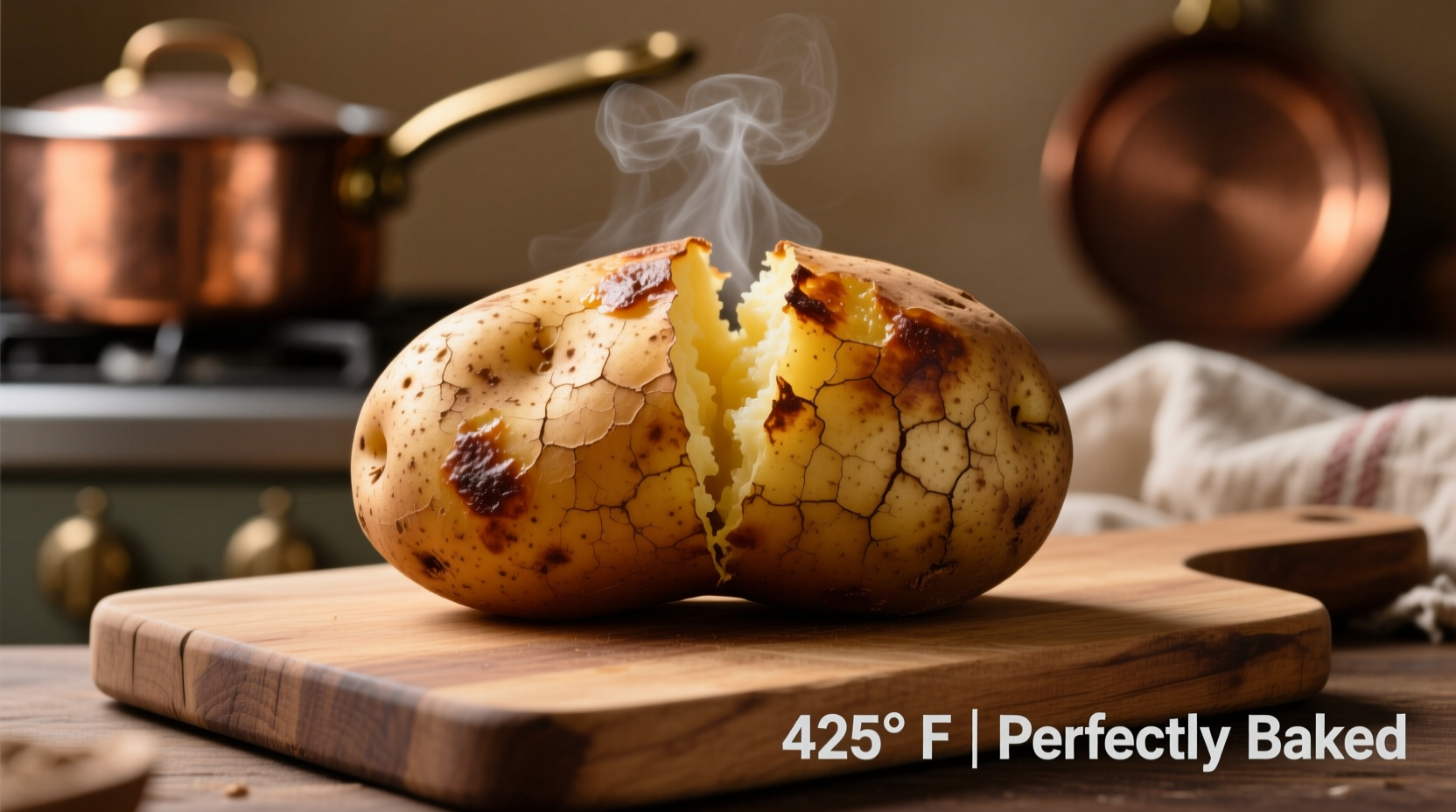
When to Choose 425°F vs. Other Methods
While 425°F delivers excellent results for standard baked potatoes, certain situations call for different approaches:
- Best for: Weeknight dinners when you need faster results, when you want maximum skin crispness, or when baking multiple potatoes simultaneously
- Not ideal for: Baking stuffed potatoes (lower temperature prevents filling from drying out), or when using convection ovens without adjustment (reduce temperature by 25°F)
- Alternative method: For extra-crispy skin, start at 450°F for 20 minutes, then reduce to 400°F for remaining time
Troubleshooting Common Baking Issues
Even with perfect timing, issues can arise. Here's how to fix them:
- Soggy skin: Didn't dry potatoes thoroughly before baking or skipped the oil/salt step
- Dense interior: Undercooked (needs more time) or potato variety with lower starch content
- Bursting potatoes: Not enough punctures or punctures weren't deep enough
- Uneven cooking: Potatoes weren't similar in size or weren't rotated during baking
According to research from the University of Minnesota Extension, russet potatoes are ideal for baking due to their high starch content and thick skin that holds up well to high-heat cooking. Their dry, fluffy texture when baked makes them the preferred choice over waxy varieties like red potatoes.
Serving and Storage Recommendations
Once your potatoes are perfectly baked at 425°F, follow these serving and storage guidelines:
- Immediate serving: Cut a slit in the top, fluff interior with a fork, and add your favorite toppings
- Short-term storage: Keep warm in a 200°F oven for up to 30 minutes without quality loss
- Refrigeration: Store cooled potatoes in airtight container for 3-4 days
- Reheating: For best results, reheat in 400°F oven for 15-20 minutes (microwaving makes skin soggy)
Professional kitchens often use the America's Test Kitchen method of partially baking potatoes at 425°F, then finishing at a slightly lower temperature to achieve optimal texture without over-browning. This two-stage approach delivers consistent results even with varying potato sizes.
Final Thoughts for Perfect Baked Potatoes
Baking potatoes at 425°F transforms what many consider a simple side dish into a culinary highlight. By understanding the science behind the temperature choice and following these precise timing guidelines, you'll consistently achieve that perfect balance of crisp skin and fluffy interior. Remember that oven temperatures can vary, so using an instant-read thermometer to check for that 205-210°F internal temperature is the most reliable indicator of perfect doneness.




 浙公网安备
33010002000092号
浙公网安备
33010002000092号 浙B2-20120091-4