
The Science Behind Perfect Baguette Garlic Bread
When searching for the ideal garlic bread, professional bakers consistently choose baguette over other bread varieties. The unique structure of authentic French baguette—with its thin, crisp crust and open crumb pattern—creates the perfect vehicle for garlic butter absorption while maintaining structural integrity during baking. According to the American Institute of Baking, traditional baguettes contain only four ingredients: flour, water, yeast, and salt, making them the purest canvas for garlic flavor enhancement.
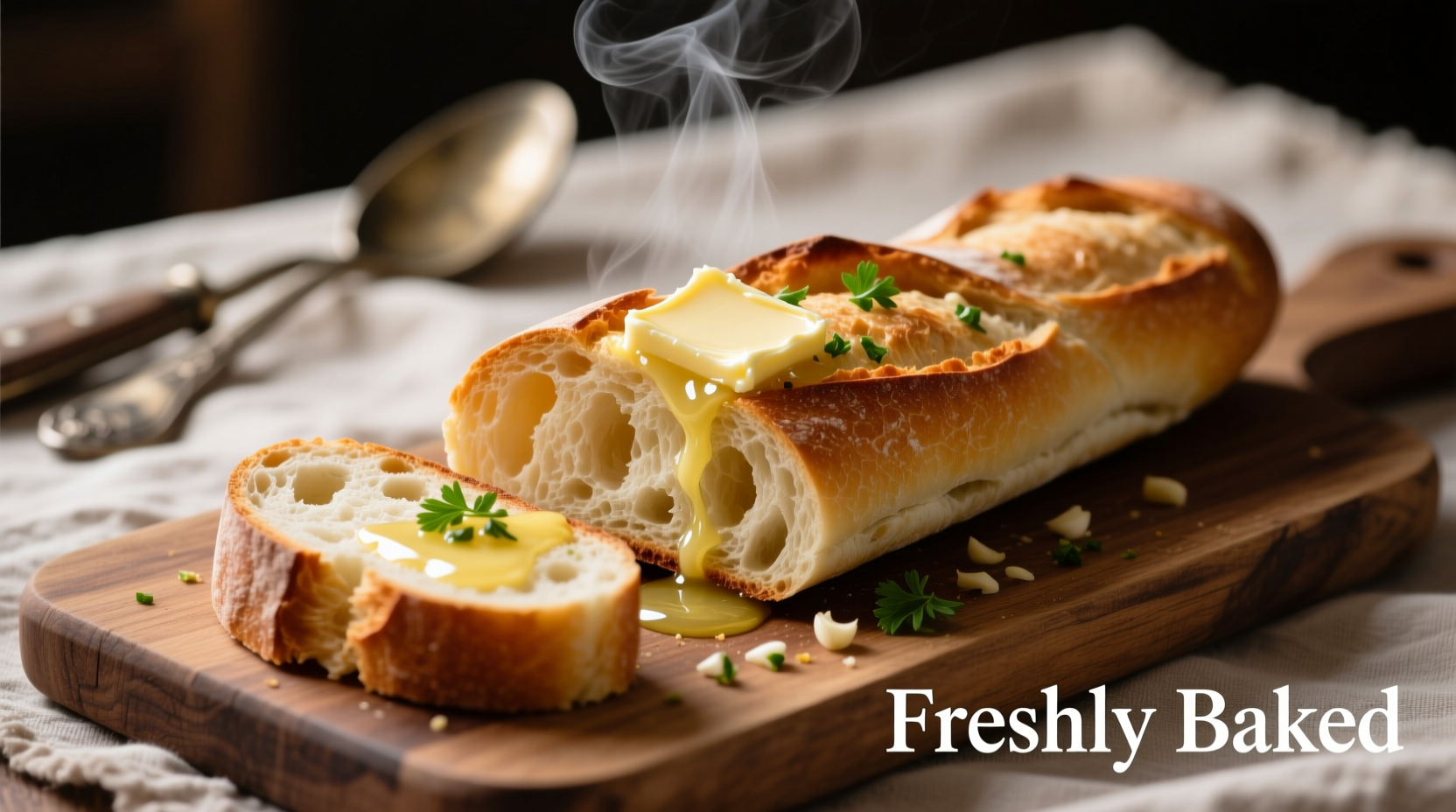
Why Baguette Outperforms Other Breads
The baguette's high surface-area-to-volume ratio allows for maximum garlic butter coverage while its hollow interior structure prevents sogginess. Unlike sandwich breads that become mushy, the baguette's chewy texture withstands moisture from the garlic mixture while developing an irresistible crunch on the exterior.
| Bread Type | Crispness Retention | Butter Absorption | Flavor Balance |
|---|---|---|---|
| Traditional Baguette | Excellent (48+ hours) | Optimal (even distribution) | Ideal garlic-to-bread ratio |
| Sandwich Bread | Poor (soggy within hours) | Excessive (waterlogged) | Overpowering garlic flavor |
| Ciabatta | Good (24 hours) | Inconsistent (pocket issues) | Uneven flavor distribution |
Historical Evolution of Garlic Bread
While garlic bread has ancient Mediterranean roots, the baguette version emerged in mid-20th century America when Italian immigrants began using French bread as a substitute for traditional Italian loaves. The Food Timeline documents that garlic bread gained popularity in American restaurants during the 1970s, with the baguette version becoming standard by the 1990s due to its superior texture characteristics.
Essential Ingredients Checklist
Creating exceptional baguette garlic bread requires attention to ingredient quality:
- Baguette selection: Choose day-old bread for optimal moisture content (fresh baguettes contain too much moisture)
- Garlic: Use fresh cloves rather than pre-minced varieties for brighter flavor
- Butter: Unsalted European-style butter (82% fat content) provides superior browning
- Herbs: Parsley adds color contrast while balancing garlic intensity
Professional Preparation Method
Follow these steps for restaurant-quality results:
- Preheat oven to 375°F (190°C) with rack positioned in center
- Prepare garlic butter mixture: ½ cup softened butter, 4 minced garlic cloves, 2 tbsp chopped parsley, ¼ tsp salt
- Cut baguette horizontally without separating halves
- Spread mixture evenly, focusing on crust edges for maximum crispness
- Wrap in foil for first 10 minutes, then bake uncovered for 8-10 minutes
- Broil 1-2 minutes for golden finish (watch carefully to prevent burning)
Contextual Application Guidelines
Baguette garlic bread excels in specific dining scenarios but has limitations:
- Ideal for: Italian dinners, French-inspired menus, casual gatherings
- Avoid when: Serving delicate seafood dishes (overpowering flavors)
- Texture warning: Best consumed within 2 hours of preparation (stales faster than regular bread)
- Dietary note: Not suitable for garlic-sensitive individuals or low-FODMAP diets
Flavor Enhancement Techniques
Professional chefs use these methods to elevate basic garlic bread:
- Garlic preparation: Roast cloves before mincing for sweeter, less pungent flavor
- Butter temperature: Must be properly softened (65-70°F) for even spreading
- Layering technique: Apply half the mixture inside, half on exterior crust
- Finishing touch: Sprinkle with flaky sea salt immediately after baking
Variations Worth Trying
While classic preparation remains popular, these adaptations satisfy different preferences:
- Cheesy version: Add ¼ cup grated Parmesan to butter mixture
- Vegan alternative: Substitute butter with olive oil and nutritional yeast
- Herb-infused: Incorporate rosemary or thyme for earthy notes
- Spicy kick: Add ¼ tsp red pepper flakes to butter mixture
Serving Recommendations
Pair your baguette garlic bread with complementary dishes:
- Tomato-based pasta dishes (absorbs sauce beautifully)
- Creamy soups (contrasts rich textures)
- Salads with vinaigrette dressings (balances acidity)
- As part of a charcuterie board (complements cured meats)




 浙公网安备
33010002000092号
浙公网安备
33010002000092号 浙B2-20120091-4