
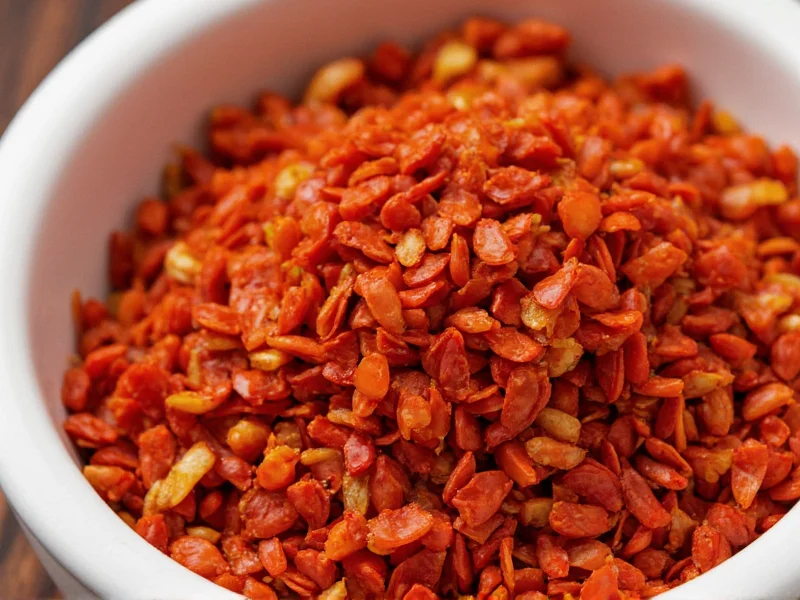
When you sprinkle chili flakes on pizza or pasta, you're adding measurable heat to your dish. Understanding exactly how spicy chili flakes are—and what factors influence their heat level—helps you use them effectively in cooking without overwhelming your palate.
The Science Behind Chili Flakes' Spiciness
Chili flakes derive their heat from capsaicin, a chemical compound concentrated in the placenta (white ribs) and seeds of chili peppers. When manufacturers produce chili flakes, they typically include these heat-concentrated parts, which is why even small amounts deliver noticeable spice.
The Scoville scale measures spiciness by determining how much sugar-water solution is needed to neutralize the heat. For context:
| Chili Product | Scoville Heat Units (SHU) | Relative Heat Level |
|---|---|---|
| Chili Flakes (standard) | 30,000-50,000 | Moderate to Hot |
| Chili Powder | 500-5,000 | Mild |
| Fresh Jalapeño | 2,500-8,000 | Mild to Moderate |
| Cayenne Pepper (fresh) | 30,000-50,000 | Hot |
| Habanero Pepper | 100,000-350,000 | Very Hot |
Factors That Determine Chili Flakes' Heat Level
Not all chili flakes deliver the same heat intensity. Several factors influence how spicy are chili flakes from different brands or regions:
Pepper Variety Used
Most commercial chili flakes use cayenne peppers, but some blends incorporate hotter varieties like bird's eye chilies or milder ones like ancho peppers. Red pepper flakes heat level Scoville measurements vary significantly based on this primary ingredient.
Processing Method
How manufacturers process the peppers affects heat distribution. Some brands remove more seeds and membranes (where capsaicin concentrates), resulting in milder flakes. Others keep these parts intact for maximum heat—important to know when comparing are chili flakes hotter than chili powder.
Geographic Origin
Chili peppers grown in different regions develop varying heat levels due to soil composition, climate, and sunlight exposure. Italian red pepper flakes typically use a milder variety than Turkish or Korean chili flakes, which explains why understanding how spicy are chili flakes compared to fresh chilies requires regional context.
Historical Evolution of Chili Flakes
Chili flakes have evolved through centuries of culinary adaptation:
- 6000+ years ago: Chili peppers first domesticated in Mexico (Mesoamerica), used fresh or dried by indigenous cultures.
- 1493: Columbus brings chili peppers to Europe; they quickly spread to Africa, India, and Asia via trade routes.
- 16th-18th centuries: Drying and grinding chilies becomes common in Mediterranean and Asian cuisines for preservation and concentrated flavor.
- 19th century: Crushed red pepper flakes become a staple in Southern Italian cooking, often made at home from locally grown peppers.
- Early 20th century: Commercial production begins in the United States, particularly in Italian-American communities in New York.
- Late 20th century: Globalization leads to standardized production and diverse regional varieties (e.g., Korean gochugaru, Turkish pul biber).
Source: Peabody Museum of Archaeology & Ethnology, Harvard University
Using Chili Flakes Without Overpowering Your Dish
Knowing that chili flakes are spicy doesn't have to limit your cooking. Professional chefs use several techniques to control heat:
- Add early for milder heat: Cooking chili flakes in oil at the beginning of preparation distributes capsaicin throughout the dish, creating a more subtle warmth.
- Finish with flakes for sharper heat: Sprinkling on top just before serving delivers a more pronounced, immediate spiciness.
- Start small and taste: Begin with 1/8 teaspoon per serving and adjust gradually—remember that heat intensifies as dishes sit.
- Balance with dairy or acid: If you've added too much, a splash of cream, yogurt, or lemon juice can counteract excessive spiciness.
Contextual Limitations of Chili Flakes
Chili flakes excel in many applications but have specific boundaries:
- Health Restrictions: Not recommended for individuals with active peptic ulcers or severe irritable bowel syndrome (IBS). A NIH-reviewed study found capsaicin can stimulate gastric acid secretion and exacerbate symptoms in sensitive populations (NIH, 2014).
- Culinary Incompatibility: Avoid in raw preparations requiring fresh pepper brightness (e.g., pico de gallo) or when uniform mild heat is needed—flakes create localized hot spots. Also, the drying process reduces complex flavor notes present in fresh chilies.
- Storage Sensitivity: Heat potency degrades significantly after 18 months even with proper storage (USDA guidelines). For critical applications, use within 12 months and store in vacuum-sealed, light-proof containers.
Sources: NIH Review on Capsaicin and GI Symptoms, USDA Spice Storage Guidelines
Common Misconceptions About Chili Flakes
Several myths persist about these popular seasonings:
Myth: "Chili flakes and red pepper flakes are identical."
Reality: While often used interchangeably, "chili flakes" may refer to flakes from various chili types, while "red pepper flakes" typically means cayenne-based flakes. This distinction matters when considering are chili flakes spicy enough for authentic recipes.
Myth: "Older chili flakes lose all their heat."
Reality: While chili flakes gradually lose potency (about 15-20% per year), properly stored in a cool, dark place, they maintain significant heat for 1-2 years—unlike chili powder which degrades faster.
Practical Applications in Global Cuisines
Different culinary traditions use chili flakes in distinctive ways that showcase their spiciness profile:
- Italian cooking: Crushed red pepper flakes provide subtle background heat in pasta dishes without dominating other flavors.
- Asian cuisine: Many Chinese and Korean recipes use chili flakes (like la doubanjiang) as both heat source and flavor base, often toasted first to deepen flavor.
- Mexican preparations: While less common than fresh chilies, some regional dishes incorporate chili flakes for consistent heat in salsas and stews.
Understanding these applications helps answer the practical question of using chili flakes in cooking without too much heat while maintaining authentic flavor profiles.




 浙公网安备
33010002000092号
浙公网安备
33010002000092号 浙B2-20120091-4