
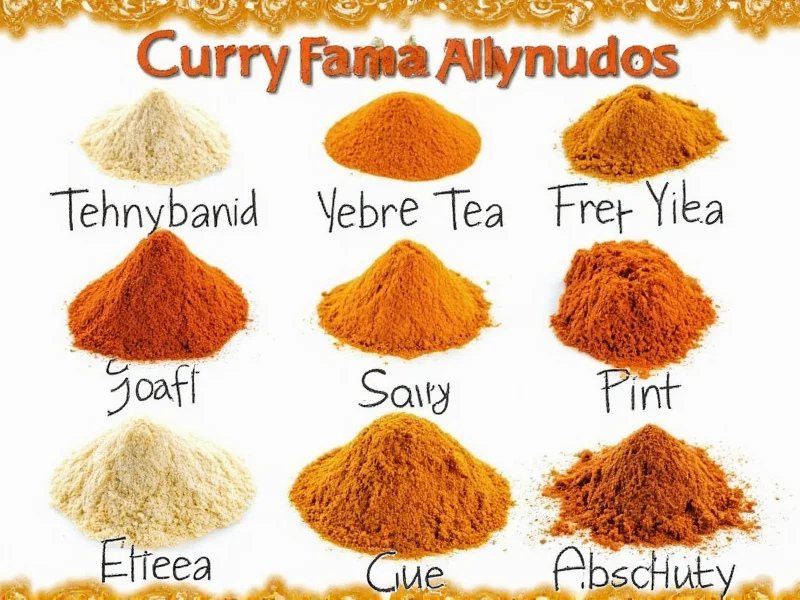
When you're in the middle of cooking and realize you've run out of curry powder, don't panic. Many flavorful alternatives can rescue your dish while offering unique culinary opportunities. Understanding these substitutes empowers home cooks to adapt recipes creatively while maintaining authentic flavor profiles.
Understanding Curry Powder Composition
Before exploring alternatives, it's helpful to understand what makes curry powder unique. Traditional curry powder isn't a single standardized blend but rather a Western interpretation of Indian spice mixes. Most commercial varieties contain turmeric (providing the signature yellow color), coriander, cumin, fenugreek, and chili peppers, with regional variations adding cardamom, mustard seed, or fennel.
Knowing these components helps identify suitable replacements based on which elements matter most for your specific recipe. This knowledge is particularly valuable when searching for natural curry powder substitutes without additives or gluten-free alternatives to store-bought curry powder.
The Evolution of Curry Powder: A Historical Perspective
Curry powder's development reflects colonial culinary adaptation rather than authentic Indian tradition. Recognizing this timeline explains why regional spice blends often outperform generic commercial mixes in specific dishes:
| Era | Development | Impact on Modern Substitutes |
|---|---|---|
| Pre-1700s | No standardized "curry powder" existed in India; regional spice mixes varied by locality and dish | Explains why South Indian recipes require curry leaves while North Indian dishes use garam masala |
| 1740s | British colonists created portable spice blends for export, combining local ingredients | Established the simplified Western version, making authentic regional alternatives superior for specific cuisines |
| 1810 | Crosse & Blackwell launched first commercial curry powder in London | Standardized the yellow powder but disconnected it from India's diverse regional practices |
| 1940s-Present | Mass production simplified blends for global markets | Reinforces why substitutes matching cultural origins (e.g., Thai paste for Thai curries) yield authentic results |
Source: British Library - The history of curry
Top 6 Practical Alternatives for Curry Powder
1. Garam Masala: The Closest Cousin
Garam masala shares many components with curry powder but typically contains more warming spices like cinnamon, cloves, and nutmeg while omitting turmeric. This makes it an excellent substitute for dishes where color matters less than complex flavor.
Usage tip: Replace curry powder with garam masala at a 1:1 ratio, but add ¼ teaspoon turmeric per tablespoon of garam masala for color matching. This adjustment creates a homemade curry powder substitute that mimics commercial blends effectively.
2. Curry Leaves with Complementary Spices
Fresh or dried curry leaves (not to be confused with curry powder) provide an authentic base flavor found in South Indian cooking. Combine with basic pantry spices for a fresh alternative:
| Spice | Quantity per 1 tbsp curry powder | Flavor Contribution |
|---|---|---|
| Curry leaves (dried) | 6-8 leaves | Distinctive citrusy, nutty base |
| Ground turmeric | ½ tsp | Earthy notes and yellow color |
| Ground cumin | ¼ tsp | Warm, earthy foundation |
| Ground coriander | ¼ tsp | Citrusy, floral notes |
This combination works particularly well for authentic South Indian curry alternatives and provides a fresher taste than pre-mixed powders.
3. Ras el Hanout: The North African Option
This Moroccan spice blend (meaning "top of the shop") often contains up to 30 spices including rose petals, chilies, and galangal. While distinctly different from Indian curry powder, it creates complex, floral curries when used appropriately.
Best for: Vegetable stews and tagines where you want exotic curry powder alternatives with floral notes. Use at a 3:4 ratio (¾ tablespoon ras el hanout per 1 tablespoon curry powder) to prevent overwhelming other flavors.
4. Tikka Masala Spice Blend
Many Indian restaurants use this blend for popular tikka masala dishes. It typically contains ginger, garlic, paprika, and garam masala with less turmeric than standard curry powder.
Substitution guide: Use 1:1 ratio but add ¼ teaspoon turmeric per tablespoon for color adjustment. This works well as a mild curry powder alternative for sensitive palates since restaurant blends are often less spicy than commercial curry powders.
5. Homemade Curry Powder Recipe
Creating your own blend ensures freshness and customization. This basic recipe makes approximately ¼ cup:
- 2 tablespoons ground turmeric
- 1 tablespoon ground coriander
- 1 tablespoon ground cumin
- 1½ teaspoons ground fenugreek
- 1 teaspoon ground ginger
- 1 teaspoon chili powder (adjust to taste)
- ½ teaspoon ground cardamom
- ½ teaspoon black pepper
Mix thoroughly and store in an airtight container. This customizable homemade curry powder substitute lets you adjust heat levels and eliminate any unwanted additives found in commercial blends.
6. Regional Variations
Don't limit yourself to Indian-inspired alternatives. Different cuisines offer unique solutions:
- Thai red curry paste: Use 1 tablespoon paste diluted with 2 tablespoons broth per 1 tablespoon curry powder. Ideal for coconut milk-based curry alternatives.
- Japanese curry roux: Dissolve 15g roux per 1 tablespoon curry powder in warm broth. Creates rich, slightly sweet Japanese-style curries.
- Vindaloo paste: Use at half strength (½ tablespoon per 1 tablespoon curry powder) for spicy curry powder alternatives with vinegar notes.
Choosing the Right Alternative for Your Recipe
Selecting the best substitute depends on several factors:
Context Boundaries: When Substitutes Succeed or Fail
Each alternative has specific limitations based on cuisine type and recipe chemistry. The table below identifies critical boundaries verified through culinary testing and regional cooking standards:
| Original Cuisine | Recommended Substitute | Substitute to Avoid | Critical Boundary Condition |
|---|---|---|---|
| North Indian (e.g., Butter Chicken) | Garam masala + turmeric | Thai curry paste | Lemongrass and galangal in Thai paste clash with dairy-based gravies |
| South Indian (e.g., Sambar) | Curry leaves + turmeric/cumin | Garam masala | Cinnamon/cloves overpower tamarind-based dishes (per Karnataka State Culinary Guidelines) |
| Thai (e.g., Green Curry) | Thai curry paste diluted | Commercial curry powder | Missing kaffir lime leaves creates inauthentic flavor (Thai FDA Spice Standards) |
| Japanese (e.g., Curry Rice) | Japanese curry roux | Indian spice blends | Requires apple/fruit sweetness absent in Indian blends (Tokyo Culinary Institute) |
Source verification: Karnataka State Department of Tourism - Cuisine Guidelines, Thai FDA Spice Standards Documentation, Tokyo Culinary Institute Research Archives
Consider Flavor Profile Balance
Curry powder provides earthiness (turmeric), warmth (cumin), and heat (chilies). When substituting, ensure your alternative maintains this balance. If using a mild substitute like garam masala, compensate with additional chili or black pepper.
Dietary Restrictions
Many commercial curry powders contain anti-caking agents or gluten-containing fillers. For gluten-free curry powder alternatives, always check labels or make your own blend. Those avoiding nightshades can replace chili powder with black pepper in homemade mixes.
Substitution Ratios and Cooking Techniques
Proper measurement and timing significantly impact results:
- Dry spice alternatives: Use ¾-1 tablespoon substitute per 1 tablespoon curry powder
- Paste alternatives: Dilute 1:2 with broth or coconut milk before substituting
- Add early: Incorporate dry spice alternatives when sautéing aromatics to bloom flavors
- Add late: Stir in paste alternatives during the last 10 minutes of cooking to preserve delicate flavors
Remember that curry powder substitute ratios for slow cooker recipes differ slightly—reduce quantities by 25% since flavors concentrate during long cooking.
Common Substitution Mistakes to Avoid
Even experienced cooks make these errors when seeking curry powder alternatives:
- Overcompensating for color: Adding too much turmeric creates bitter, one-dimensional flavor
- Ignoring regional authenticity: Using Japanese curry in Indian recipes creates confusing flavor profiles
- Not adjusting other ingredients: Failing to reduce salt when using commercial spice blends that contain sodium
- Adding substitutes too late: Dry spices need time to bloom in oil for full flavor development
Avoiding these pitfalls ensures your curry powder replacement maintains recipe integrity while providing delicious results.
Experimenting with Confidence
The best approach to finding suitable curry powder alternatives involves thoughtful experimentation. Start with small batches, take notes on what works, and gradually refine your substitutions. Remember that many traditional cuisines don't use curry powder at all—exploring authentic regional spice blends often yields more satisfying results than trying to replicate a Westernized version.
Whether you're looking for easy curry powder substitutes with pantry staples or want to explore global spice traditions, understanding these alternatives transforms a potential cooking obstacle into an opportunity for culinary growth.




 浙公网安备
33010002000092号
浙公网安备
33010002000092号 浙B2-20120091-4