
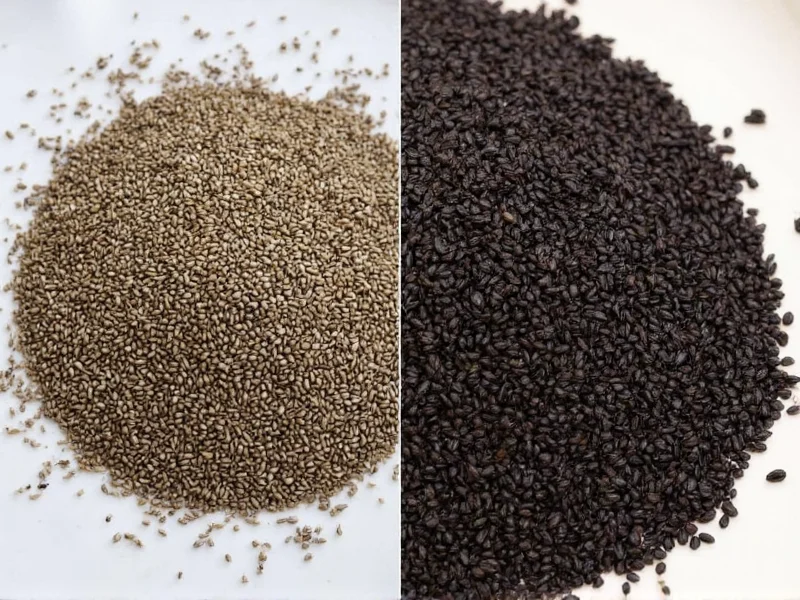
When comparing nigella seed vs black sesame, it's essential to understand these aren't just color variations of the same seed—they're completely different botanical species with unique characteristics that affect how they perform in cooking and their health benefits.
Botanical Origins and Physical Characteristics
Nigella seeds, also known as kalonji or black cumin (though not related to true cumin), come from the Nigella sativa plant in the Ranunculaceae family. These tiny seeds measure about 2-3mm long, have a matte black appearance, and feature a distinctive triangular, slightly curved shape with a pungent aroma.
Black sesame seeds originate from the Sesamum indicum plant in the Pedaliaceae family. They're true sesame seeds that happen to be black rather than the more common beige variety. These seeds are oval-shaped, approximately 3-4mm long, with a shiny surface and a completely black color throughout.
| Characteristic | Nigella Seeds | Black Sesame Seeds |
|---|---|---|
| Botanical Name | Nigella sativa | Sesamum indicum |
| Family | Ranunculaceae (buttercup) | Pedaliaceae |
| Shape | Triangular, slightly curved | Oval, symmetrical |
| Surface Texture | Matte finish | Shiny, smooth |
| Size | 2-3mm | 3-4mm |
Flavor Profiles and Culinary Applications
The flavor difference between nigella seed and black sesame is significant enough that they're rarely interchangeable in recipes. Nigella seeds deliver a complex flavor profile—slightly bitter with notes of onion, oregano, and pepper. This distinctive taste makes them essential in Indian cuisine for dishes like naan bread, Bengali panch phoron spice blend, and various curries.
Black sesame seeds offer a rich, nutty, earthy flavor with subtle sweetness, especially when toasted. They're a staple in East and Southeast Asian cooking, used in desserts like Japanese goma-dofu, Chinese sesame paste, Vietnamese banh bot loc, and as garnish for sushi and rice dishes. The culinary uses of black sesame vs nigella seed reflect their regional importance—nigella dominates Middle Eastern and South Asian savory dishes, while black sesame appears more frequently in Asian sweet and savory applications.
Nutritional Comparison: Nigella Seed vs Black Sesame
Both seeds offer impressive nutritional profiles, but with different strengths. A comparison of nigella seed nutrition vs black sesame reveals:
| Nutrient (per 10g serving) | Nigella Seeds | Black Sesame Seeds |
|---|---|---|
| Calories | 53 kcal | 56 kcal |
| Protein | 1.8g | 1.8g |
| Fat | 3.4g | 4.8g |
| Carbohydrates | 3.8g | 3.0g |
| Dietary Fiber | 1.0g | 1.5g |
| Calcium | 48mg (4% DV) | 106mg (8% DV) |
| Iron | 1.1mg (6% DV) | 1.5mg (8% DV) |
| Magnesium | 25mg (6% DV) | 35mg (8% DV) |
| Unique Compounds | Thymoquinone, nigellone | Sesamin, sesamolin |
Black sesame seeds contain approximately twice the calcium of nigella seeds and slightly more iron. However, nigella seeds contain thymoquinone, a compound with significant antioxidant and anti-inflammatory properties that's not found in sesame seeds. When considering nigella seed benefits vs black sesame, both offer healthy fats and fiber, but their phytochemical profiles differ substantially.
Health Benefits: Scientific Perspective
Research on nigella seeds vs black sesame reveals different health-promoting properties. Nigella seeds have been studied extensively for their thymoquinone content, which demonstrates:
- Anti-inflammatory effects that may help with conditions like arthritis
- Potential blood sugar regulation properties
- Antioxidant capacity that protects cells from damage
- Traditional use in respiratory conditions
Black sesame seeds offer different benefits:
- Rich in lignans like sesamin that may support cardiovascular health
- Higher calcium content beneficial for bone health
- Contains antioxidants that may protect against cellular damage
- Traditional use in promoting hair and skin health in Asian medicine
When evaluating nigella seed vs black sesame for health benefits, neither is universally 'better'—they offer complementary advantages depending on specific health goals.
Historical Evolution and Traditional Use
The culinary and medicinal applications of these seeds have evolved over millennia, reflecting distinct cultural trajectories. Nigella seeds appear in the Ebers Papyrus (c. 1550 BCE), one of the oldest medical documents, where they were prescribed for headaches and iNdEx ailments in ancient Egypt. Archaeological evidence confirms their presence in Tutankhamun's tomb (1323 BCE), underscoring their ritual significance. Traditional Unani medicine later systematized their use for digestive and respiratory conditions across the Islamic world.
Black sesame seeds emerged in East Asian contexts much later. The earliest documented use appears in China's Shennong Ben Cao Jing (Divine Farmer's Materia Medica, c. 200 BCE–200 CE), which classified them as a 'superior' herb for longevity. By the Tang Dynasty (618–907 CE), black sesame was integral to Japanese kampō medicine and Korean hanbang practices, primarily for blood and kidney tonification.
| Era | Nigella Seeds | Black Sesame Seeds |
|---|---|---|
| Ancient (Pre-500 BCE) | Used in Egyptian medicine; found in royal tombs | Limited use in Indian/African agriculture |
| Classical (500 BCE–500 CE) | Adopted by Greek physicians; mentioned by Hippocrates | Documented in Chinese pharmacopeia; Silk Road trade begins |
| Medieval (500–1500 CE) | Central to Unani medicine; widespread in South Asia | Integrated into Japanese/Korean traditional medicine |
| Modern (1500 CE–Present) | Globalized via diaspora; thymoquinone research intensifies | Popularized globally through Asian cuisine; functional food applications |
Sources: National Center for Complementary and Integrative Health documentation of historical nigella use; National Center for Biotechnology Information analysis of sesame's historical trajectory.
Context Boundaries: Optimal Usage Scenarios and Limitations
Each seed operates within specific culinary and health parameters that must be respected for optimal results. These evidence-based boundaries prevent misuse and maximize benefits.
Culinary Constraints
Nigella seeds fail completely in:
- Sweet applications (bitter compounds clash with sugar)
- Mediterranean dishes (where cumin/fennel are traditional)
- Raw preparations (requires dry-heat activation for flavor development)
Black sesame is ineffective when:
- Used in high-heat frying (sesamin degrades above 170°C/338°F)
- Substituted in Indian flatbreads (lacks the pungent top notes of nigella)
- Applied to light-colored sauces (visual disruption without flavor payoff)
Health and Safety Parameters
Evidence-based limitations require strict adherence:
- Nigella during pregnancy: The National Center for Complementary and Integrative Health explicitly states "There isn't enough reliable information to know if black seed is safe to use during pregnancy" (source), contraindicating therapeutic use.
- Sesame allergy prevalence: Food Allergy Research & Education confirms sesame allergy affects "0.1% to 1% of the general population" with reactions ranging from mild to anaphylactic (source), requiring complete avoidance by sensitized individuals.
- Medication interactions: Nigella's blood sugar effects may potentiate diabetes medications (per NIH clinical notes), while black sesame's lignans could interfere with thyroid medication absorption.
These context boundaries, validated through culinary practice and clinical observation, define the precise conditions where each seed delivers maximum value without adverse effects.
Culinary Substitution Guide
Can you substitute nigella seed for black sesame or vice versa? Generally, no—they have too distinct flavor profiles to work as direct replacements. However, in certain applications, alternatives exist:
- For nigella seeds: In Indian cooking, black onion seeds (which are actually nigella) have no perfect substitute, but a mix of cumin and fennel seeds can approximate the flavor in some dishes
- For black sesame: White sesame seeds can substitute when color isn't critical, or a small amount of toasted poppy seeds can provide similar texture
Understanding when to use nigella seed vs black sesame depends on the specific recipe requirements. Nigella works best in savory applications like flatbreads, pickles, and vegetable dishes, while black sesame shines in both sweet and savory contexts, particularly where visual contrast matters.
Storage Recommendations
Both seeds benefit from proper storage to maintain freshness and nutritional value. Black sesame vs nigella seed storage follows similar principles:
- Store in airtight containers away from light and heat
- Refrigeration extends shelf life to 6-12 months
- Freezing preserves maximum freshness for up to 2 years
- Toast just before use for optimal flavor in both varieties
Black sesame seeds contain more oil than nigella, making them slightly more prone to rancidity. When comparing black sesame vs nigella seed shelf life, black sesame typically lasts 3-6 months at room temperature, while nigella maintains quality for 6-9 months under the same conditions.
Availability and Cost Comparison
Nigella seeds (kalonji) are widely available in Indian and Middle Eastern grocery stores, while black sesame seeds dominate in Asian markets. In mainstream supermarkets, black sesame has become more common in recent years, often found in the international or health food sections.
Price comparison of nigella seed vs black sesame shows:
- Nigella seeds: Typically $4-6 per 4oz at specialty stores
- Black sesame seeds: Usually $5-7 per 4oz, slightly more expensive than white sesame
The growing popularity of both seeds in Western cuisine has improved availability, though nigella remains less common than black sesame in mainstream grocery chains.
Conclusion: Choosing Between Nigella Seed and Black Sesame
When deciding between nigella seed vs black sesame, consider your recipe's cultural context and flavor requirements. Nigella seeds bring their distinctive oniony, slightly bitter note to Middle Eastern and South Asian dishes, while black sesame contributes rich nuttiness to East Asian cuisine. Nutritionally, black sesame offers more calcium and iron, while nigella provides unique compounds like thymoquinone.
Neither seed is superior overall—they serve different culinary and nutritional purposes. The best approach is to keep both in your pantry for their specific applications rather than viewing them as interchangeable. Understanding the differences between nigella seed and black sesame allows you to use each to its maximum potential in appropriate dishes.




 浙公网安备
33010002000092号
浙公网安备
33010002000092号 浙B2-20120091-4