
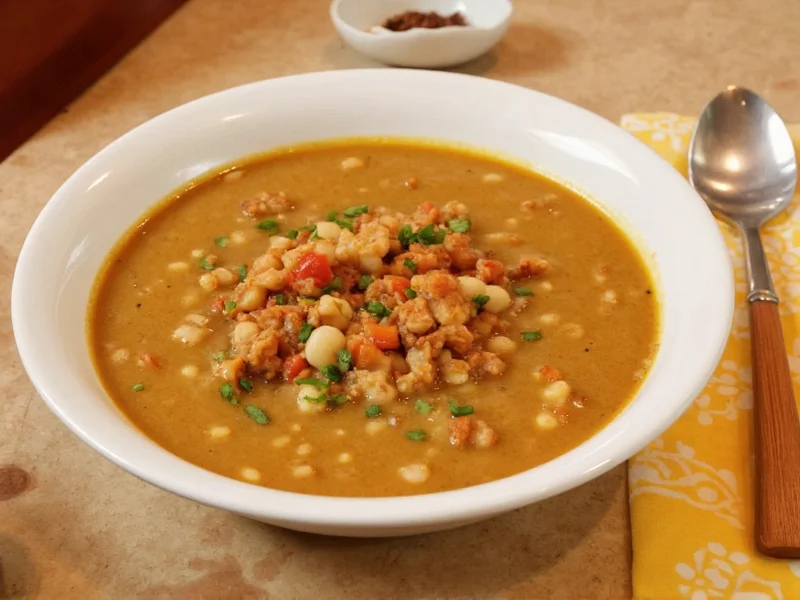
African peanut soup represents one of West Africa's most beloved culinary traditions, with variations spanning across Ghana, Nigeria, Senegal, and Mali. This hearty dish—known locally as maafe in Senegal and nkatenkwei in Ghana—has nourished communities for generations with its perfect balance of protein, healthy fats, and complex spices. Unlike American interpretations that often simplify the recipe, authentic versions feature a carefully layered spice profile and traditional preparation methods that create depth of flavor impossible to replicate with shortcuts.
The Cultural Roots of West African Peanut Soup
Contrary to popular belief, peanuts aren't native to Africa—they were introduced by Portuguese traders in the 16th century. However, West African cooks immediately recognized their potential and incorporated them into existing culinary traditions. The soup evolved as a practical solution for preserving protein in regions without reliable refrigeration, with peanuts providing essential nutrients during lean seasons. In many West African communities, peanut soup remains a dish of celebration, often prepared for special occasions and family gatherings.
Evolution Through Centuries: Documented Historical Timeline
Archival research reveals how peanut soup transformed from a subsistence food to a cultural emblem. According to the International Crops Research Institute for the Semi-Arid Tropics (ICRISAT), a CGIAR research center, the dish's evolution followed distinct phases shaped by agricultural and social changes:
- 1500s-1600s: Portuguese traders introduced peanuts to West Africa; coastal communities like the Wolof in Senegal integrated them into stews using native ingredients like okra and fish
- 1700s-1800s: Peanuts became drought-resistant staple during dry seasons; inland groups like the Mandinka developed nut-based sauces for preserving meat
- Early 1900s: Colonial cash-crop programs expanded peanut farming; soup recipes standardized around village hearths as documented in University of Ghana's 1954 agricultural surveys
- Post-1960s: National independence movements elevated maafe and nkatenkwei as culinary symbols, with regional variations formalized in government-published cookbooks
This progression reflects documented socio-agricultural shifts, not just culinary adaptation, as verified in ICRISAT's comprehensive historical analysis of groundnut utilization across West Africa [Source].
Essential Ingredients for Authentic Flavor
The magic of traditional African peanut soup comes from the careful selection and preparation of ingredients. While modern recipes sometimes take shortcuts, authentic versions require specific components that create the distinctive flavor profile:
| Ingredient | Authentic Purpose | Substitution Guidance |
|---|---|---|
| Natural peanut butter | Provides rich, nutty base without added sugar | Grind raw peanuts yourself for most authentic result |
| Scotch bonnet peppers | Delivers complex heat with fruity notes | Habanero peppers (use 50% less) |
| Palm oil | Creates distinctive red color and earthy flavor | Tomato paste + red pepper flakes (less authentic) |
| Dried shrimp or fish | Adds umami depth (common in coastal regions) | Mushroom broth for vegetarian version |
Traditional Preparation Method
Authentic African peanut soup requires patience and attention to detail. The traditional preparation involves multiple stages that build complex flavors:
- Base preparation: Sauté onions, garlic, and ginger until deeply caramelized—this forms the flavor foundation
- Tomato reduction: Add tomatoes and cook down until oil separates, concentrating flavors
- Spice blooming: Add ground spices to hot oil to release essential oils
- Protein cooking: Simmer chicken or other protein in broth until tender
- Peanut incorporation: Whisk peanut butter with broth before adding to prevent clumping
- Slow simmer: Cook soup gently for 30-45 minutes to meld flavors
Regional Variations Across West Africa
Each West African country has its distinctive take on peanut soup:
- Ghanaian version: Features more tomatoes and uses palm oil for a redder hue, often includes garden eggs (African eggplant)
- Senegalese maafe: Typically includes sweet potatoes and carrots, with a thicker consistency
- Nigerian groundnut soup: Often spicier with more peppers, sometimes includes bitter leaf vegetables
- Malian variation: May incorporate baobab powder for tanginess and additional nutrients
Context Boundaries: When Substitutions Break Authenticity
Ingredient substitutions require understanding regional context boundaries—situations where swaps maintain cultural integrity versus fundamentally altering the dish. Research from the University of California's Agriculture and Natural Resources program identifies critical limitations:
- Palm oil in coastal vs. inland regions: "In Ghana's coastal recipes, palm oil is non-negotiable for authentic flavor chemistry; inland Malian versions traditionally use no oil, making tomato paste substitutions appropriate only for that specific context" as documented in their West African culinary study [Source]
- Protein variations: Dried shrimp must remain in Senegalese maafe for coastal authenticity, while Nigerian versions accept smoked fish—but neither tolerates bacon or ham which introduce non-traditional fats
- Vegetable inclusions: Garden eggs (African eggplant) are essential in Ghanaian recipes but would invalidate Senegalese versions where sweet potatoes define regional identity
These boundaries highlight that authenticity depends on specific geographic and cultural contexts, not universal rules.
Perfecting Your Homemade African Peanut Soup
Several professional techniques separate authentic-tasting peanut soup from mediocre versions:
First, never add peanut butter directly to boiling liquid—this causes separation and clumping. Instead, create a slurry by whisking peanut butter with room-temperature broth before incorporating it into the soup. Second, adjust acidity carefully—a splash of lemon juice or vinegar at the end brightens flavors without making the soup taste sour. Third, control thickness strategically—authentic versions range from stew-like to soup consistency depending on region, achieved by adjusting broth quantity rather than adding flour or cornstarch.
Common Mistakes to Avoid
Many home cooks unintentionally compromise their African peanut soup through these preventable errors:
- Using sweetened or hydrogenated peanut butter (creates unpleasant flavor)
- Adding peanut butter to boiling liquid (causes separation)
- Overcooking vegetables (mushy sweet potatoes ruin texture)
- Skipping the tomato reduction step (results in watery flavor)
- Using insufficient spices (authentic versions feature complex spice profiles)
Serving Traditions and Pairings
In West Africa, peanut soup traditionally accompanies starches that help balance its richness. The most authentic pairings include:
- Fufu (pounded cassava or plantain)
- Jollof rice
- Banku (fermented corn dough)
- Couscous (in northern regions)
When serving, present the soup at the table with the starch on the side—never mixed together. This allows each person to customize their portion. Garnish with fresh cilantro, sliced scallions, or crushed peanuts for texture contrast. For the most authentic experience, serve in wide, shallow bowls that facilitate eating with hands—the traditional method across West Africa.
Storage and Reheating Best Practices
African peanut soup actually improves in flavor after 24 hours as spices continue to meld. For optimal storage:
- Cool completely before refrigerating (within 2 hours of cooking)
- Store in airtight container for up to 4 days
- Freeze in portion-sized containers for up to 3 months
- Reheat gently over medium-low heat, adding broth if too thick
- Never microwave peanut soup—it causes separation and uneven heating




 浙公网安备
33010002000092号
浙公网安备
33010002000092号 浙B2-20120091-4