
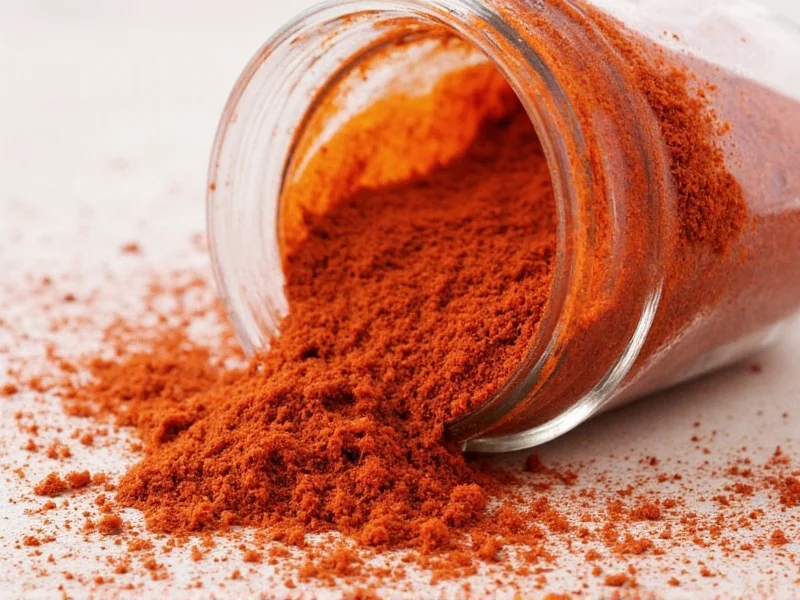
Achiote Paste Replacement Isn’t About Flavor Matching — It’s About Heat Stability and Fat Solubility
Most home cooks treat achiote paste replacement as a color-and-taste swap. That’s why their marinades separate, their stews turn muddy, and their roasted meats lack depth — not because they chose the wrong substitute, but because they misdiagnosed the problem.
Achiote paste isn’t primarily a flavor agent in everyday cooking. Its functional role — binding pigment to fat, resisting thermal breakdown below 350°F (175°C), and dispersing evenly in oil-based preparations — is what makes it irreplaceable *in specific contexts*. Yet most substitution advice starts from aroma or hue, ignoring how the paste behaves when heated, stirred, or stored. In many homes, this leads to reheated leftovers with faded color, unevenly seasoned proteins, or sauces that weep oil after refrigeration. The confusion doesn’t come from ignorance of Latin American cuisine — it comes from over-indexing on sensory similarity while underestimating physical behavior in real kitchen conditions.
The core judgment is narrow and situational: achiote paste replacement only matters when you’re applying heat *in fat*, for more than five minutes, and expect stable color transfer to meat or grain. Outside that boundary — say, in cold salsas, quick stir-fries with high smoke-point oils, or dishes where visual uniformity isn’t expected — any earthy-red substitute works fine. You don’t need annatto seeds soaked in oil if you’re brushing chicken before air-frying at 400°F for 12 minutes. You *do* need something that won’t degrade or bleed when simmered in lard for 45 minutes. This isn’t about authenticity; it’s about physics, not pedigree.
Two common, unproductive fixations dominate home discussions: (1) whether the substitute contains ‘real’ annatto extract, and (2) whether it matches the exact brick-red shade of commercial Mexican pastes. Neither determines outcome. Annatto content varies widely even in authentic pastes — some use 15% ground seed, others 3%. And color fades predictably under heat regardless of source. What matters is whether the pigment stays suspended in fat during cooking, not whether it’s labeled ‘natural’ or matches Pantone 18-1443 TPX. These debates distract from actual performance — like trying to calibrate a thermometer while holding it over steam.
Another ineffective debate centers on ‘freshness’ versus ‘shelf-stable’. People assume homemade achiote paste — made with toasted cumin, garlic, and fresh oregano — is inherently superior. But in practice, most home kitchens lack consistent refrigeration below 38°F (3°C), and freshly blended paste often separates within 48 hours unless emulsified with lecithin or mustard. Meanwhile, store-bought versions with modest preservatives hold up longer *and* disperse more reliably in hot oil. The freshness argument collapses when your fridge runs warm and your cooking schedule is irregular — which is true in most homes.
The real constraint isn’t sourcing or tradition — it’s fat temperature control. Most home stovetops can’t maintain steady 275–325°F (135–165°C) oil baths without fluctuation. Achiote’s pigment breaks down above 350°F, but below 250°F it won’t fully release into fat. So if your pan cycles between smoking and cooling — common on electric ranges or induction units without precise low-heat settings — no substitute will behave consistently. This isn’t a flaw in the ingredient; it’s a mismatch between equipment capability and biochemical requirement. You can’t fix it with better spice blends. You adjust the method — or accept that certain applications simply won’t replicate restaurant results.
Here’s how to decide, case by case:
- Roasting whole chicken with rub: Use paprika + cumin + touch of turmeric — color stabilizes in dry heat, fat renders slowly, no emulsion needed.
- Simmering pork shoulder in lard for carnitas: Skip all powders. Use annatto oil (seeds steeped 20 min in warm lard), strained — only this delivers heat-stable dispersion.
- Quick shrimp sauté with citrus: Substitute smoked paprika alone — flavor carries, color isn’t critical, and high heat means pigment degradation is unavoidable anyway.
- Vegetarian black bean stew: Omit entirely. Achiote’s earthiness clashes with cumin-heavy legume bases; visual contrast matters less here.
- Grilling marinated skirt steak: Use chipotle powder + a pinch of safflower oil — smoky depth replaces earthiness, oil prevents sticking, and grill char masks subtle hue loss.
- Batch-cooking adobo sauce for freezing: Make annatto oil in advance and freeze in ice-cube trays — avoids separation, ensures reproducible dispersion per portion.
| What people fixate on | What it affects | When it matters | When it doesn't |
|---|---|---|---|
| Exact hue match to commercial paste | Visual consistency in plated dish | When serving guests at formal dinner where color signals authenticity | In weeknight family meals, reheated lunches, or dishes with strong competing colors (e.g., tomato-based stews) |
| Presence of 'pure' annatto seed | Fat solubility and thermal stability | Dishes cooked >30 min in lard or pork fat at steady 275–325°F | Cold marinades, quick sautés, or recipes using neutral oils like canola or grapeseed |
| Garlic/onion ratio in homemade version | Flavor balance in final dish | When paste is used raw in salsas or uncooked dressings | In long-simmered applications — aromatics cook off, leaving only pigment and base oil behavior |
| Organic certification | Shelf life and emulsion stability | In humid climates or homes without consistent refrigeration | In air-conditioned kitchens with reliable 36–38°F fridges and usage within 5 days |
Quick verdicts for home cooks
- If you’re air-frying chicken wings and want reddish color, smoked paprika works — no annatto needed.
- For slow-cooked carnitas in lard, skip all powders and use infused annatto oil instead.
- When making adobo sauce to freeze, pre-infuse and freeze the oil — not the paste.
- If your stove can’t hold low heat steadily, avoid recipes requiring prolonged gentle infusion.
- For vegetarian stews, omit achiote entirely — its earthiness competes, not complements.
- When grilling thin cuts over high flame, prioritize smoke and sear over pigment retention.




 浙公网安备
33010002000092号
浙公网安备
33010002000092号 浙B2-20120091-4