
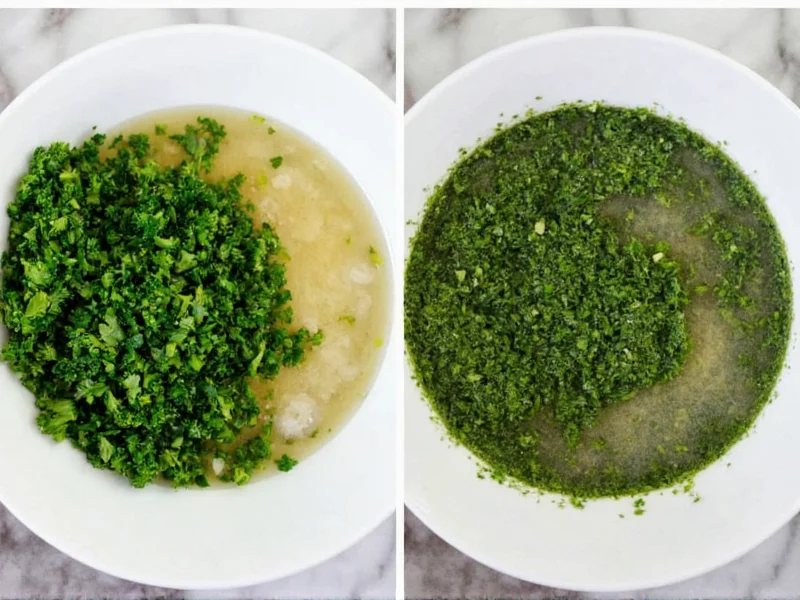
Understanding herb conversions is essential for consistent cooking results. When a recipe calls for fresh parsley but you only have dried, or vice versa, knowing the proper substitution ratio prevents flavor imbalances. The standard culinary guideline states that dried herbs generally have triple the potency of fresh herbs due to the removal of water content during the drying process.
Why the 3:1 Conversion Ratio Works
Herbs lose approximately 75-85% of their weight when dried, concentrating their essential oils and flavor compounds. Fresh parsley contains significant water content that doesn't contribute to flavor, while dried parsley has had this moisture removed, leaving behind concentrated flavor particles. This scientific principle behind herb dehydration explains why you need less dried parsley to achieve equivalent flavor intensity.
Complete Parsley Measurement Conversion Chart
| Fresh Parsley | Dried Parsley | Equivalent Weight |
|---|---|---|
| 1 cup | 1/3 cup | 20g fresh = 6g dried |
| 1/2 cup | 2 tablespoons | 10g fresh = 3g dried |
| 1/3 cup | 1 tablespoon | 6.7g fresh = 2g dried |
| 1/4 cup | 2.5 teaspoons | 5g fresh = 1.5g dried |
| 2 tablespoons | 2 teaspoons | 3g fresh = 1g dried |
Practical Substitution Guidelines
When converting between fresh and dried parsley in recipes, consider these professional kitchen tips:
- Timing matters: Add dried herbs earlier in cooking to allow time for rehydration and flavor release, while fresh herbs should be added near the end to preserve their delicate flavor
- Flavor profile differences: Dried parsley has a more earthy, concentrated flavor compared to fresh parsley's bright, grassy notes
- Recipe type considerations: Use fresh parsley for garnishes and cold dishes, dried for long-simmering sauces and stews
- Quality impact: High-quality dried parsley maintains better flavor than lower-grade products, affecting your conversion accuracy
Common Conversion Mistakes to Avoid
Many home cooks make these critical errors when substituting parsley forms:
- Using equal measurements (1:1 ratio) instead of the proper 3:1 conversion
- Not adjusting for recipe cooking time (dried herbs need longer to infuse)
- Measuring dried herbs by volume without proper spooning and leveling
- Using old, stale dried herbs that have lost potency, requiring adjustment
When Fresh and Dried Parsley Aren't Interchangeable
While conversions work for most applications, certain dishes require specific parsley forms for authentic results. Garnishes, tabbouleh, chimichurri, and fresh herb salads demand fresh parsley for proper texture and bright flavor. Conversely, dried parsley works better in spice blends, dry rubs, and long-cooked dishes where fresh herbs would become mushy. Understanding these distinctions ensures your 1 3 cup fresh parsley to dried conversion serves your culinary purpose appropriately.
Measuring Techniques for Accuracy
Precise measurement significantly impacts your conversion success. For dried herbs, spoon the herb into your measuring spoon rather than scooping directly from the container to avoid compaction. Level off with a straight edge for accuracy. When measuring fresh herbs, lightly pack the cup without compressing the leaves. Remember that how much dried parsley equals 1/3 cup fresh depends on proper measurement technique as much as the conversion ratio itself.
Storing Herbs for Maximum Potency
Proper storage affects your conversion accuracy. Fresh parsley lasts 1-2 weeks when stored upright in water (like flowers) in the refrigerator with a plastic bag loosely covering the leaves. Dried parsley maintains best flavor for 6-12 months when stored in airtight containers away from light and heat. Older dried herbs lose potency, potentially requiring slight measurement adjustments beyond the standard fresh parsley to dried parsley ratio.
Evolution of Herb Drying Techniques
The reliability of today's 3:1 conversion ratio stems from centuries of drying method refinement. Historical context reveals why modern ratios are more precise:
- Pre-Industrial Era (Before 1900): Sun and air drying produced inconsistent results with potency ratios varying from 2:1 to 5:1 due to weather dependency and lack of moisture control
- Early Industrialization (1900-1940): Introduction of low-temperature ovens standardized drying temperatures (95-115°F), establishing consistent 3:1 potency ratios for commercial products
- Modern Standardization (1940-Present): Precision-controlled dehydration at 8-12% final moisture content (per USDA Agricultural Research Service protocols) cemented the 3:1 ratio as the culinary standard
This evolution explains why historical cookbooks used variable substitution guidelines, while contemporary recipes rely on the consistent 3:1 ratio (National Center for Home Food Preservation, Food Preservation History Timeline).
Contextual Factors Affecting Conversion Accuracy
While the 3:1 ratio serves as a reliable baseline, these evidence-based conditions require adjustments for optimal results:
- Home-Dried vs. Commercially Processed: Home-dried herbs typically retain 15-20% more moisture than commercial products. Use a 4:1 ratio (1/4 cup fresh = 1 tablespoon dried) for home-dried parsley to compensate for reduced potency (University of Georgia Cooperative Extension, Drying Herbs Publication C1015)
- Storage Duration Impact: Dried herbs lose 15-20% volatile compounds annually under standard storage. For herbs stored beyond 12 months, increase用量 by 25-50% to achieve equivalent flavor intensity (USDA Agricultural Research Service, Herb and Spice Composition Database)
- Humidity Exposure Threshold: In environments exceeding 60% relative humidity, dried herbs absorb moisture within 4 weeks, reducing potency by 30%. Store in vacuum-sealed containers with desiccants when humidity exceeds this threshold (National Center for Home Food Preservation, Dry Herbs and Spices Storage Guidelines)




 浙公网安备
33010002000092号
浙公网安备
33010002000092号 浙B2-20120091-4