
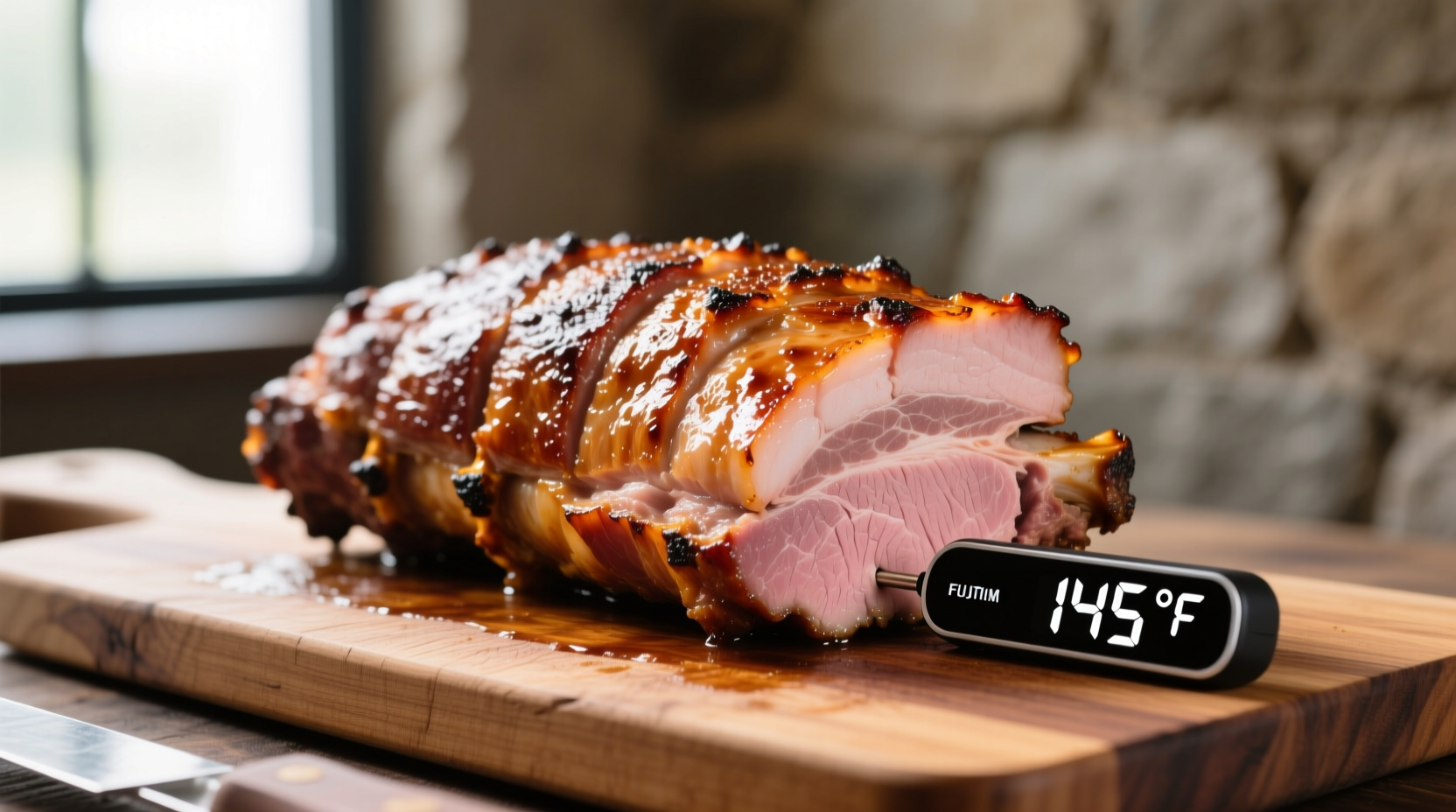
Look, I've cooked hundreds of pork loins over 20 years—from backyard grills to restaurant kitchens. And I'll be straight with you: that "cook until no pink" myth? Total nonsense. It's why so many home cooks end up with dry, sawdust-textured pork. The real game-changer? Understanding carryover cooking. Let's fix this once and for all.
Why 145°F Isn't Just Safe—It's Scientifically Necessary
Remember when Grandma swore pork needed 160°F? Times changed. The USDA updated guidelines in 2011 after confirming trichinosis spores die at 138°F when held briefly. Seriously—Thermoworks' lab tests prove it. But here's what nobody tells you: pulling at 145°F on the grill means it'll hit 155°F+ by dinner time. Disaster.
You gotta pull early. For standard boneless loin (that lean, tender cut), yank it at 135-140°F. Trust the rest time—that carryover heat does the real work. Marbled cuts like rib-end loin? You can push to 145°F pull temp since fat renders better. But boneless? Stick to the 135-140°F sweet spot.
| Cut Type | Pull Temp | Final Temp After Rest | Texture Result |
|---|---|---|---|
| Boneless loin (lean) | 135-140°F | 145-150°F | Juicy, slight pink center |
| Bone-in loin (rib-end) | 140-145°F | 150-155°F | Firm but moist, fat rendered |
| Overcooked (common mistake!) | 150°F+ | 160°F+ | Dry, crumbly, flavorless |
When to Break the Rules (and When Not To)
Real talk: I've seen folks try "low and slow" on pork loin like it's a brisket. Bad idea. That lean muscle has zero connective tissue to break down—it just dries out. Save the 225°F smoker for pork shoulder.
DO break the temp rule if:
- You're sous vide cooking (hold 140°F for 1.5+ hours for pasteurization)
- Using a cured cut like coppa (cook to 150°F for texture)
NEVER break it if:
- Feeding immunocompromised people (stick to 145°F minimum)
- Using ground pork (always 160°F—surface bacteria mixed throughout)
Thermometer Tricks Butchers Won't Tell You
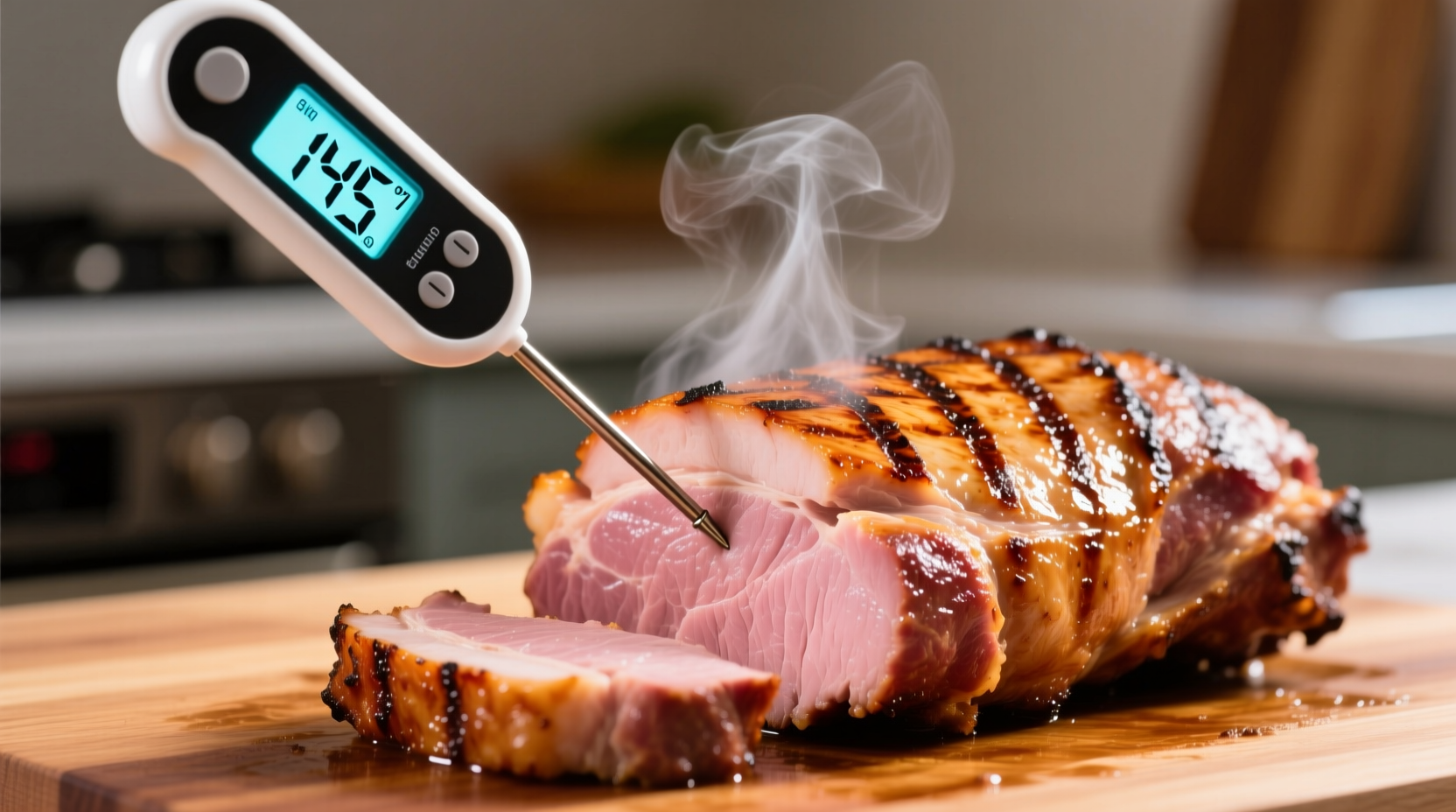
That $10 hardware store thermometer? Useless. I've tested dozens. You need a leave-in probe with ±0.5°F accuracy. Why? Pork loin temps swing 5°F in 90 seconds. Here's my field test:
- Insert probe horizontally through thickest part (not touching bone!)
- Set alarm for 137°F—gives buffer for carryover
- Rest on a wire rack (not cutting board!) to avoid steam-cooking
Pro tip: Resting time matters more than you think. 3 minutes for chops, 10+ for roasts. That's why Coleman Natural confirms 145-150°F as ideal—the rest time finishes the job.
Why Your Pork Loin Is Still Dry (Spoiler: It's Not the Temp)
"But I hit 145°F and it's dry!" Classic. Nine times out of ten, it's one of these:
- Slicing too soon: Cutting before 5-minute rest = juices on the board, not in your mouth
- Wrong cut: "Loin" gets mislabeled—ask for center-cut loin roast (not tenderloin!)
- Thermometer error: Cheap probes read 5-10°F high. Calibrate in ice water first
And heads-up: that "pink = unsafe" panic? Gone since 2011. At 145°F, it's safe and pink. If your guests freak out, slice and sprinkle smoked paprika—it fools the eye.
Everything You Need to Know
Yes—100% safe and normal. The USDA confirms color isn't a doneness indicator. At 145°F with 3-minute rest, trichinosis is eliminated (killed at 138°F). That slight pink center means you didn't overcook it.
Almost always a rest time or slicing error. Cutting too soon releases juices—wait 5+ minutes. Also, many thermometers read high; calibrate yours. If using bone-in, ensure the probe isn't touching bone (reads falsely high).
You can, but it'll be dry. Lean pork loin has minimal fat—over 150°F, proteins squeeze out moisture permanently. If guests insist, serve with pan sauce or apple chutney to compensate. Better: explain the 145°F safety science upfront.
3-4 days max at 40°F or below. Slice before storing—it cools faster, reducing bacterial growth windows. Reheat only once to 165°F. Never leave cooked pork at room temperature over 2 hours (1 hour if >90°F).




 浙公网安备
33010002000092号
 浙B2-20120091-4