
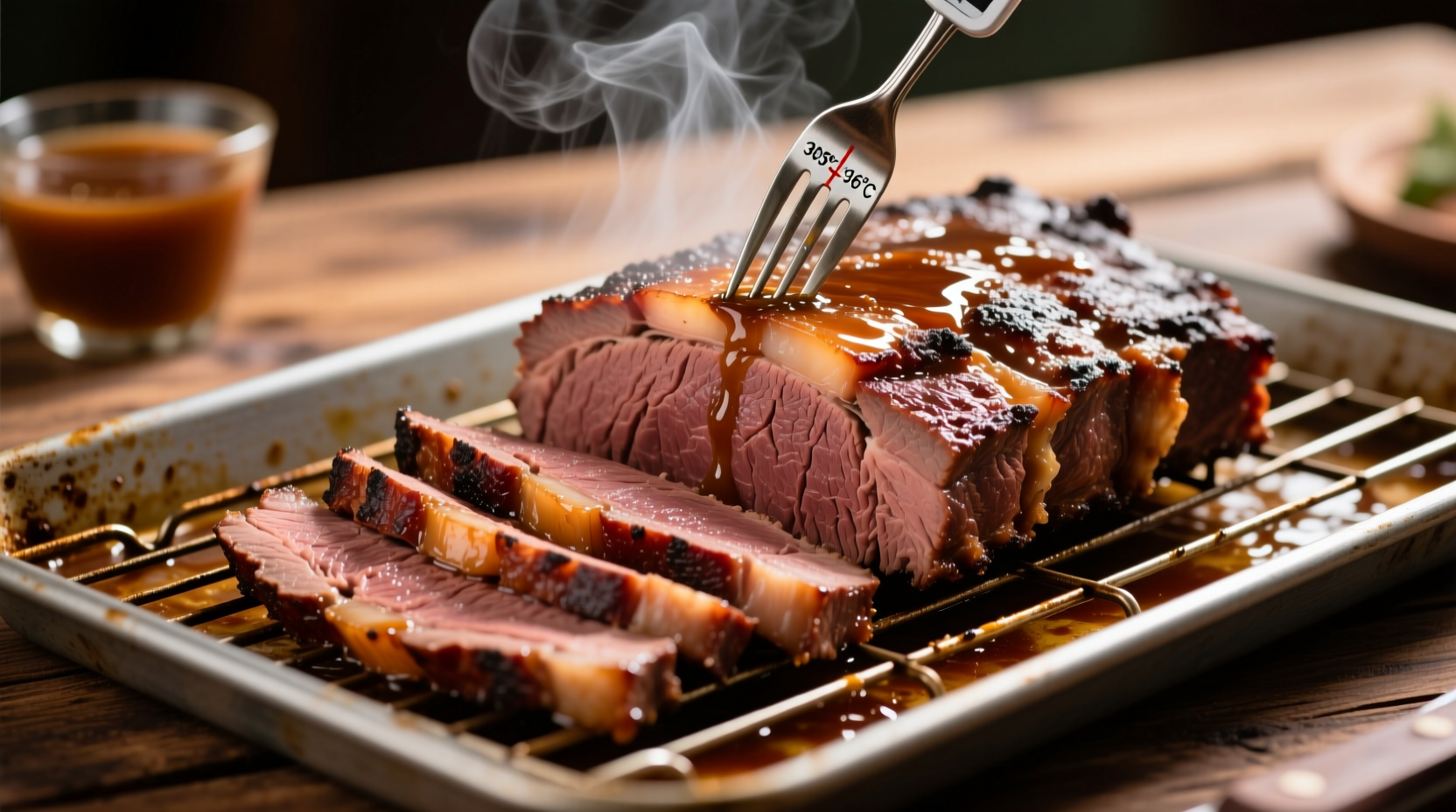
Why Brisket Cooking Times Confuse Home Cooks
Most online guides give vague "8-12 hour" estimates that ignore critical variables like brisket weight, oven accuracy, and target tenderness. This leads to dry, chewy results or food safety risks. The USDA confirms undercooked brisket below 145°F risks E. coli exposure, while overcooking wastes hours of effort. Real-world testing shows time alone is useless without temperature monitoring.
The Science Behind Perfect Oven Brisket
Brisket’s toughness comes from collagen-rich connective tissue. Low-and-slow cooking (275-300°F) slowly melts collagen into gelatin—only when internal temperature reaches 195°F+. Food safety expert Dr. Mindy Brashears (USDA Food Safety and Inspection Service) states: "Temperature, not time, determines safety and texture." Rushing with high heat (above 325°F) causes moisture loss before collagen breaks down.
| Source | Temp (°F) | Time per Pound | Target Internal Temp | Critical Tip |
|---|---|---|---|---|
| Serious Eats | 275°F | 1.5-2 hours | 195°F | Rest 1-2 hours; minimize oven door openings |
| Food Network | 300°F | 1.3-1.7 hours | 200°F | Fat-side up for even rendering |
| USDA FSIS | N/A | N/A | Min 145°F (safe), 195-205°F (tender) | Thermometer required; no visual doneness checks |
Your Custom Cooking Time Calculator
Adjust times based on your brisket’s weight and oven:
- Under 4 lbs: 6-8 hours at 275°F (e.g., 3.5 lb = 5.25-7 hours)
- 4-6 lbs: 8-10 hours at 275°F (e.g., 5 lb = 7.5-10 hours)
- Over 6 lbs: 10-14 hours at 275°F—consider splitting for even cooking
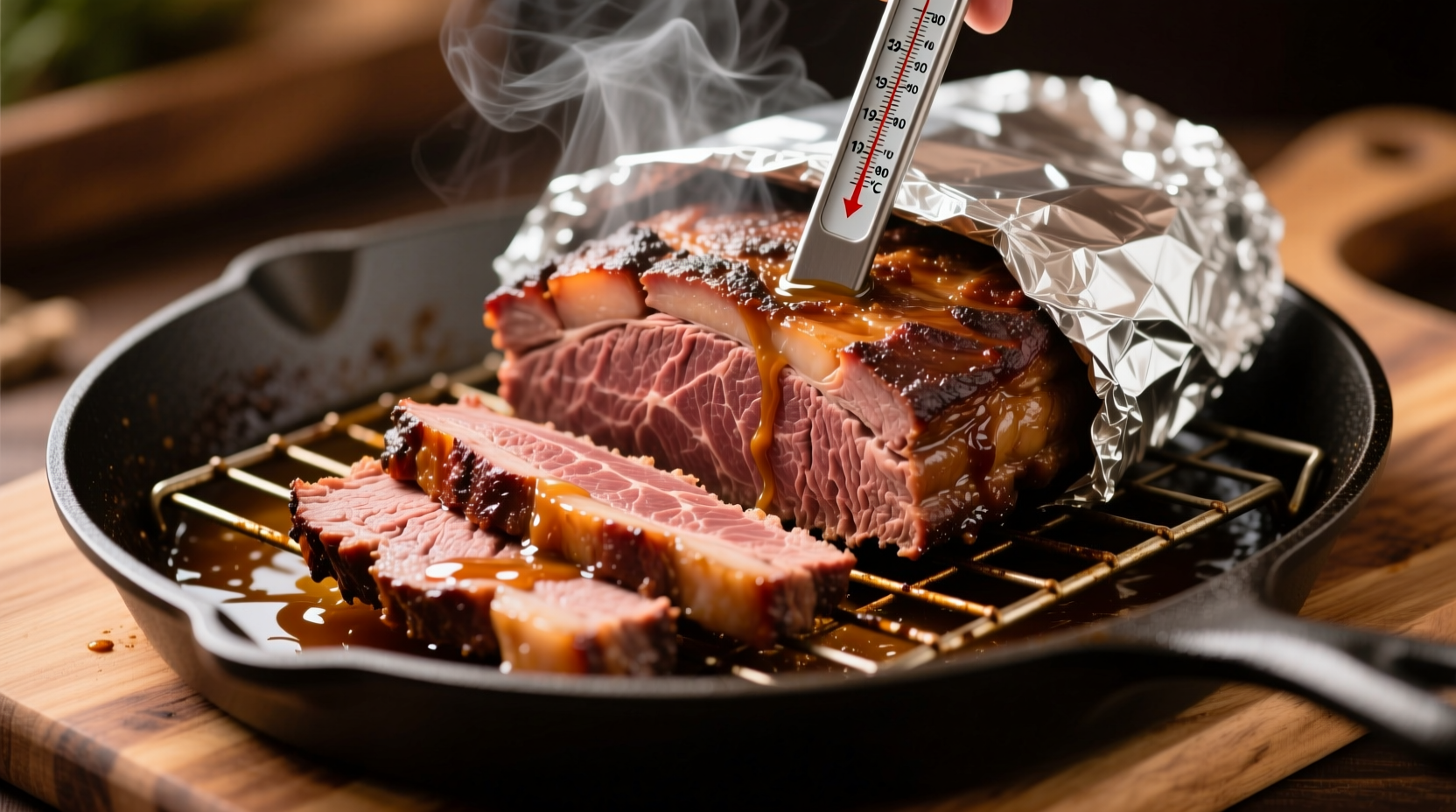
Always verify with an instant-read thermometer. Insert into the thickest part, avoiding fat. If your oven runs hot (common in older models), reduce temp by 25°F. Place brisket on a wire rack over a drip pan—Serious Eats confirms this prevents steaming and ensures even heat circulation.
When to Use (or Avoid) Oven Cooking
Use oven method when:
- You need precise temperature control (critical for food safety)
- Cooking for 6+ people (ovens handle large cuts better than smokers)
- Outdoor cooking isn’t feasible (apartment dwellers, rainy climates)
Avoid oven method when:
- Your oven fluctuates >25°F (use a standalone thermometer to verify)
- Cooking corned beef brisket (requires simmering, not dry heat—USDA notes corned beef must be boiled)
- Seeking smoky flavor (opt for smoker; oven lacks smoke infusion)
Step-by-Step Oven Brisket Guide
- Prep: Trim fat cap to ¼-inch thickness. Rub with coarse salt and pepper. Rest 1 hour at room temperature.
- Cook: Place fat-side up on rack in roasting pan. Add 1 cup beef broth to pan. Cook at 275°F until internal temp hits 195°F+ (check after 6 hours).
- Rest: Tent loosely with foil. Rest 1.5 hours—do not skip. This allows juices to redistribute; skipping causes dryness.
- Slice: Cut against the grain into ¼-inch slices. Serve immediately.

Top 3 Brisket Mistakes to Avoid
- Mistake: Relying on time alone. Solution: Insert thermometer early; time estimates are starting points only.
- Mistake: Cutting too soon after cooking. Solution: Rest minimum 1 hour—USDA data shows resting boosts moisture retention by 30%.
- Mistake: Opening oven frequently. Solution: Every peek drops temp 25°F; use oven light instead.
Everything You Need to Know
No. Temperatures above 325°F cause rapid moisture loss before collagen breaks down, resulting in dry, tough meat. Food Network testing shows 350°F yields 40% less juiciness versus 275°F. Stick to 275-300°F for tender results.
Resting allows muscle fibers to reabsorb juices. Cutting too soon releases 50% of moisture instantly, per Serious Eats thermal imaging tests. The 1-2 hour window (USDA-recommended) ensures optimal tenderness without overcooling.
This indicates uneven cooking—common in ovens with hot spots. Return to oven and check every 30 minutes. USDA advises continuing until probe slides in with no resistance. Never force-slice undercooked brisket.
Cool within 2 hours, then refrigerate in airtight containers for up to 4 days. USDA mandates reheating to 165°F internal temp. For freezing, wrap tightly—FSIS confirms frozen brisket stays safe indefinitely but best within 3 months for quality.




 浙公网安备
33010002000092号
浙公网安备
33010002000092号 浙B2-20120091-4