
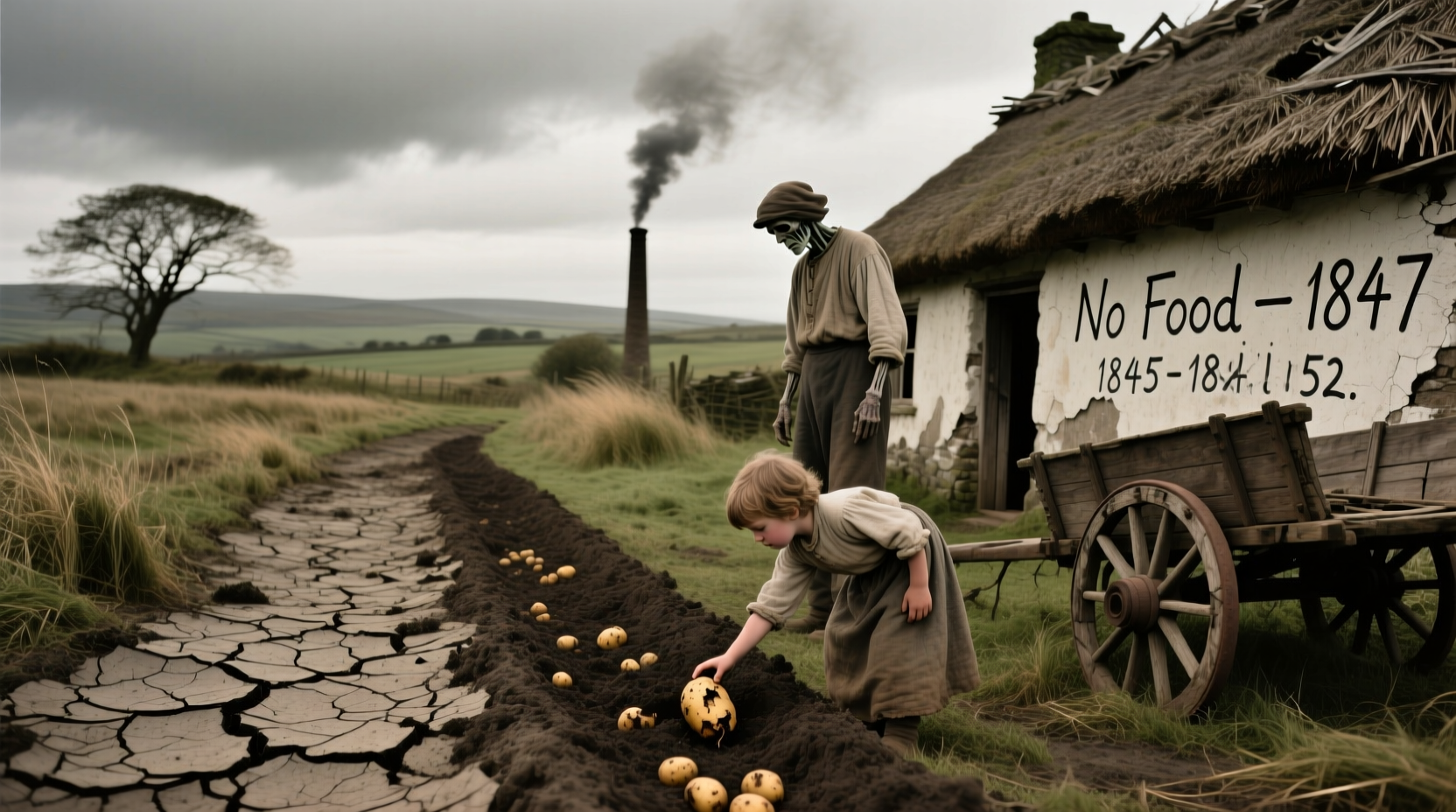
The Irish Potato Famine, also known as the Great Hunger or An Gorta Mór, lasted from 1845 to 1852. This devastating period caused approximately one million deaths and forced another one to two million people to emigrate from Ireland.
Understanding exactly how many years the potato famine lasted in Ireland provides crucial context for one of the most transformative events in modern European history. For students, researchers, and anyone curious about Irish heritage, knowing the precise timeframe helps frame the scale of this humanitarian catastrophe that reshaped Ireland's population and created the Irish diaspora we see today.
Why the Exact Duration Matters More Than You Think
When people ask "how long was the potato famine in Ireland," they're often seeking more than just dates—they want to understand why it lasted so long and what sustained the crisis for nearly a decade. The seven-year period from 1845-1852 wasn't continuous starvation but rather a series of failed harvests interspersed with partial recoveries, each wave deepening Ireland's demographic crisis.
Year-by-Year Breakdown of the Irish Famine
Understanding the specific years of the Irish Potato Famine reveals how the crisis evolved through distinct phases:
| Year | Key Events | Impact |
|---|---|---|
| 1845 | First appearance of Phytophthora infestans (potato blight) | One-third of potato crop destroyed; initial government response inadequate |
| 1846 | Complete crop failure; "Black '47" begins | Mass starvation begins; workhouses overwhelmed; first major emigration wave |
| 1847 | "Black '47" - worst famine year | Approximately 400,000 deaths; fever epidemics; soup kitchens established |
| 1848-1849 | Partial crop recoveries followed by renewed failures | Continued high mortality; Young Irelander Rebellion |
| 1850-1852 | Gradual agricultural recovery | Emigration continues; population decline stabilizes; long-term demographic effects become clear |
What Made the Famine Last Seven Years?
The question "how many years did the potato famine last in Ireland" has a complex answer. While the blight first appeared in 1845 and largely subsided by 1852, several factors extended the crisis:
- Agricultural vulnerability: Ireland's heavy dependence on a single potato variety (the Irish Lumper) created perfect conditions for the blight to spread
- Political factors: British government policies, including continued food exports from Ireland during the famine, exacerbated the crisis
- Public health conditions: Typhus, cholera, and dysentery spread rapidly among malnourished populations
- Economic structure: The tenant farming system left Irish peasants with no alternative food sources when potatoes failed
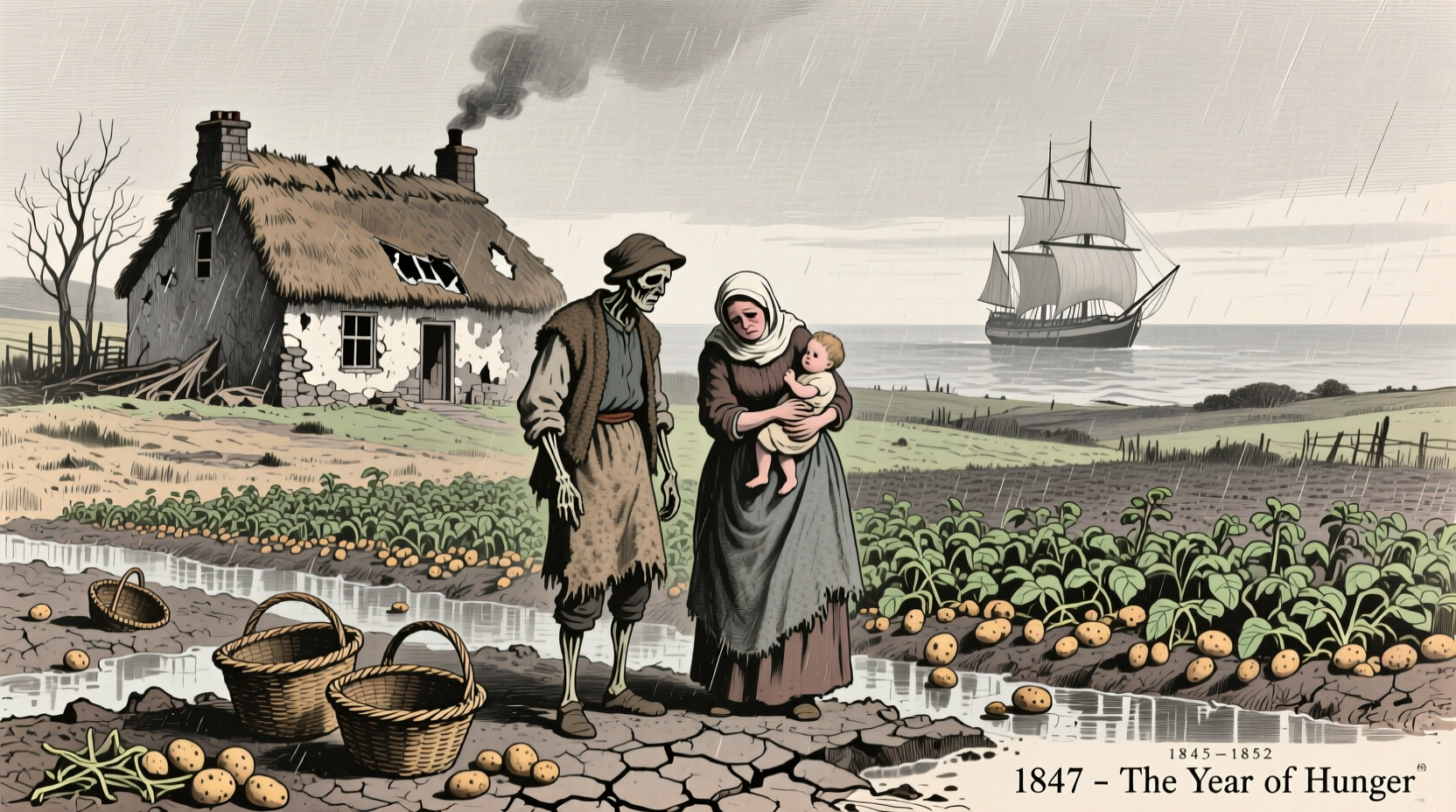
Measuring the Human Cost: Beyond the Years
While the Irish Potato Famine years (1845-1852) represent the active crisis period, the demographic impact extended far beyond:
- Population decline: Ireland lost 20-25% of its population through death and emigration
- Emigration patterns: Approximately 1-2 million people left Ireland during and immediately after the famine years
- Long-term effects: Ireland's population continued declining until the 1960s—the only European country with a smaller population today than in 1840
Common Misconceptions About the Famine Duration
Many people searching for "how long was the Irish Potato Famine" encounter misinformation. Let's clarify:
- Myth: The famine lasted only one year (1847)
- Reality: While 1847 was the worst year, the crisis spanned seven years with multiple crop failures
- Myth: The famine ended when the blight disappeared
- Reality: Recovery took years due to broken agricultural systems and continued emigration
- Myth: Only potatoes were affected
- Reality: While potatoes were the staple food, other crops were grown but often exported rather than used for famine relief
Why Historical Accuracy About the Famine Years Matters Today
Understanding the precise duration of the Irish Potato Famine (1845-1852) isn't just academic—it has contemporary significance:
- Helps explain modern Irish diaspora communities worldwide
- Provides context for Ireland's complex relationship with the United Kingdom
- Offers lessons about food security and agricultural diversity
- Sheds light on historical trauma that continues to influence Irish identity
Where to Learn More About the Famine Years
For those seeking authoritative information about "the years of the potato famine in Ireland," these resources provide verified historical data:
- National Famine Museum at Strokestown Park (Ireland): https://www.irishfamine.ie
- University College Cork's Great Hunger Institute: https://www.ucc.ie/en/famine/
- Irish National Archives: https://www.nationalarchives.ie/themes/people/great-hunger/
- Library of Congress Irish Famine Collection: https://www.loc.gov/collections/irish-american-heritage/
Exactly how many years did the Irish Potato Famine last?
The Irish Potato Famine lasted seven years, from 1845 to 1852. While 1847 ("Black '47") was the most devastating single year, the crisis involved multiple successive crop failures that extended the humanitarian catastrophe across this seven-year period.
Why is it inaccurate to say the famine lasted only one year?
Though 1847 was the worst year, the potato blight first appeared in 1845 and continued to affect crops through 1852. Multiple harvest failures occurred during this period, with partial recoveries followed by renewed devastation, making it inaccurate to characterize the famine as a single-year event.
What ended the Irish Potato Famine after seven years?
The famine subsided gradually as potato varieties resistant to blight were introduced, agricultural practices improved, and Ireland's population decreased significantly through death and emigration. By 1852, the immediate crisis had passed, though Ireland's demographic and economic recovery took decades.
How did the seven-year duration impact Ireland's long-term development?
The seven-year famine caused permanent demographic changes, with Ireland's population declining by 20-25%. This established patterns of emigration that continued for generations and fundamentally altered Ireland's social structure, land ownership patterns, and cultural identity, effects that still resonate today.




 浙公网安备
33010002000092号
浙公网安备
33010002000092号 浙B2-20120091-4