
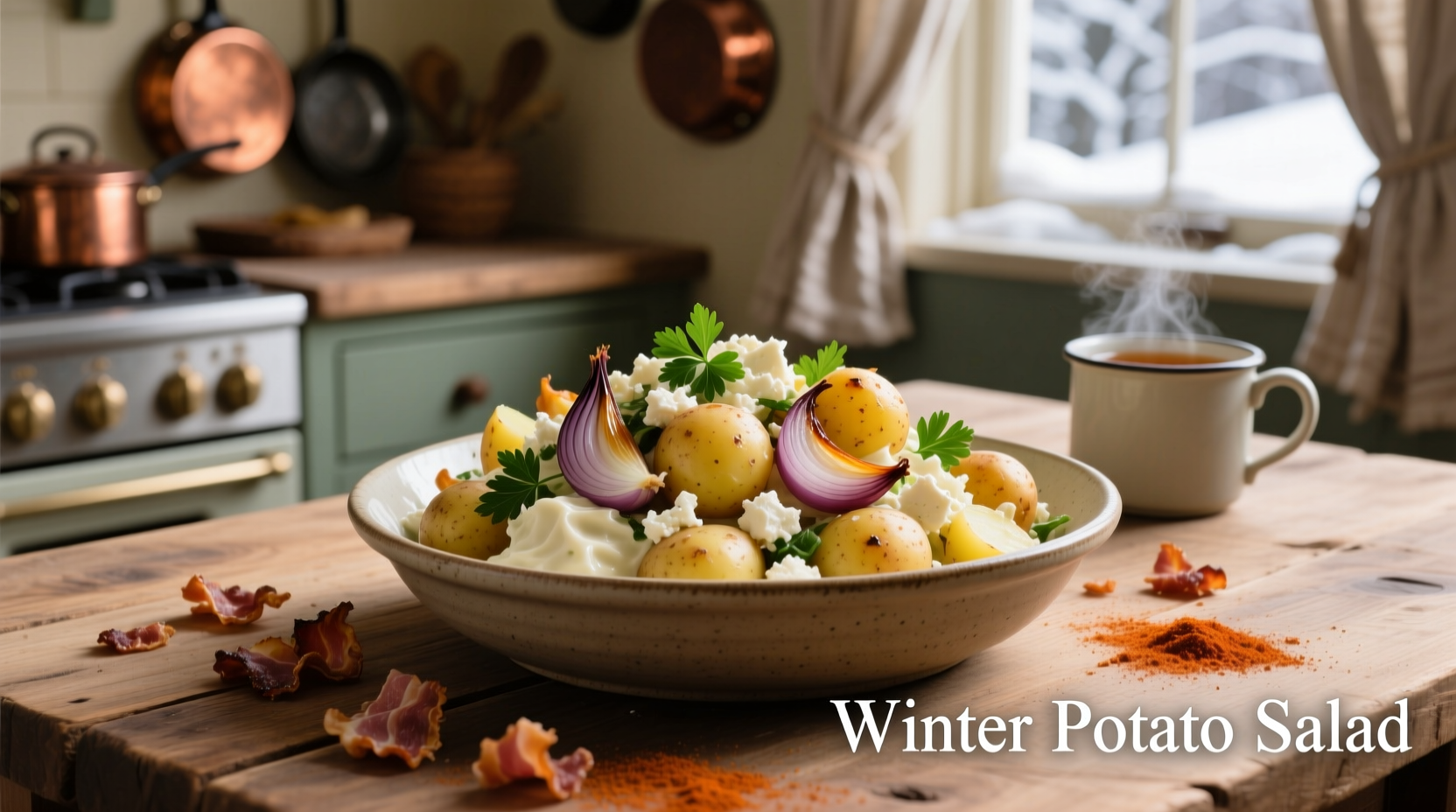
Winter potato salad succeeds where summer versions fail by incorporating heartier ingredients, warming spices, and strategic preparation methods that maintain texture and flavor in cold temperatures. Unlike traditional versions that turn mushy and bland when served chilled during colder months, the right winter potato salad balances seasonal produce with proper starch management and temperature-aware dressing techniques.
Why Winter Demands a Different Potato Salad Approach
Regular potato salad often disappoints during colder months because standard preparation methods don't account for winter's unique challenges. When temperatures drop below 60°F (15°C), our taste buds become less sensitive to subtle flavors, requiring bolder seasoning. Additionally, cold air causes traditional mayonnaise-based dressings to seize up and separate, while room-temperature potatoes absorb dressing differently than warm ones.
| Seasonal Factor | Summer Potato Salad | Winter Potato Salad |
|---|---|---|
| Temperature Sensitivity | Taste buds more sensitive | Requires 20-30% more seasoning |
| Dressing Behavior | Mayo stays emulsified | Needs vinegar base with mustard stabilizer |
| Potato Texture | Waxy potatoes preferred | Starchy potatoes hold shape better when cold |
| Serving Environment | Outdoor gatherings | Indoor holiday meals |
According to USDA food science research, starch retrogradation occurs more rapidly in cold environments, causing potatoes to expel moisture and become waterlogged. This explains why summer potato salads often turn soggy when served during winter gatherings. The solution lies in both ingredient selection and preparation timing.
Building Your Winter Potato Salad Foundation
The foundation of exceptional winter potato salad starts with proper potato selection and cooking technique. While summer versions typically use waxy potatoes like red bliss, winter salads benefit from starchy varieties such as Russets or Yukon Golds that maintain structure when chilled. The National Potato Council confirms these varieties contain 20-22% starch content compared to 16-18% in waxy potatoes, creating a firmer texture that withstands cold temperatures.
Cook potatoes until just tender—about 12-15 minutes for 1-inch cubes—then immediately toss with 2 tablespoons of apple cider vinegar while still warm. This critical step creates a flavor barrier that prevents dressing absorption issues later. Allow potatoes to cool completely before adding dressing, as warm potatoes will cause mayonnaise to break down.
7 Seasonal Variations for Winter Gatherings
Root Vegetable Medley Potato Salad
Combine roasted parsnips, carrots, and turnips with Yukon Gold potatoes for earthy depth. Toss with a dressing of Dijon mustard, maple syrup, and walnut oil. This variation works particularly well for Thanksgiving gatherings, as the natural sweetness complements turkey without overwhelming other dishes.
Apple & Walnut Winter Potato Salad
Fuji or Honeycrisp apples add crisp sweetness that balances the starchiness of winter potatoes. Toss diced apples with lemon juice immediately after cutting to prevent browning. Add toasted walnuts for crunch and a dressing featuring cider vinegar and whole grain mustard. Food historians note that apple-potato combinations trace back to 19th century New England harvest traditions, making this variation historically authentic for winter celebrations.
Roasted Beet & Horseradish Potato Salad
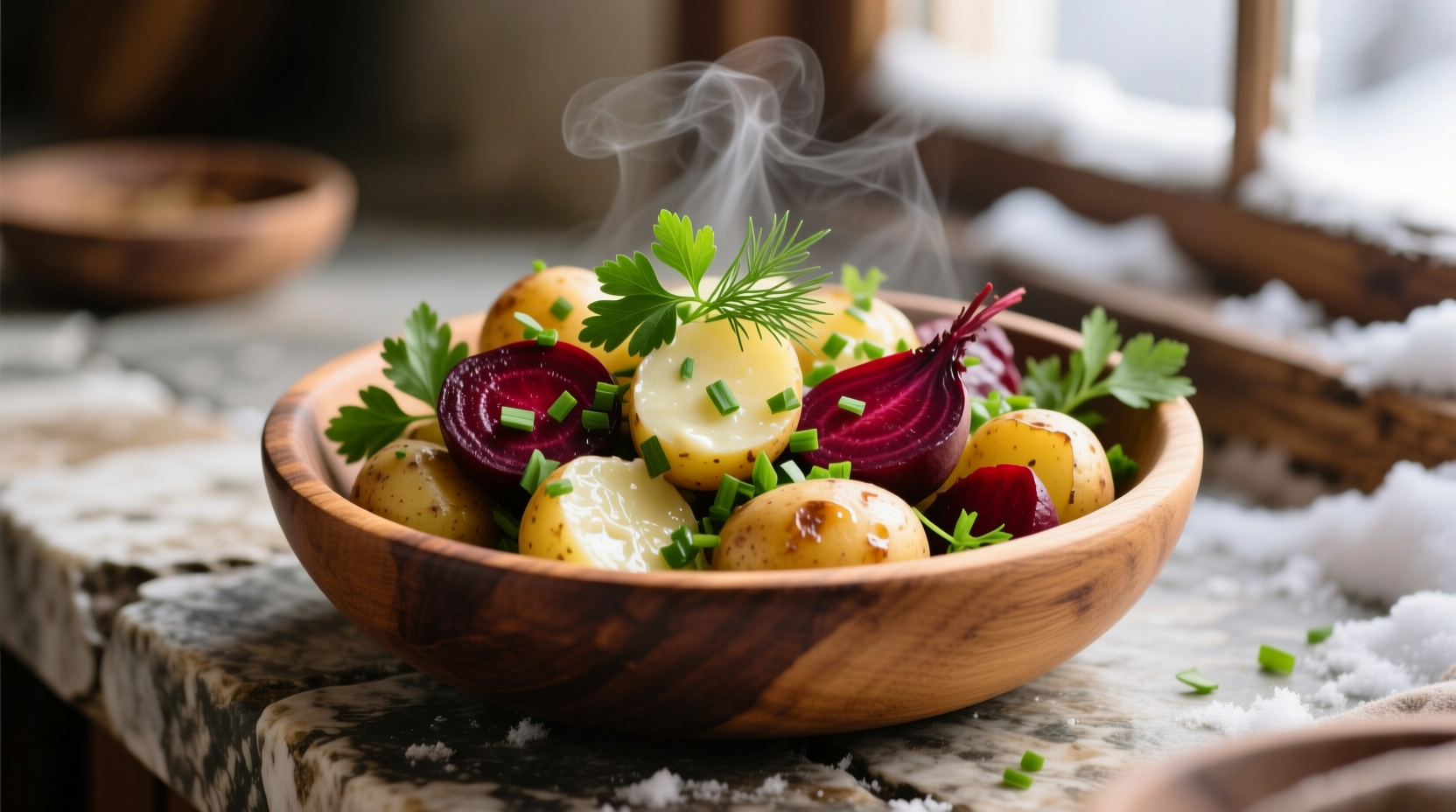
This vibrant variation incorporates roasted beets for natural sweetness and color. The secret is roasting beets separately before combining to prevent color bleeding. Add freshly grated horseradish (not prepared) to the dressing for a warming kick that cuts through winter's heaviness. This version performs best when prepared 24 hours ahead, allowing flavors to meld while maintaining distinct textures.
Brussels Sprouts & Bacon Winter Salad
Shaved Brussels sprouts add welcome crunch and nutritional value often missing in traditional potato salads. Blanch sprouts for 90 seconds in salted water, then shock in ice water to preserve crispness. Pair with crispy bacon and a sherry vinaigrette for a sophisticated holiday side that bridges the gap between salad and comfort food.
Citrus & Fennel Winter Potato Salad
Blood oranges and cara cara oranges provide bright acidity that cuts through winter's heaviness. Thinly sliced fennel adds anise notes that complement citrus beautifully. Toss with a dressing of orange zest, lemon juice, and olive oil. This variation shines during January gatherings when citrus reaches peak season, according to USDA seasonal produce guides.
Cranberry & Pecan Holiday Potato Salad
Dried cranberries soaked in orange juice plump up beautifully in dressing, while toasted pecans add rich texture. Use a dressing with honey and apple cider vinegar to balance tartness. This variation works specifically for Thanksgiving through New Year's celebrations but becomes cloying outside this window—demonstrating important context boundaries for seasonal cooking.
Smoked Fish Winter Potato Salad
For Scandinavian-inspired celebrations, fold in flaked smoked trout or salmon with capers and dill. Use a lighter dressing of crème fraîche and lemon to complement the fish without overwhelming it. This version requires same-day preparation as the fish can become overly salty if marinated too long.
Winter-Specific Preparation Techniques
Timing is everything with winter potato salad. Unlike summer versions that benefit from immediate serving, winter salads require strategic preparation windows:
- 48 hours ahead: Roast root vegetables and prepare vinaigrettes
- 24 hours ahead: Cook potatoes and combine with acidic components
- 4 hours ahead: Add final dressing and delicate ingredients
This staged approach prevents sogginess while allowing flavors to develop properly. When serving, bring salad to 55-60°F (13-16°C)—just above refrigerator temperature—to maximize flavor perception. Cold foods served below 50°F (10°C) experience significant flavor suppression, according to USDA flavor research.
Troubleshooting Common Winter Potato Salad Issues
Problem: Dressing separates when served cold
Solution: Add 1 teaspoon of dry mustard to your dressing—it contains compounds that stabilize emulsions in cold temperatures
Problem: Salad tastes bland despite proper seasoning
Solution: Increase acid components by 25% and add warming spices like smoked paprika or celery seed that remain perceptible at lower temperatures
Problem: Potatoes become waterlogged after refrigeration
Solution: Toss cooked potatoes with vinegar immediately after cooking, then spread in a single layer on a baking sheet to cool completely before refrigerating




 浙公网安备
33010002000092号
浙公网安备
33010002000092号 浙B2-20120091-4