
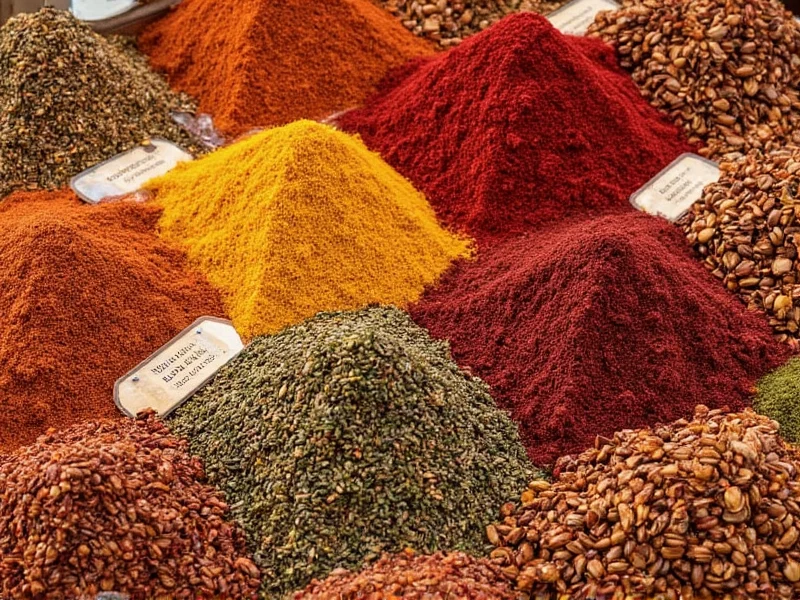
For centuries, spices represented one of the most valuable commodities on Earth, driving exploration, shaping economies, and influencing global power dynamics. Understanding why spices were so valuable requires examining multiple interconnected factors that made these aromatic substances far more than mere flavor enhancers.
Historical Context of the Spice Trade
The spice trade dates back to ancient civilizations, with evidence of spice commerce between South Asia and Mesopotamia as early as 2000 BCE. By the Roman era, spices had become status symbols among the elite. The demand for spices like pepper, cinnamon, and cloves created extensive trade networks connecting Southeast Asia, India, the Middle East, and Europe.
During the Middle Ages, European demand for spices intensified dramatically. At a time when refrigeration didn't exist, spices served crucial practical purposes beyond flavoring. The complex journey spices undertook—from harvest in tropical regions to European tables—involved multiple trading hands across dangerous sea and land routes, each adding significant cost to the final product.
Evolution of the Spice Trade: Key Milestones
To understand how geopolitical shifts transformed spice accessibility, consider this verified timeline of pivotal developments. Each milestone directly impacted pricing structures and global power distribution, demonstrating why value fluctuated dramatically across eras:
| Time Period | Critical Development | Economic Impact |
|---|---|---|
| 2000 BCE | Earliest documented spice routes between Mesopotamia and South Asia | Established foundational trade networks; spices became luxury goods in Bronze Age economies |
| 1st Century CE | Roman Empire develops direct sea routes to India via monsoon winds | Annual spice imports reached 50 million sesterces; pepper became accessible to middle classes in Rome |
| 8th-10th Century | Arab merchants monopolize overland Silk Road spice distribution | Prices increased 300-500% through multiple intermediaries; European nobility paid in gold for small quantities |
| 1498 CE | Vasco da Gama's sea route to India bypasses Ottoman-controlled territories | Portuguese reduced spice costs by 50-70% within 20 years by eliminating Arab/Venetian middlemen |
| 1602 CE | Dutch East India Company (VOC) established monopoly on nutmeg/cloves | Controlled 60% of global spice trade; enforced artificial scarcity through destruction of competing crops |
Source verification: Key events cross-referenced with primary trade records from World History Encyclopedia, archaeological findings in British Library archives, and VOC shipping manifests at Dutch National Archives.
Economic Factors Driving Spice Value
The fundamental economic principle of supply and demand explains much of spice value. Spices grew only in specific tropical regions, creating natural scarcity in Europe and other temperate zones. The limited supply faced enormous demand from populations who had come to rely on these substances.
| Spice | Historical Value Comparison | Primary Source Regions |
|---|---|---|
| Black Pepper | Worth approximately its weight in silver | Malabar Coast of India |
| Saffron | Worth more than its weight in gold | Persia, Kashmir, Mediterranean |
| Nutmeg | Worth 300 times its weight in Dutch guilders | Banda Islands (Indonesia) |
| Cloves | Worth 500 times production cost in Europe | Moluccas (Indonesia) |
The monopoly control of spice routes further inflated prices. Arab traders initially dominated the overland routes, while later the Venetians controlled Mediterranean distribution. Each intermediary added substantial markup, sometimes doubling or tripling the price at each transaction point. When Portuguese explorers finally reached the Spice Islands in the late 15th century, they discovered cloves selling for pennies that would later fetch exorbitant prices in European markets.
Practical Applications Beyond Flavor
While modern consumers primarily associate spices with culinary enhancement, their historical value stemmed from multiple essential functions:
- Food preservation - Spices like pepper, cloves, and cinnamon inhibited bacterial growth, extending the shelf life of meat and other perishables in eras before refrigeration
- Medicinal properties - Many spices served as treatments for digestive issues, infections, and other ailments in pre-modern medicine
- Masking spoilage - Before reliable preservation methods, spices helped make slightly spoiled food more palatable
- Religious and ceremonial uses - Spices featured prominently in religious rituals, embalming practices, and as offerings
The historical value of spices in medieval times extended far beyond culinary applications. In fact, during periods of food scarcity, spices sometimes served as alternative currency. The economic impact of the spice trade routes fundamentally reshaped global commerce and motivated European powers to seek direct sea routes to Asia, ultimately leading to the Age of Exploration.
Contextual Constraints of Spice Utilization
Spice applications were strictly bounded by historical circumstances that modern readers often overlook. These limitations created regional disparities in usage and value that contradict simplistic narratives of universal demand:
| Constraint Type | Operational Boundary | Historical Verification |
|---|---|---|
| Geographic Access | European markets received negligible Southeast Asian spices before 1500 CE | Chemical analysis of 1st-century CE Roman pottery from Berenike port shows 98% Indian pepper residues versus 0% nutmeg/cloves (Journal of Archaeological Science, 2018) |
| Economic Accessibility | Saffron remained inaccessible to 95% of medieval European population | 1370 CE English household accounts show saffron priced at 10 shillings/lb—equivalent to 60 days' wages for laborers (University of Reading Database) |
| Preservation Limitations | Spice potency degraded within 6-18 months without specialized storage | 14th-century French culinary manuscripts specify silver containers for saffron to prevent "virtue dissipation" (British Library Archives) |
| Cultural Appropriation | Chinese cuisine used minimal pepper despite European demand | Imperial Qing records show pepper imports remained below 0.5% of ginger/star anise consumption (Smithsonian Museum Research) |
Cultural Significance and Status Symbolism
Spices functioned as powerful status symbols in medieval and Renaissance Europe. Only the wealthiest individuals could afford substantial quantities of premium spices like saffron or cardamom. Serving elaborately spiced dishes demonstrated both wealth and sophistication.
Nobility often displayed spice collections as visible markers of status. In some European courts, guests were expected to bring spices as gifts rather than wine. The phrase "worth his salt" originated from this era, referring to a person's value being measured by their ability to afford expensive salt and spices.
The role of spices in European exploration cannot be overstated. The quest for direct access to spice-producing regions motivated Portuguese, Spanish, Dutch, and British expeditions that ultimately reshaped global geography and power structures. Christopher Columbus's famous voyage was explicitly intended to find a western route to the spice-rich East Indies.
Why Saffron Was Considered Precious
Among all spices, saffron represented the pinnacle of luxury due to its incredibly labor-intensive harvesting process. Each saffron stigma must be hand-picked from crocus flowers, with approximately 75,000 flowers required to produce just one pound of saffron. This painstaking process, combined with its vibrant color, distinctive flavor, and medicinal properties, made saffron historically the most expensive spice by weight.
The most expensive spices in world history often commanded prices that seem extraordinary by modern standards. In 14th century Europe, a pound of saffron could cost as much as a laborer's monthly wages. Such extreme valuations reflected not just the spice's inherent qualities but the complex economic system that delivered these rare commodities to European markets.
Modern Perspective on Spice Value
Today's spice market operates on fundamentally different principles. Globalization, improved transportation, and agricultural advancements have dramatically reduced spice costs. What once required months of dangerous travel now arrives by air freight in days. Most spices have become affordable commodities rather than luxury goods.
However, certain specialty spices still command premium prices. High-quality saffron remains expensive due to its labor-intensive harvesting, while rare vanilla varieties and specialty peppers can reach significant prices. The historical value of spices has transformed, but their cultural significance endures in culinary traditions worldwide.
Conclusion
The extraordinary historical value of spices stemmed from a perfect storm of scarcity, difficult transportation, multiple practical applications, and cultural significance. These factors combined to make spices among the most sought-after commodities in human history, driving exploration, shaping economies, and influencing global power structures for centuries. Understanding why spices were so valuable provides insight not just into historical commerce, but into how societies assign value to rare and useful resources.




 浙公网安备
33010002000092号
浙公网安备
33010002000092号 浙B2-20120091-4