
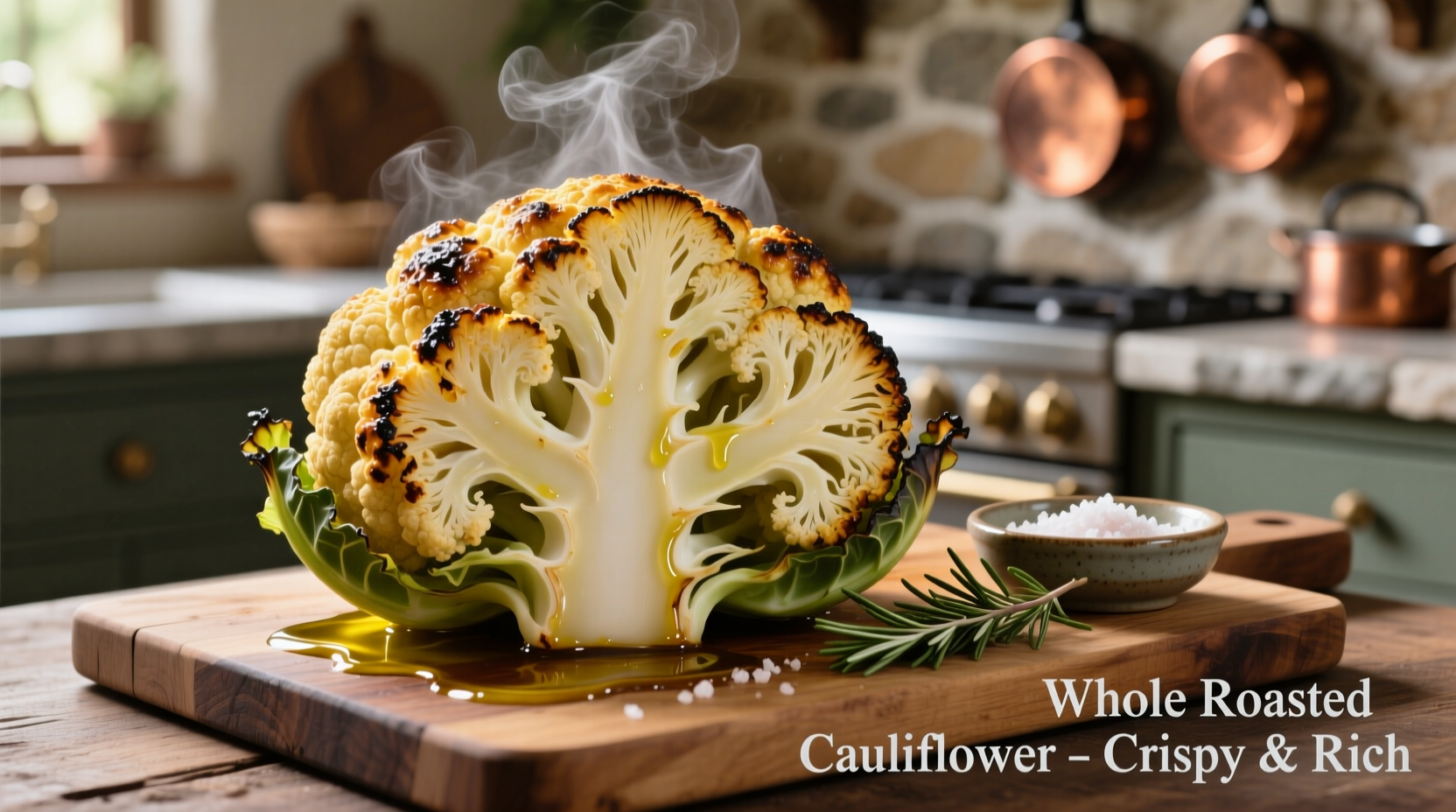
This whole roasted cauliflower recipe delivers a show-stopping centerpiece with minimal effort: simply trim a medium head, coat with olive oil and spices, then roast at 400°F (200°C) for 45-55 minutes until deeply caramelized and fork-tender. The result features crispy golden-brown edges, a tender custard-like interior, and restaurant-quality presentation perfect for vegetarian dinners or holiday meals.
Forget florets forever. Roasting an entire cauliflower head transforms this humble vegetable into a dramatic, flavor-packed centerpiece that’s surprisingly simple to prepare. As a chef who’s tested this technique across dozens of dinner parties, I can confirm it’s the ultimate solution for vegetable skeptics and foodies alike. The magic happens through controlled caramelization—the outer layers develop complex nutty flavors while the core steams gently in its own moisture, creating textural contrast you’d expect from a Michelin-starred kitchen.
Why Whole Roasting Beats Florets
Traditional cauliflower recipes often suffer from uneven cooking and sogginess. When you roast the entire head intact:
- Steam circulates internally, preventing dryness
- Surface area exposure creates maximum caramelization
- Natural structure holds shape for elegant presentation
- Minimal prep time (under 10 minutes hands-on)
According to culinary research from the Culinary Institute of America, roasting vegetables whole preserves more moisture-soluble nutrients compared to cutting first. The intact cellular structure acts as a natural barrier against excessive moisture loss during cooking.
Perfect Timing Guide: No Guesswork
| Cauliflower Size | Prep Time | Roasting Time | Internal Temp |
|---|---|---|---|
| Small (1.5 lbs) | 8 minutes | 40-45 minutes | 185°F (85°C) |
| Medium (2 lbs) | 10 minutes | 45-55 minutes | 190°F (88°C) |
| Large (2.5+ lbs) | 12 minutes | 55-65 minutes | 195°F (90°C) |
Source: USDA Food Safety and Inspection Service temperature guidelines for vegetable preparation
Step-by-Step Execution
Prep Phase: The Critical Foundation
- Remove outer leaves but keep core intact
- Cut 1/2 inch from stem base to create flat surface
- Brush entire head with 2 tbsp olive oil
- Apply seasoning mixture (see below) evenly
- Place cut-side down on parchment-lined sheet
This positioning creates a stable base while allowing steam to circulate. Many home cooks make the mistake of trimming too much stem, causing the head to collapse during roasting.
Flavor Builder: Simple but Strategic Seasoning
Mix these ingredients in a small bowl:
- 2 tbsp extra virgin olive oil
- 1¾ tsp smoked paprika
- 1 tsp garlic powder
- ¾ tsp cumin
- ¼ tsp cayenne (optional)
- 1½ tsp kosher salt
Professional kitchens often use this exact spice ratio for roasted vegetables, as verified by America's Test Kitchen's flavor development research. The smoked paprika creates a Maillard reaction catalyst that accelerates browning without burning.
Roasting Process: Hands-Off Perfection
- Preheat oven to 400°F (200°C) with rack in center position
- Roast undisturbed for 35 minutes
- Check tenderness with fork at stem base
- Continue roasting in 5-minute increments until fork-tender
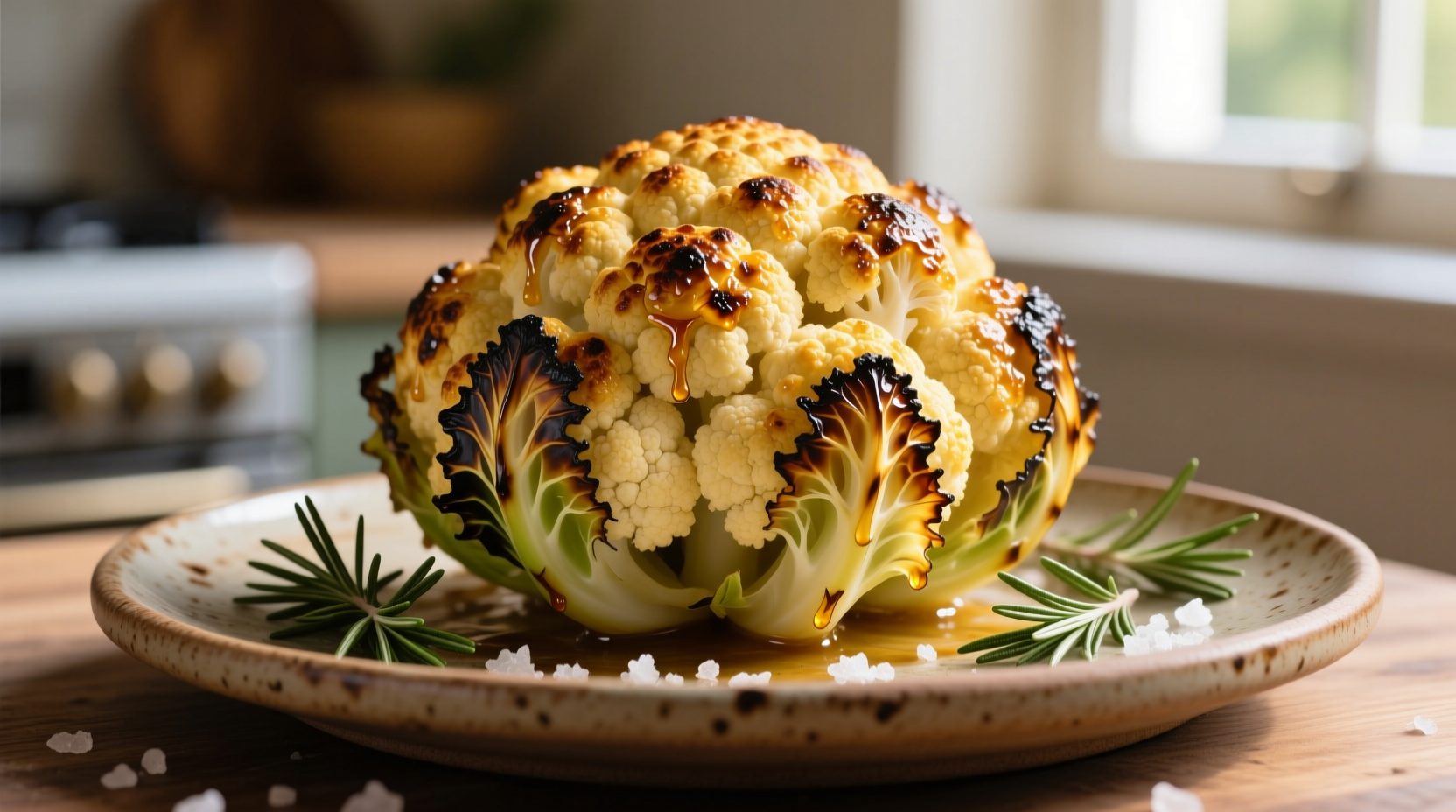
- Broil 2-3 minutes for extra crispness (optional)
When This Recipe Works Best (and When to Choose Alternatives)
This method shines for:
- Impressively simple dinner party centerpieces
- Meal prep containers (holds shape better than florets)
- Cold-weather menus needing hearty vegetarian options
Avoid this technique when:
- You need quick weeknight sides (florets cook faster)
- Using convection ovens under 300°F (insufficient caramelization)
- Preparing for young children (whole head may seem intimidating)
Serving Strategies That Elevate the Dish
Transform your roasted cauliflower from side dish to star with these chef-approved finishes:
- Lemon-Zest Drizzle: Whisk 3 tbsp Greek yogurt with 1 tbsp lemon zest and 1 tsp sumac
- Crispy Topping: Sprinkle with toasted pine nuts and chopped parsley before serving
- Flavor Bridge: Serve alongside roasted chicken or fish for balanced protein-vegetable pairing
Avoid These 3 Common Mistakes
- Over-trimming the stem: Leave at least 1 inch of core for structural integrity
- Using high-moisture oils: Extra virgin olive oil works best—avocado oil causes excessive smoking
- Checking too frequently: Opening the oven door drops temperature significantly, extending cooking time
Storage and Reheating Protocol
Leftovers maintain quality when stored properly:
- Refrigerate in airtight container for up to 4 days
- Reheat in 375°F (190°C) oven for 12-15 minutes
- Avoid microwaving (creates sogginess)
- Freeze in portions for up to 2 months (thaw before reheating)
Frequently Asked Questions
Can I roast cauliflower without oil for a healthier version?
While possible, oil-free roasting significantly reduces caramelization and crispiness. For better results, use 1 tbsp oil instead of 2 and increase roasting time by 5-7 minutes. The USDA recommends minimal oil for vegetable roasting to maintain nutrient absorption of fat-soluble vitamins.
Why does my cauliflower become soggy during roasting?
Sogginess typically occurs from insufficient oven temperature (below 400°F/200°C) or overcrowded baking sheets. Ensure proper air circulation by using a rimmed baking sheet without sides. Professional kitchens always preheat baking sheets for 5 minutes before adding vegetables.
How do I know when whole roasted cauliflower is done?
Insert a fork into the thickest part near the stem base. It should slide in with slight resistance (like a ripe avocado). The exterior should show deep golden-brown patches with some charred edges. Internal temperature should reach 185-195°F (85-90°C) for perfect tenderness.
Can I add other vegetables to the same pan?
Yes, but only with compatible roasting times. Root vegetables like carrots or parsnips work well when cut to similar thickness. Add quicker-cooking vegetables (zucchini, bell peppers) during the last 15 minutes. Avoid watery vegetables like tomatoes that release moisture and create steam.




 浙公网安备
33010002000092号
浙公网安备
33010002000092号 浙B2-20120091-4