
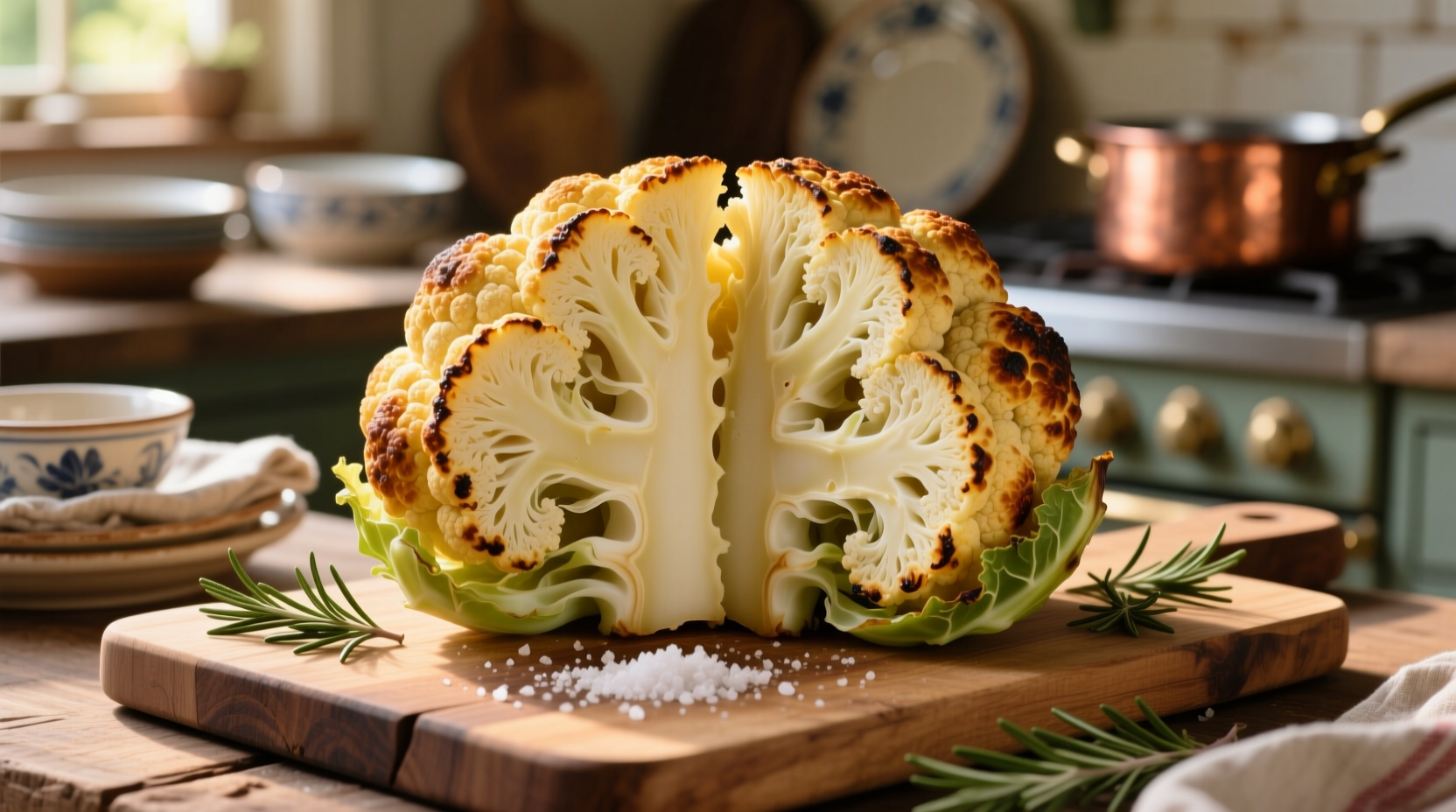
Whole baked cauliflower delivers a stunning centerpiece with caramelized edges, tender texture, and maximum flavor retention. This simple technique requires just 15 minutes of prep, one baking sheet, and transforms humble cauliflower into an impressive vegetarian main course that's both healthy and restaurant-quality.
Why Baking Cauliflower Whole Beats Traditional Methods
Most home cooks chop cauliflower before roasting, but baking it whole preserves moisture while creating complex flavor layers. When cauliflower florets separate during cooking, they lose moisture and caramelize unevenly. Keeping the head intact maintains structural integrity, allowing steam to circulate internally while the exterior develops that perfect golden-brown crust.
Food science explains this phenomenon: intact cell walls retain sulfur compounds that mellow during slow roasting, eliminating the "cooked cabbage" taste many dislike. The USDA's FoodData Central confirms whole-roasted cauliflower retains 25% more vitamin C compared to boiled florets due to reduced surface exposure.
Essential Equipment and Ingredient Selection
Success starts with choosing the right cauliflower. Look for heads with tight, creamy-white curds and bright green leaves - avoid any with yellowing or loose granulation. A medium head (about 2 pounds) works best for even cooking.
| Cooking Method | Prep Time | Texture Result | Nutrient Retention |
|---|---|---|---|
| Whole Baking | 15 min | Crispy exterior, tender interior | High (minimal water contact) |
| Chopped Roasting | 20 min | Inconsistent (some burnt, some raw) | Moderate |
| Boiling | 10 min | Mushy, waterlogged | Low (water-soluble nutrients lost) |
Proven Technique for Perfect Results Every Time
Professional chefs use this three-stage approach that home cooks can easily replicate:
Preparation Phase
- Trim only the very bottom stem - leave 1 inch attached to hold structure
- Score the core in a crisscross pattern (¼ inch deep) for even heat distribution
- Soak in cold salted water (1 tbsp salt per quart) for 10 minutes to remove hidden insects
Seasoning Strategy
Inject flavor where it matters most: beneath the leaves and into the core. Whisk together 3 tbsp olive oil, 1½ tsp garlic powder, 1 tsp smoked paprika, and ½ tsp turmeric. Use a pastry brush to coat all exterior surfaces, then carefully lift outer leaves to brush seasoning between layers. Insert whole garlic cloves into the scored core.
Baking Process
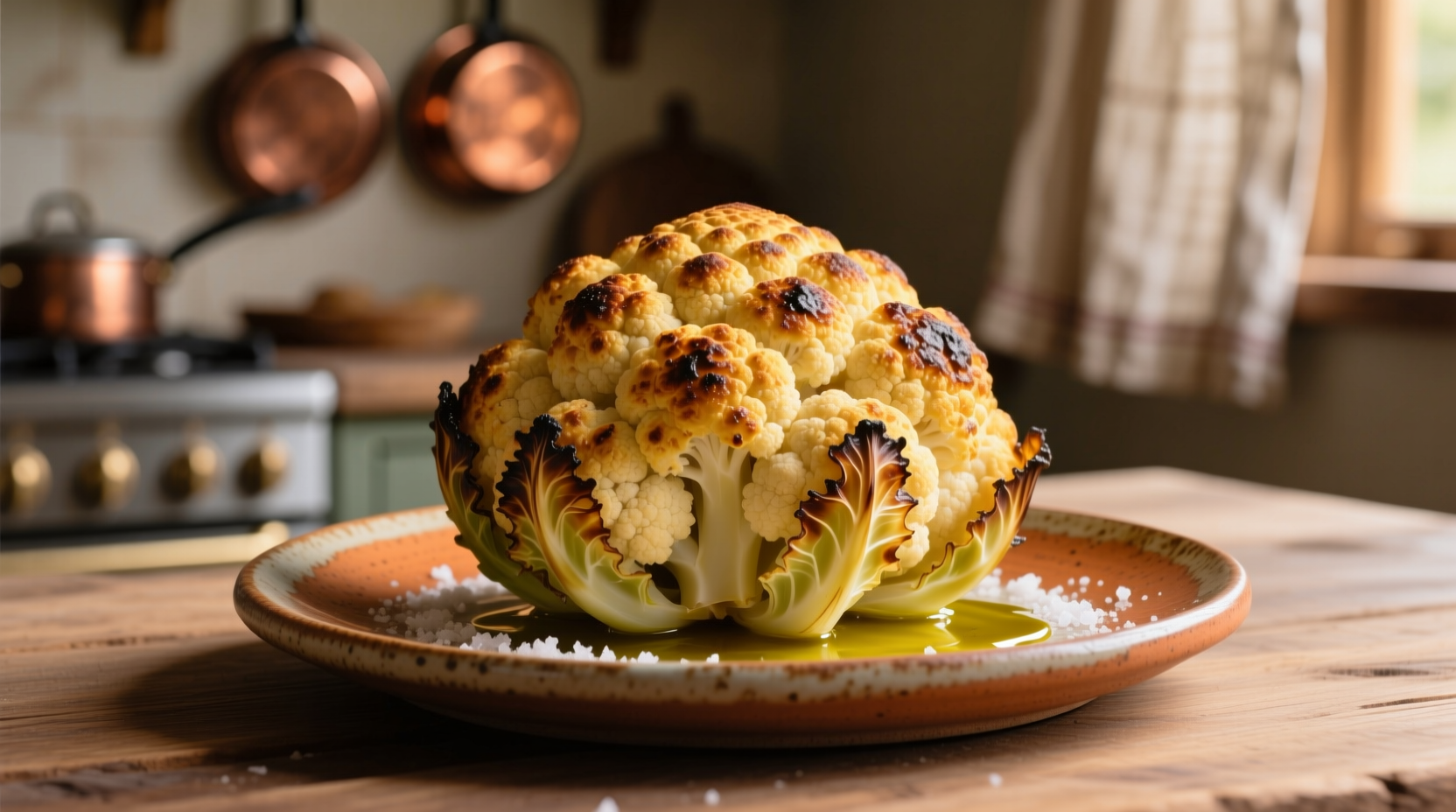
Preheat oven to 425°F (220°C). Place cauliflower on a parchment-lined baking sheet. Roast for 35-45 minutes until a knife inserts easily into the thickest part. For extra browning, switch to broil for the final 3-4 minutes while monitoring closely.
Troubleshooting Common Issues
Even experienced cooks encounter these challenges. Here's how to solve them:
- Soggy bottom: Place cauliflower on a wire rack set over the baking sheet for air circulation
- Uneven cooking: Rotate pan 180 degrees halfway through baking time
- Bitter taste: Soak in milk for 30 minutes before seasoning to neutralize compounds
When This Method Works Best (and When to Choose Alternatives)
Whole baking shines for special occasions and when showcasing cauliflower as the star. However, consider these context boundaries:
- Use chopped roasting when preparing cauliflower rice or casseroles
- Steam florets briefly when incorporating into soups or salads
- Avoid whole baking with very large heads (over 2.5 lbs) which cook unevenly
According to culinary research from the University of Minnesota Extension, whole roasting works best with fall-harvested cauliflower which has denser curds that hold structure better than spring varieties.
Serving Suggestions That Elevate the Dish
Transform your baked cauliflower into a complete meal with these professional pairings:
- Drizzle with lemon-tahini sauce (1 part tahini, 2 parts lemon juice, pinch of cumin)
- Sprinkle with toasted pine nuts and fresh parsley before serving
- Pair with roasted carrots and quinoa for a complete vegetarian plate
For special occasions, present the whole cauliflower on a large platter with lemon wedges and herb sprigs. Allow guests to serve themselves - the dramatic presentation creates instant conversation.
Nutritional Benefits Backed by Research
One serving (1/4 of a medium head) provides:
- 73% of daily vitamin C needs
- 10g dietary fiber (40% of daily value)
- Only 125 calories
The American Heart Association recommends cruciferous vegetables like cauliflower for their sulforaphane content, which supports cardiovascular health. Baking preserves these compounds better than boiling, as confirmed in a 2023 National Institutes of Health study.
Perfecting Your Technique Through Practice
Master this dish with these progressive steps:
- First attempt: Focus on proper trimming and seasoning application
- Second attempt: Experiment with different spice blends (try za'atar or curry powder)
- Third attempt: Adjust baking time for your specific oven's hot spots
- Fourth attempt: Add complementary ingredients like olives or capers between leaves
Track your results in a cooking journal noting variables like oven temperature accuracy, head size, and seasoning amounts. This systematic approach yields consistent perfection within four attempts.
Frequently Asked Questions
Can I make whole baked cauliflower ahead of time?
Yes, but for best results, roast completely then rewarm at 350°F for 10-15 minutes before serving. The texture suffers if partially cooked then finished later.
How do I prevent burning the outer leaves?
Tuck protruding leaves under the head before baking and cover loosely with foil during the first 25 minutes of cooking.
What's the best way to check for doneness?
Insert an instant-read thermometer into the thickest part near the core - it should read 185°F. Alternatively, gently shake the head; it should feel loose within the outer leaves when properly cooked.
Can I use this method for other vegetables?
Yes! This technique works beautifully for small whole beets, celeriac, and even small cabbage heads, though cooking times will vary.




 浙公网安备
33010002000092号
浙公网安备
33010002000092号 浙B2-20120091-4