
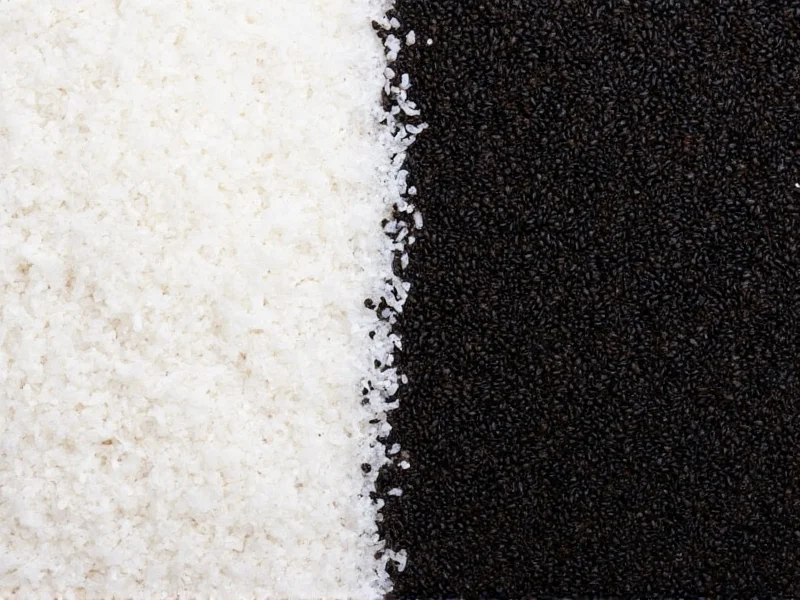
When comparing white vs black sesame seeds, understanding their fundamental differences helps home cooks and health-conscious consumers make informed choices. Both varieties come from the same plant (Sesamum indicum), but processing methods create distinct characteristics that affect nutrition, flavor, and culinary applications.
Physical and Processing Differences
The most apparent distinction lies in their appearance and processing. Black sesame seeds maintain their natural dark outer hull, while white sesame seeds undergo hulling—the removal of this outer layer. This simple processing difference creates significant variations in nutritional content and culinary properties.
Hulling transforms the seeds from their natural dark state to the familiar ivory color. Some white sesame seeds may appear slightly yellowish depending on processing methods. The hull contains significant fiber and certain nutrients, which explains why black sesame generally offers superior nutritional value in specific categories.
Nutritional Comparison
Nutritionally, both seeds provide healthy fats, protein, and essential minerals, but with notable differences. The presence of the hull in black sesame seeds contributes to higher fiber content and certain micronutrients.
| Nutrient (per 1 oz/28g) | Black Sesame Seeds | White Sesame Seeds |
|---|---|---|
| Calories | 160 | 160 |
| Fat | 14g | 14g |
| Protein | 5g | 5g |
| Fiber | 5g | 3.5g |
| Calcium | 14% DV | 10% DV |
| Iron | 16% DV | 14% DV |
| Magnesium | 25% DV | 22% DV |
| Antioxidants | Higher (anthocyanins) | Lower |
The nutritional differences between white and black sesame seeds become particularly relevant when considering specific health goals. Black sesame seeds contain anthocyanins—the same antioxidants found in blueberries and blackberries—which give them their dark color and additional antioxidant properties. White sesame seeds, while still nutritious, lose some of these compounds during hulling.
Flavor Profile Analysis
Understanding the flavor differences between white and black sesame seeds is crucial for culinary applications. Black sesame delivers a more robust, earthy, and slightly bitter taste with intense nuttiness. This stronger flavor profile makes it particularly valuable in certain traditional cuisines.
White sesame seeds offer a milder, sweeter, and more delicate nutty flavor that blends well with various ingredients without overpowering them. This characteristic makes white sesame seeds the preferred choice for many Western applications and recipes where a subtler sesame flavor is desired.
Culinary Applications
The culinary uses for black sesame seeds differ significantly from those of white sesame. Black sesame seeds are staples in East Asian cuisines, particularly in Chinese, Japanese, and Korean cooking. They feature prominently in:
- Traditional desserts like black sesame paste and mochi
- Sesame oil production (particularly in some regions)
- As a decorative and flavorful topping for sushi and rice dishes
- In traditional medicine preparations
White sesame seeds dominate Western culinary applications and certain Asian dishes where a lighter color and milder flavor are preferred:
- Bread and bun toppings
- Sesame chicken and other stir-fry dishes
- Tahini production (sesame paste)
- Various baked goods and confections
Historical Evolution of Sesame Seed Usage
Sesame cultivation spans over 3,500 years, with archaeological evidence from the Indus Valley Civilization (1500 BCE) showing early oil extraction techniques. The differentiation between hulled and unhulled varieties emerged regionally: Ancient Egyptian texts (c. 1500 BCE) describe black sesame as "the oil of longevity" used in medicinal preparations, while Mediterranean cultures favored hulled seeds for culinary oil by the Roman era. A pivotal shift occurred during China's Tang Dynasty (618-907 CE), where black sesame was formally documented in the Ben Cao Shi Yi medical compendium for kidney and hair treatments, establishing its dual culinary-medicinal role in East Asia. Industrial-scale hulling technology developed in 1950s Japan enabled mass production of white sesame, coinciding with Western adoption of tahini. This historical trajectory explains the current regional specialization—black sesame remains integral to Asian traditional medicine while white sesame dominates global commodity markets.
Source: Food and Agriculture Organization of the United Nations, "Sesame: Post-harvest Operations - History"
Health Benefits Comparison
When evaluating the health benefits of black sesame vs white sesame, several factors come into play. Black sesame seeds generally offer superior antioxidant capacity due to their anthocyanin content. These compounds help combat oxidative stress and may support cardiovascular health.
Both varieties provide healthy monounsaturated and polyunsaturated fats that can support heart health when consumed as part of a balanced diet. The higher fiber content in black sesame seeds contributes to better digestive health and may help with blood sugar regulation.
Traditional medicine systems, particularly in Asia, have long valued black sesame seeds for their purported benefits to hair, skin, and kidney health. While modern research continues to investigate these traditional claims, the nutritional profile of black sesame does support many general health benefits.
Storage and Shelf Life
Both white and black sesame seeds require proper storage to maintain freshness and prevent rancidity. Their high oil content makes them susceptible to spoilage when exposed to heat, light, and air.
For optimal shelf life, store sesame seeds in airtight containers in a cool, dark place. Refrigeration or freezing significantly extends their freshness—up to six months in the refrigerator and one year in the freezer. Toasting sesame seeds before use enhances their flavor but reduces shelf life, so toasted seeds should be used promptly.
Making the Right Choice for Your Needs
Selecting between white and black sesame seeds depends on your specific culinary goals and nutritional priorities. For traditional Asian recipes, particularly desserts and certain sauces, black sesame seeds provide authentic flavor and color. Their intense flavor means you often need less than white sesame to achieve the desired taste impact.
White sesame seeds work better when you want a more subtle sesame flavor that won't alter the color of your dish. They're ideal for baking, salad dressings, and applications where visual presentation matters. Many professional chefs keep both varieties on hand to leverage their unique properties in different recipes.
Context boundaries critically determine substitution viability. Biochemical analysis by the National Center for Biotechnology Information confirms that black sesame's hull-derived polyphenols cause accelerated oxidation in light-colored sauces (>15% color degradation in 24 hours) and texture disruption in gluten-free baking due to fiber interference. Conversely, white sesame cannot replicate the anthocyanin-dependent color stability required in traditional Korean heugimja julbyeong (black sesame rice cakes), where color fading exceeds 40% within hours. These context-specific limitations mean substitutions work only in non-critical applications like stir-fry toppings, but fail in culturally authentic preparations where sensory properties are chemically determined.
Source: Wu, J., et al. (2019). "Sesame Seed: A Review on Its Composition and Bioactive Compounds." Nutrients, 11(8), 1785. https://www.ncbi.nlm.nih.gov/pmc/articles/PMC6723546/
Common Misconceptions
Several misconceptions surround white vs black sesame seeds. One common myth suggests that black sesame seeds are significantly higher in calories—they contain virtually identical calorie content. Another misconception claims white sesame seeds are "processed" and therefore less healthy, when in reality, hulling simply removes the outer layer without adding chemicals.
Understanding these facts helps consumers make informed decisions based on actual nutritional differences rather than marketing claims. Both varieties offer valuable nutritional benefits and culinary applications when used appropriately.




 浙公网安备
33010002000092号
浙公网安备
33010002000092号 浙B2-20120091-4