
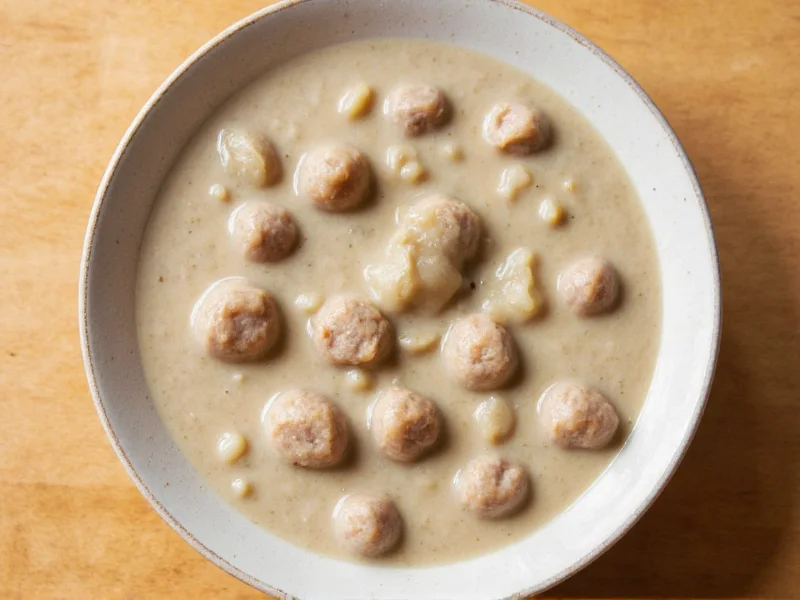
Originating in the American South, white sausage gravy transforms simple pantry staples into a comforting meal that has sustained generations. Unlike brown gravies that use meat drippings and stock, this version creates its distinctive color and texture through a milk-based roux. The magic happens when rendered sausage fat combines with flour to form a roux, then milk is gradually incorporated to create that signature creamy texture without lumps.
Historical Evolution: From Frontier Necessity to Southern Icon
White sausage gravy's origins trace to 19th-century Appalachian frontier cooking, where resourceful cooks transformed limited ingredients into sustaining meals. Early versions documented in Southern households utilized available fats and grains to create thickened sauces. The first recorded recipe resembling modern preparation appeared in The Richmond Times-Dispatch (September 11, 1927), featuring sausage and milk-based gravy as a diner staple (Library of Congress, Chronicling America). By the mid-20th century, industrialized sausage production and refrigeration access cemented its status as a standardized breakfast icon across the South.
This evolution reflects regional adaptation: frontier cooks used cornmeal or flour to thicken milk with meat drippings for calorie density. As rural communities gained access to dairy, the milk-based version thrived in Southern agricultural regions where brown gravies (requiring stock) were less accessible. The dish's transformation from frontier necessity to cultural symbol was documented in WPA food surveys during the 1930s, noting its prevalence in working-class Southern breakfasts.
Gravy Variations: White Sausage vs. Brown vs. Sawmill
Understanding regional distinctions reveals white sausage gravy's unique culinary position. While all gravies share thickening principles, key differences define their preparation and cultural context:
| Gravy Type | Primary Base | Key Ingredients | Regional Association | Traditional Meal |
|---|---|---|---|---|
| White Sausage Gravy | Milk | Breakfast sausage, flour, milk | American South | Breakfast |
| Brown Gravy | Meat drippings/stock | Drippings, flour, stock (beef/turkey) | Nationwide | Dinner |
| Sawmill Gravy | Milk | Sausage or available meats, flour, milk | Southern lumber camps | Breakfast |
Source: USDA Food and Nutrition Service (Brown Gravy Recipe Guidelines) and Southern Foodways Alliance (Sawmill Gravy Oral History).
The Essential Components of Authentic White Sausage Gravy
Creating perfect white sausage gravy requires understanding each element's role. The sausage provides both flavor foundation and the fat needed for the roux. Mild breakfast sausage works best for traditional preparation, though hot varieties can add welcome heat for those who prefer spice. The roux—equal parts fat and flour—acts as the thickening agent, while whole milk delivers the creamy texture that defines this Southern classic.
| Ingredient | Traditional Amount | Key Purpose |
|---|---|---|
| Mild breakfast sausage | 1 pound | Flavor base and fat source for roux |
| All-purpose flour | 3-4 tablespoons | Roux thickener for smooth consistency |
| Whole milk | 2-3 cups | Creamy texture and distinctive white color |
| Salt and black pepper | To taste | Essential seasoning balance |
Step-by-Step Preparation for Lump-Free Gravy
Follow these professional techniques for flawless homemade white sausage gravy every time. Start by browning 1 pound of mild breakfast sausage in a cast-iron skillet over medium heat, breaking it into small crumbles as it cooks. Once fully cooked, remove about half the sausage bits for garnish later—this prevents overcooking during the simmering phase.
With 3-4 tablespoons of rendered fat remaining in the skillet, gradually whisk in an equal amount of all-purpose flour. Cook this roux for 2-3 minutes until it bubbles but doesn't brown, stirring constantly. The key to creamy sausage gravy from scratch is slowly incorporating cold milk while whisking continuously. Add milk in 1/2 cup increments, allowing each addition to thicken before adding more. This gradual process prevents lumps and ensures perfect texture.
After adding 2-3 cups of whole milk, continue simmering until the gravy reaches your desired thickness. Return the reserved sausage to the skillet and season with freshly ground black pepper and salt to taste. For authentic southern white sausage gravy, avoid pre-made seasonings—freshly cracked pepper provides the distinctive flavor profile.
Avoiding Common Preparation Mistakes
Many home cooks struggle with lumpy gravy or inconsistent thickness. The most frequent error involves adding milk too quickly to the roux. Professional chefs recommend keeping milk cold while the roux is hot—this temperature contrast helps with smooth incorporation. Another critical technique: never stop whisking during the initial milk addition phase.
Using low-fat milk creates a thinner gravy that lacks richness, while non-dairy alternatives often separate when heated. For the creamiest results, whole milk is essential. If your gravy becomes too thick, add more milk a tablespoon at a time while simmering. Conversely, if too thin, create a slurry of 1 tablespoon flour mixed with 2 tablespoons cold milk, then whisk into simmering gravy.
Variations and Customizations
While traditional biscuits and white gravy uses mild sausage, creative variations include adding crumbled bacon for smokiness or hot sausage for spice. Some Southern chefs incorporate a pinch of cayenne or smoked paprika for depth. For a richer version, substitute half the milk with heavy cream during the final simmering stage.
Vegetarian adaptations use plant-based sausage alternatives with vegetable broth instead of meat drippings, though the flavor profile differs significantly from authentic preparation. Gluten-free versions substitute rice flour or cornstarch for the traditional wheat flour, but require careful temperature management to prevent gumminess.
Contextual Considerations: Appropriate Settings and Limitations
White sausage gravy is deeply rooted in Southern breakfast culture but operates within specific contextual boundaries. Traditionally served only at breakfast or brunch in the American South, offering it at dinner may seem culturally incongruous outside this context. The dish's richness makes it unsuitable for hot-weather dining in many regions, though Southern communities enjoy it year-round due to cultural tradition.
Dietary limitations significantly impact accessibility: the traditional recipe contains dairy and pork, making it inappropriate for lactose-intolerant individuals, vegetarians, and those avoiding pork for religious or health reasons. According to the National Institute of Diabetes and Digestive and Kidney Diseases, approximately 36% of Americans experience lactose intolerance that may cause discomfort after consuming dairy-based gravies (NIDDK, 2020). Gluten-free adaptations also present texture challenges, as alternative thickeners often compromise the signature creamy consistency.
Modern interpretations appear on menus nationwide, but authenticity requires acknowledgment of its regional origins. Serving white sausage gravy outside Southern-style breakfast contexts—such as with dinner entrees—may confuse diners expecting traditional accompaniments like split biscuits.
Serving Traditions and Pairings
The classic presentation involves spooning generous portions of hot gravy over split, buttered buttermilk biscuits. This combination creates the beloved breakfast gravy recipe known as 'sawmill gravy' in some regions. For authentic Southern breakfast service, offer additional black pepper and hot sauce on the side.
Modern interpretations pair white sausage gravy with roasted potatoes, scrambled eggs, or even as a topping for breakfast casseroles. Some diners enjoy it with fried chicken for a 'chicken and gravy' variation, though purists consider this a distinct preparation from traditional breakfast gravy.
Storage and Reheating Best Practices
Properly stored in an airtight container, homemade white sausage gravy keeps for 3-4 days in the refrigerator. When reheating, add a splash of milk while warming over low heat to restore creamy consistency. Avoid microwaving without liquid addition, as this causes separation.
For longer preservation, freeze portions in freezer-safe containers for up to 3 months. Thaw overnight in the refrigerator before reheating. Never refreeze gravy that has already been frozen once, as this compromises both texture and food safety per USDA Food Safety guidelines.




 浙公网安备
33010002000092号
浙公网安备
33010002000092号 浙B2-20120091-4