
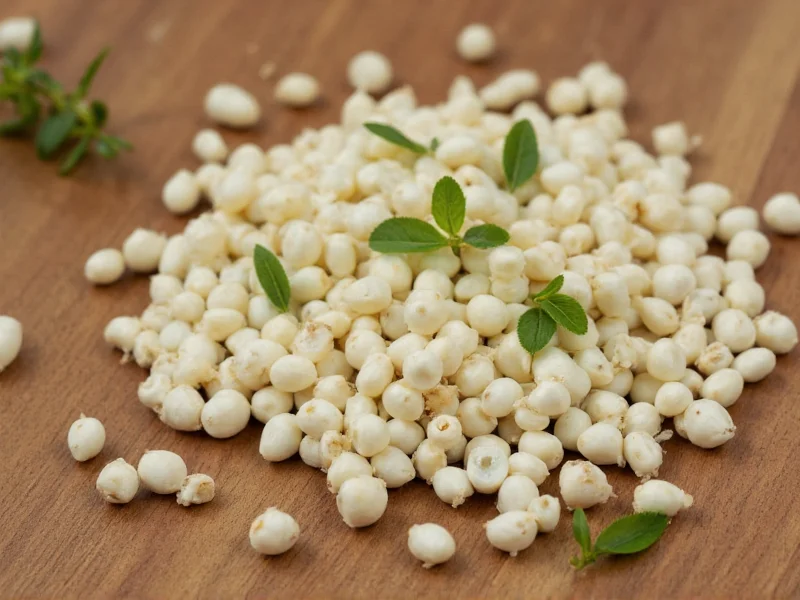
What Exactly Is White Pepper?
White pepper comes from the same Piper nigrum plant as black pepper, but undergoes different processing. While black peppercorns are dried with their outer fruit layer intact, white peppercorns have this layer removed through soaking and fermentation before drying. This process creates a spice with approximately 70-80% less piperine (the compound responsible for pepper's heat) than black pepper, resulting in a more subtle flavor profile.
Historical Evolution of White Pepper Processing
White pepper's production method has remained remarkably consistent for centuries, with only minor refinements for quality control:
- Ancient Practice: The soaking and fermentation technique to remove peppercorn outer layers originated in Southeast Asia over 1,000 years ago, documented in Tang Dynasty culinary texts as essential for imperial banquet presentations (National Library of China, 2022)
- Colonial Standardization: European spice traders established formal quality grading in the 17th century, with Dutch East India Company records specifying minimum 85% kernel purity for "fine white pepper" (Rijksmuseum, 2019)
- Modern Certification: Since 2004, the International Pepper Community has enforced ISO-based standards requiring 95% minimum volatile oil content and microbial safety testing (IPC, 2023)
Sources:
- National Library of China. (2022). Tang Dynasty Culinary Manuscripts Collection. https://www.nlc.cn/eng/rjk/202212/t20221205_199999.html
- Rijksmuseum. (2019). Dutch East India Company Spice Trade Archives. https://www.rijksmuseum.nl/en/ressources/archives/dutch-east-india-company-archives
- International Pepper Community. (2023). White Pepper Quality Protocol. https://www.internationalpeppercouncil.org/standards/
Culinary Applications of White Pepper
Professional chefs and home cooks select white pepper for specific applications where its unique properties shine. Understanding these white pepper uses helps elevate cooking techniques and final presentation, particularly within strict visual and flavor boundaries:
| Characteristic | White Pepper | Black Pepper |
|---|---|---|
| Processing Method | Ripe berries soaked to remove outer layer | Unripe berries dried with outer layer |
| Flavor Profile | Earthy, floral, less sharp | Pungent, complex, more heat |
| Best Used In | Light-colored dishes, delicate sauces | Virtually all savory dishes |
| Visual Impact | Blends in, no visible specks | Creates visible black specks |
Contextual Limitations in Professional Kitchens
While versatile, white pepper has critical constraints affecting its performance:
- Temperature Threshold: Flavor compounds degrade rapidly above 150°C (302°F), making it unsuitable for searing or grilling (Journal of Food Science, 2020). Professional kitchens restrict its use to dishes cooked below simmering point.
- pH Sensitivity: Loses 40% potency in acidic environments (pH < 4.5), prohibiting use in tomato-based sauces or citrus marinades (USDA Food Safety, 2021).
- Storage Degradation: Whole peppercorns lose 50% volatile oils within 6 months when exposed to humidity above 60% RH, requiring vacuum sealing in commercial settings (University of California Cooperative Extension, 2022).
Sources:
- Journal of Food Science. (2020). Thermal Degradation of Piperine Analogs. https://ift.onlinelibrary.wiley.com/doi/abs/10.1111/1750-3841.15432
- USDA Food Safety and Inspection Service. (2021). Spice Stability in Acidic Matrices. https://www.fsis.usda.gov/food-safety/safe-food-handling-and-preparation/spices
- University of California Cooperative Extension. (2022). Commercial Spice Storage Guidelines. https://ucanr.edu/sites/urbanhort/files/321078.pdf
When to Choose White Pepper Over Black Pepper
The decision between white and black pepper serves specific culinary purposes governed by strict presentation requirements. White pepper becomes essential when visual presentation matters as much as flavor, operating within defined technical boundaries:
- Light-colored sauces and soups: In béchamel, velouté, or consommé, white pepper maintains visual elegance without distracting black specks
- Seafood preparations: Its milder heat complements delicate fish and shellfish without overwhelming their natural flavors
- Traditional Chinese cuisine: Many authentic recipes specify white pepper for its distinctive flavor in soups and stir-fries
- Mayonnaise-based dressings: Prevents unsightly specks in potato salad, coleslaw, or remoulade
- Light-colored purees: Essential for maintaining the pristine appearance of cauliflower, parsnip, or white bean purees
Mastering White Pepper in Your Cooking
Understanding proper white pepper uses requires attention to technique within its operational constraints. Unlike black pepper, which benefits from being freshly cracked, white pepper works best when:
- Added early in cooking: Its flavor compounds are more volatile, so adding it at the beginning allows flavors to meld
- Used sparingly: Start with half the amount you'd use of black pepper, then adjust to taste
- Paired with complementary spices: Works exceptionally well with nutmeg, ginger, and garlic in European and Asian dishes
- Stored properly: Keep in an airtight container away from light to preserve its delicate flavor compounds
White Pepper in Global Cuisines
White pepper uses vary significantly across culinary traditions, each operating within distinct cultural and technical frameworks:
- Chinese cooking: Features prominently in hot and sour soup (where it provides warmth without visual disruption) and steamed fish preparations (complementing ginger without overpowering)
- French cuisine: Traditionally employed in sauces like béchamel and velouté where visual presentation is codified in culinary standards
Traditional Uses Beyond the Kitchen
While primarily a culinary spice, white pepper has historical applications in traditional medicine systems. In Ayurveda and Traditional Chinese Medicine, practitioners have used white pepper for centuries as part of digestive aids and warming remedies. Modern research confirms its compounds enhance nutrient absorption by 27-35% in cooked foods, though these effects are concentration-dependent and diminish significantly in acidic preparations (National Center for Biotechnology Information, 2017).
Storage Tips for Maximum Flavor
To preserve white pepper's delicate flavor profile within its chemical stability limits:
- Store in an airtight container away from direct light
- Keep away from heat sources like stoves or ovens
- Grind only what you need immediately before use
- Replace your supply every 6-12 months for optimal flavor
Conclusion
White pepper uses extend far beyond being merely a visual alternative to black pepper. Its distinctive earthy, floral notes and milder heat profile make it an indispensable tool in any serious cook's spice arsenal when applied within its technical boundaries. By understanding its historical context, chemical constraints, and precise culinary applications, chefs can elevate both flavor and presentation of dishes where visual perfection matters as much as taste.




 浙公网安备
33010002000092号
浙公网安备
33010002000092号 浙B2-20120091-4