
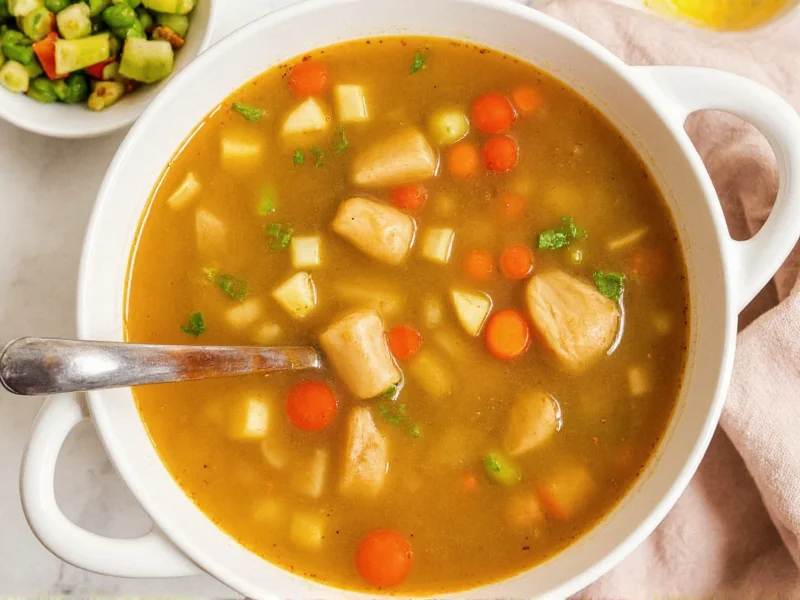
When home cooks debate which is better chicken stock or broth, the real question is which suits your specific recipe. Both liquid foundations enhance flavor, but their preparation methods create distinct characteristics that affect cooking outcomes. This comprehensive comparison examines nutritional profiles, culinary applications, and practical substitution strategies to help you make informed kitchen decisions.
Technical Differences Between Chicken Stock and Broth
The fundamental difference between chicken stock and broth lies in their ingredients and cooking process. Stock simmers bones—often roasted first—for 4-6 hours, extracting collagen that transforms into gelatin. This creates a viscous liquid that solidifies when chilled. Broth uses primarily meat and vegetables simmered for 1-2 hours, yielding a thinner, immediately flavorful liquid.
Professional chefs consider stock an ingredient that transforms during cooking, while broth functions as a finished product. This distinction explains why restaurant recipes often specify one over the other. Understanding chicken stock vs broth for cooking prevents recipe failures and elevates your culinary results.
These definitions have evolved significantly since Auguste Escoffier's 1903 Le Guide Culinaire established the bone-based stock/meat-based broth distinction. Modern commercial practices and the bone broth trend have blurred traditional boundaries, as documented in USDA Economic Research Service analyses showing how consumer terminology shifted between 2015-2020 (USDA ERS, 'Bone Broth: A Niche Market Grows', May 2018).
| Characteristic | Chicken Stock | Chicken Broth |
|---|---|---|
| Primary Ingredients | Bones, connective tissue, meat scraps | Meat, vegetables, herbs |
| Simmering Time | 4-6 hours | 1-2 hours |
| Texture | Thick, gelatinous when cooled | Thin, watery consistency |
| Sodium Content | Typically lower (unsalted) | Often higher (seasoned) |
| Flavor Profile | Subtle, neutral base | Pronounced meaty flavor |
| Best Culinary Uses | Sauces, gravies, braises | Soups, risotto, quick dishes |
Nutritional Comparison: Health Considerations
When evaluating chicken stock vs broth nutrition, stock generally contains more collagen and gelatin due to prolonged bone simmering. This provides potential joint health benefits and creates a more satisfying mouthfeel. Commercial broths often contain higher sodium levels since they're designed as finished products.
Homemade versions offer the most control over chicken stock vs broth sodium content. A typical store-bought broth contains 700-900mg sodium per cup, while unsalted stock ranges from 10-50mg. For those following low sodium chicken stock vs broth guidelines, making your own is ideal. Bone broth—a hybrid between stock and broth—simmered 12-24 hours, maximizes collagen extraction for potential health benefits.
Culinary Applications: When to Use Each
The question which is better for soup chicken stock or broth depends on your recipe goals. Broth works better for quick soups where its immediate flavor shines, like chicken noodle soup. Stock excels in dishes requiring long cooking times, like French onion soup, where its collagen develops richer texture.
Consider these specific applications:
- For sauces and gravies: Stock's gelatin creates superior body and mouthfeel
- For risotto: Broth provides instant flavor without requiring reduction
- For braising liquids: Stock enhances texture as it breaks down connective tissues
- For drinking straight: Broth's seasoned flavor makes it more palatable
However, these applications have critical boundaries where substitution fails. Consommé preparation strictly requires stock due to its collagen content forming the clarifying raft—broth's insufficient gelatin prevents proper clarification. University of Massachusetts Amherst's Food Science Extension explicitly states: 'Consommé is a clarified soup made from stock' for this structural reason (UMass Extension, 'Consommé Clarification Guide'). Similarly, in reduced sauces like demi-glace, broth cannot replicate stock's viscosity development regardless of reduction time.
Homemade vs Store-Bought Quality
Understanding chicken stock vs broth store bought options reveals significant quality variations. Many commercial 'stocks' are actually broths labeled as stock. True stock should gel when chilled—if your refrigerated container remains liquid, it's likely broth.
When making homemade chicken stock vs broth, control these factors:
- For stock: Use 2-3 pounds bones per gallon, simmer 4+ hours, skim impurities
- For broth: Use meaty bones or chicken pieces, simmer 1.5 hours, season at end
- For both: Add acid (vinegar) to extract minerals from bones
Substitution Guide for Recipe Success
When wondering can I substitute chicken broth for stock, the answer is yes—with adjustments. Broth lacks stock's body, so reduce it by half to concentrate gelatin. Conversely, stock's neutral flavor may require additional seasoning when substituting for broth.
For specific substitutions:
- Stock for broth: Add 1/4 teaspoon salt and herbs per cup
- Broth for stock: Simmer 30 minutes to reduce and concentrate
- Vegetable alternative: Mushrooms + kombu provide umami depth
Dietary Considerations and Special Needs
Those following keto chicken stock vs broth guidelines should check labels for hidden sugars. Most stocks and broths are naturally keto-friendly, but some commercial broths contain added carbohydrates. For low FODMAP chicken stock vs broth, avoid versions with onion or garlic.
When comparing organic chicken stock vs broth, certified organic versions ensure no antibiotics or hormones, but the fundamental preparation differences remain the same. The organic label affects ingredient quality, not the technical distinction between stock and broth.
Practical Kitchen Recommendations
Professional kitchens maintain both stock and broth for different applications. For home cooks with limited storage, prioritize based on your cooking habits:
- Choose stock if you frequently make sauces, gravies, or braise meats
- Choose broth if you mainly prepare quick soups or need drinking broth
- Consider making bone broth as a versatile middle ground
When evaluating which is better chicken stock or broth for your needs, consider your most common recipes rather than seeking a universal 'better' option. The right choice depends entirely on your culinary goals and the specific dish you're preparing.




 浙公网安备
33010002000092号
浙公网安备
33010002000092号 浙B2-20120091-4