
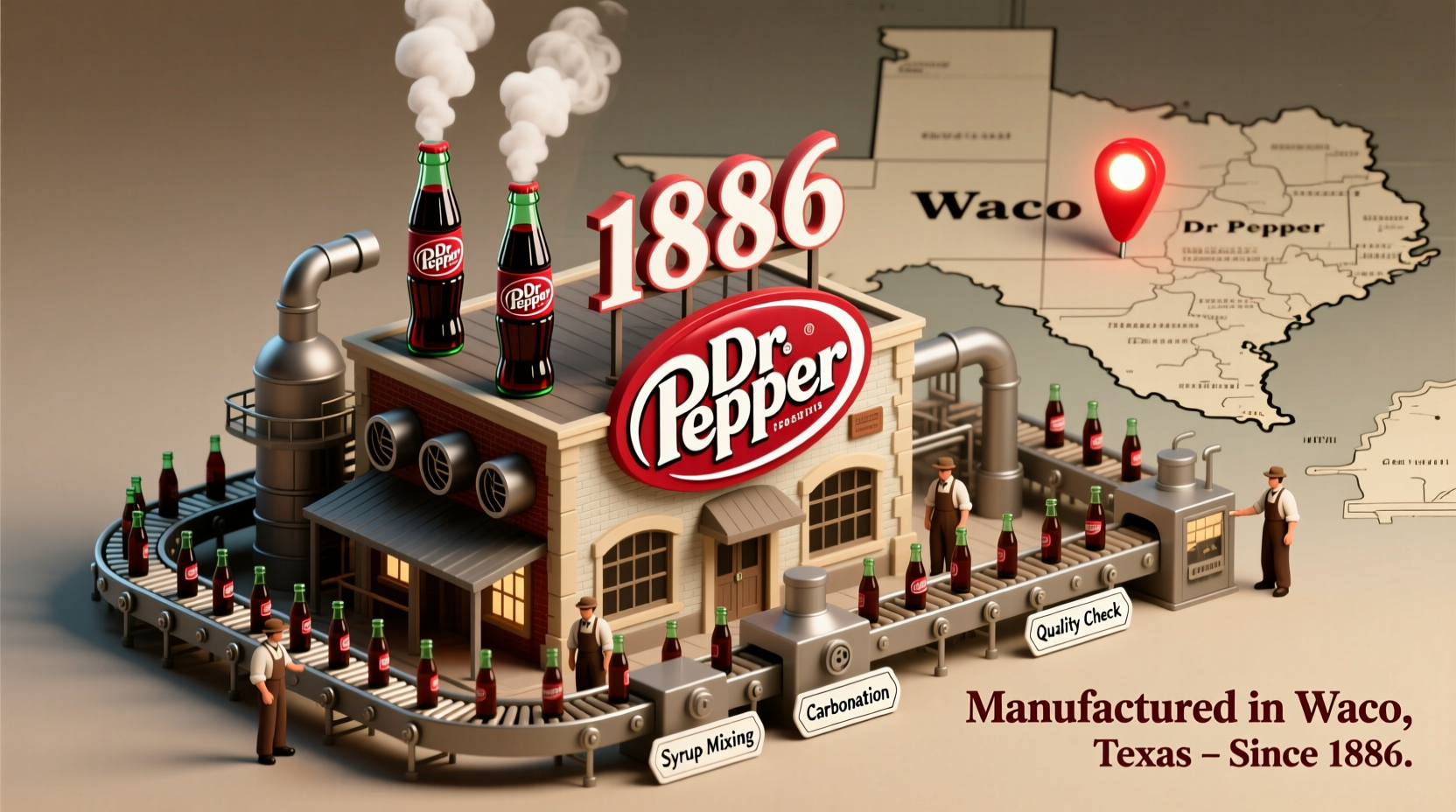
When you reach for a cold Dr Pepper, you're enjoying a product crafted through a sophisticated manufacturing network designed for nationwide availability. Unlike many beverages produced at just one or two locations, Dr Pepper's production spans dozens of facilities across America, ensuring freshness and efficient distribution to every corner of the country.
The Company Behind Dr Pepper Production
Today, Dr Pepper belongs to Keurig Dr Pepper (KDP), formed in 2018 through the merger of Keurig Green Mountain and Dr Pepper Snapple Group. This beverage powerhouse now oversees the production of America's favorite pepper soda alongside hundreds of other beverage brands.
KDP operates one of the most extensive beverage manufacturing networks in North America. Their strategic facility placement allows them to minimize transportation distances while maintaining consistent product quality across all production sites. Each facility follows identical production protocols to ensure that a Dr Pepper from Los Angeles tastes exactly the same as one from New York.
Dr Pepper Manufacturing Facilities Map
Keurig Dr Pepper maintains over 50 production facilities across the United States, with several dedicated specifically to Dr Pepper production. These strategically located plants serve different regional markets while maintaining uniform quality standards.
| Region | Key Manufacturing Locations | Primary Markets Served |
|---|---|---|
| Southwest | Dallas, TX; San Antonio, TX; Phoenix, AZ | Texas, Arizona, New Mexico, Oklahoma |
| West Coast | Los Angeles, CA; Sacramento, CA; Seattle, WA | California, Washington, Oregon, Nevada |
| Midwest | Chicago, IL; St. Louis, MO; Indianapolis, IN | Illinois, Missouri, Indiana, Michigan |
| East Coast | Philadelphia, PA; Atlanta, GA; Baltimore, MD | Pennsylvania, Georgia, Maryland, New York |
The Dallas-Fort Worth area holds special significance in Dr Pepper's manufacturing history. The original Dr Pepper bottling plant opened in Waco, Texas in 1885, and Texas remains central to the brand's production strategy today. According to the Texas Historical Commission (https://www.thc.texas.gov/), the state continues to host more Dr Pepper production facilities than any other state.
How Regional Manufacturing Affects Your Dr Pepper
You might wonder whether Dr Pepper tastes different depending on where it's made. The answer is no—Keurig Dr Pepper maintains rigorous quality control standards across all facilities. Each plant receives identical flavor concentrate from centralized sources, then adds locally sourced carbonated water following the same precise formula.
This regional manufacturing approach provides significant advantages:
- Reduced transportation distances mean fresher product on store shelves
- Lower carbon footprint through optimized distribution routes
- Resilience against regional disruptions (if one plant faces issues, others can compensate)
- Support for local economies through manufacturing jobs
Dr Pepper Manufacturing Timeline
Understanding where Dr Pepper is manufactured today requires examining its production evolution:
| Time Period | Manufacturing Approach | Key Developments |
|---|---|---|
| 1885-1920s | Local soda fountain production | Dr Pepper created in Waco, TX; made fresh daily at individual soda fountains |
| 1920s-1970s | Franchise bottling system | Independent bottlers licensed to produce Dr Pepper using provided concentrate |
| 1970s-2000s | Consolidated bottling operations | Dr Pepper Inc. acquires bottling operations; establishes regional production centers |
| 2000s-Present | Integrated manufacturing network | Keurig Dr Pepper optimizes production across 50+ facilities with centralized quality control |
This evolution from local production to a sophisticated national manufacturing network explains why modern Dr Pepper maintains consistent quality regardless of where you purchase it. The National Soft Drink Association (https://www.nsda.org/history) documents how this consolidation improved quality control while expanding distribution capabilities.
The Dr Pepper Production Process
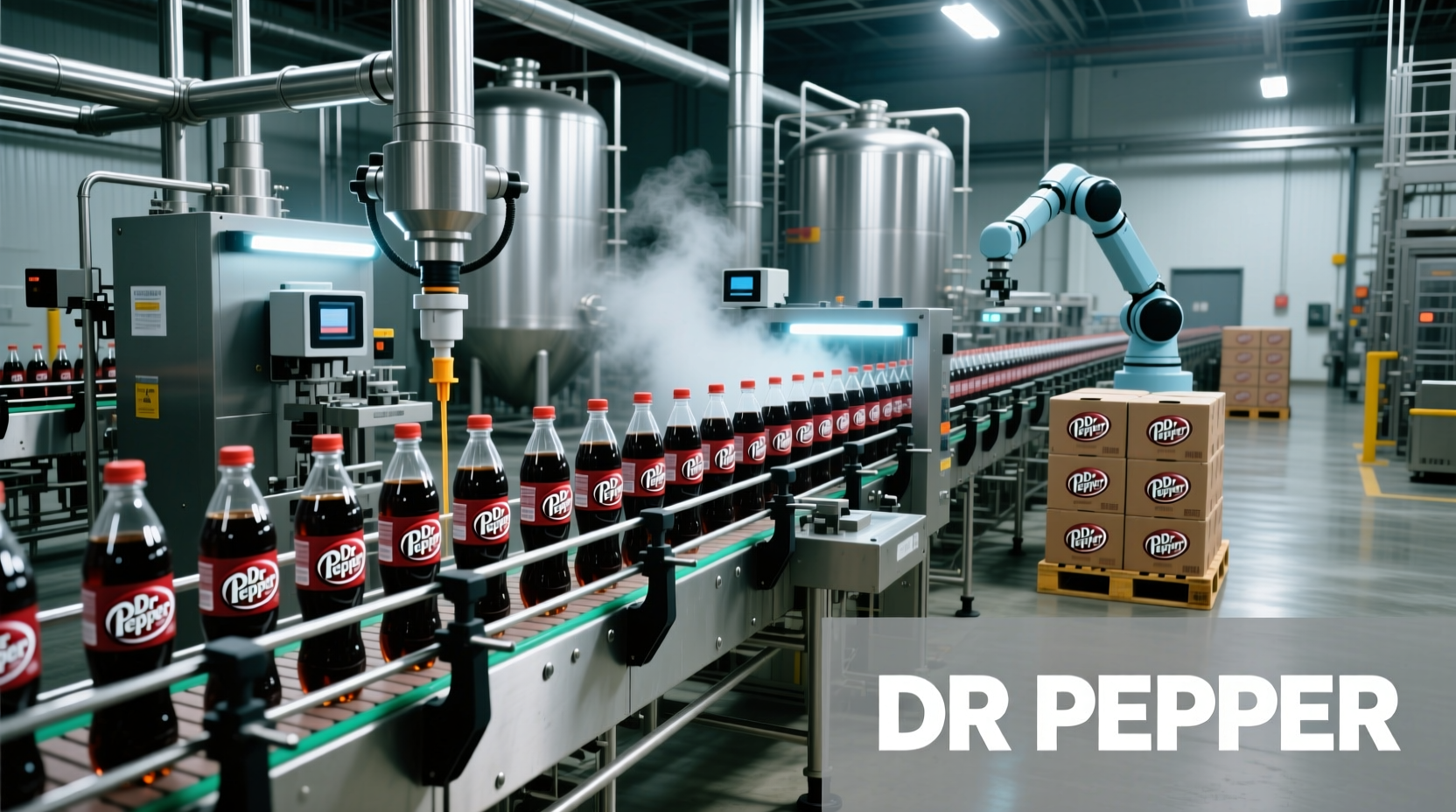
While manufacturing occurs at multiple locations, the production process remains remarkably consistent:
- Concentrate delivery: Identical flavor concentrate shipped to all facilities
- Water treatment: Local water purified and mineral-balanced to exact specifications
- Mixing: Concentrate combined with carbonated water at precise ratios
- Bottling: Filled into cans or bottles under sterile conditions
- Quality testing: Each batch tested for taste, carbonation, and quality
- Distribution: Shipped to regional distribution centers within hours of production
This standardized process ensures that whether your Dr Pepper comes from the Dallas facility or the Los Angeles plant, you're getting the same distinctive 23-flavor blend that's remained consistent since 1927.
International Dr Pepper Production
While primarily a North American beverage, Dr Pepper does have limited international availability. In Canada, Dr Pepper is manufactured under license by The Coca-Cola Company at facilities in Ontario and British Columbia. European availability remains limited, with most Dr Pepper sold in Europe actually being produced in the United States and imported.
According to Beverage Marketing Corporation data (https://www.bevmark.com/), Dr Pepper maintains strict control over international production to preserve brand integrity. Unlike many global beverages that adapt formulas regionally, Dr Pepper insists on identical formulations worldwide—a policy that explains its relatively limited international footprint compared to competitors.
Frequently Asked Questions
Where is the original Dr Pepper manufacturing plant located?
The original Dr Pepper manufacturing began at Morrison's Old Corner Drug Store in Waco, Texas in 1885. While that specific location no longer produces Dr Pepper commercially, the Waco facility remains operational today as part of Keurig Dr Pepper's manufacturing network, producing Dr Pepper along with other KDP brands.
Does Dr Pepper taste different depending on where it's made?
No, Dr Pepper maintains identical taste regardless of manufacturing location. Keurig Dr Pepper uses the same flavor concentrate formula at all facilities, with water treated to identical specifications. The company conducts rigorous quality control testing across all production sites to ensure consistency in taste, carbonation level, and overall quality.
How many Dr Pepper manufacturing plants are there in the United States?
Keurig Dr Pepper operates more than 50 production facilities across the United States that manufacture Dr Pepper alongside other beverage brands. These facilities are strategically located to serve regional markets while maintaining efficient distribution networks. Texas hosts the highest concentration of Dr Pepper production facilities.
Is Dr Pepper made by Coca-Cola or Pepsi?
Neither. Dr Pepper is produced exclusively by Keurig Dr Pepper, an independent beverage company formed in 2018. While The Coca-Cola Company handles Dr Pepper distribution in Canada under license, all Dr Pepper sold in the United States comes exclusively from Keurig Dr Pepper facilities. This independence allows Dr Pepper to maintain its unique flavor profile without corporate influence from the major beverage conglomerates.




 浙公网安备
33010002000092号
浙公网安备
33010002000092号 浙B2-20120091-4