
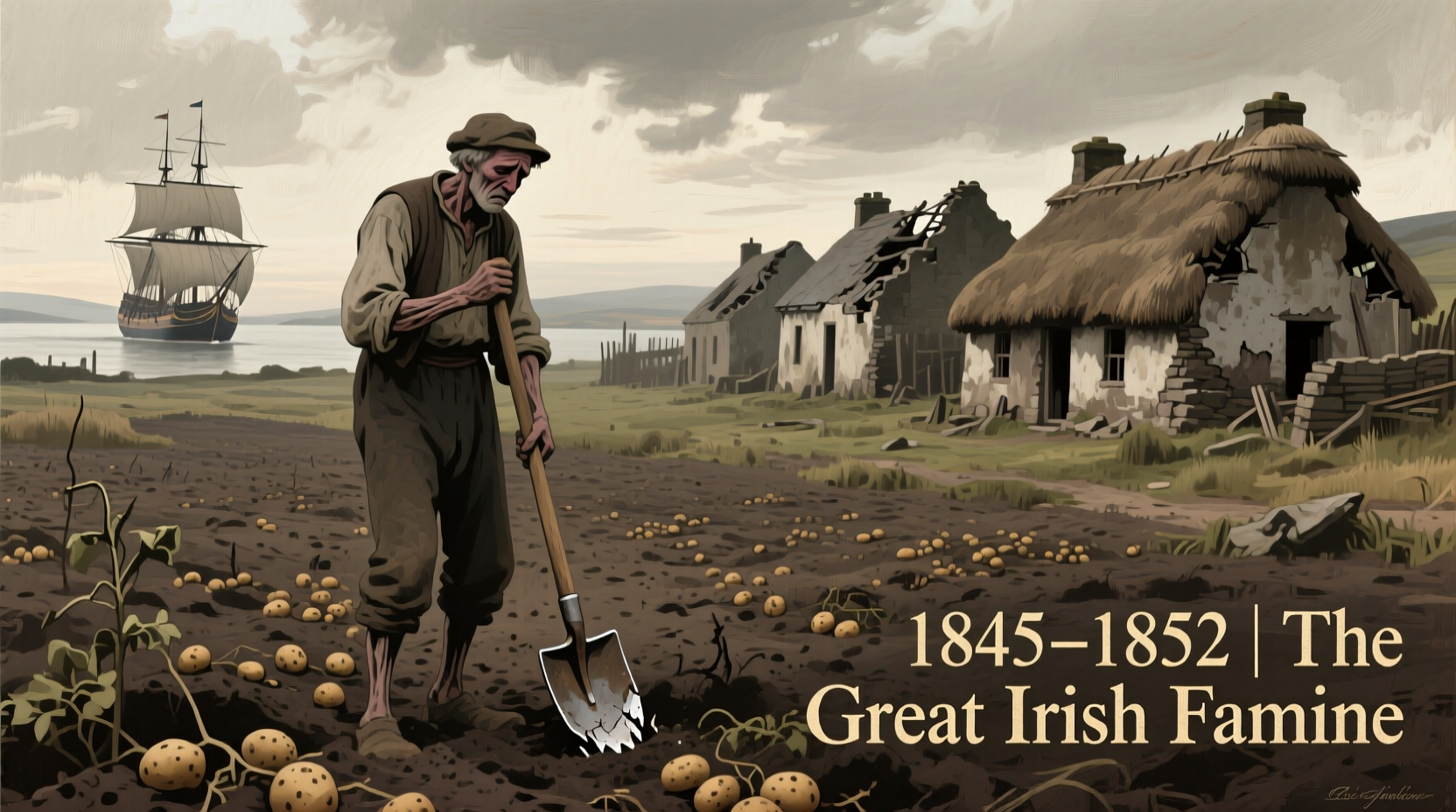
When searching for when was Ireland's potato famine, you're seeking clarity on one of history's most catastrophic food crises. Understanding the precise timeline helps contextualize how a single crop failure transformed an entire nation. This article delivers verified historical facts, clear chronological markers, and lasting impacts that continue to shape Irish identity today.
Understanding the Great Hunger: More Than Just Dates
The Irish Potato Famine, or An Gorta Mór (The Great Hunger) in Irish, wasn't merely a natural disaster but a complex tragedy rooted in colonial policies, economic vulnerability, and biological catastrophe. While many know it involved potatoes, few understand how British governance, land ownership structures, and export policies exacerbated what began as a crop disease.
Key Historical Timeline of the Irish Famine
| Year | Key Event | Impact |
|---|---|---|
| 1845 | Phytophthora infestans (potato blight) first detected in Ireland | 33% of potato crop destroyed; initial government response inadequate |
| 1846 | Complete crop failure; "Black '47" begins | 50% of potato crop lost; workhouse populations triple |
| 1847 | "Black '47" - worst famine year | Approximately 400,000 deaths; mass evictions begin |
| 1848-1850 | Partial crop recoveries but systemic issues persist | Continued high mortality; peak emigration years |
| 1851-1852 | Famine conditions gradually subside | Ireland's population decreased by 20-25% through death and emigration |
What Caused the Irish Potato Famine to Last So Long?
Understanding when did the Irish potato famine start and end requires examining why a single crop failure became a multi-year catastrophe. Several interconnected factors prolonged the crisis:
- Monoculture dependency - Over 3 million Irish people relied almost exclusively on potatoes for sustenance
- British policy failures - Despite the crisis, Ireland remained a net food exporter to Britain throughout the famine
- Inadequate relief efforts - Soup kitchens were closed in 1847, replaced by workhouses that spread disease
- Landlord-tenant system - Mass evictions displaced starving families during the worst years
How the Potato Blight Spread Across Ireland
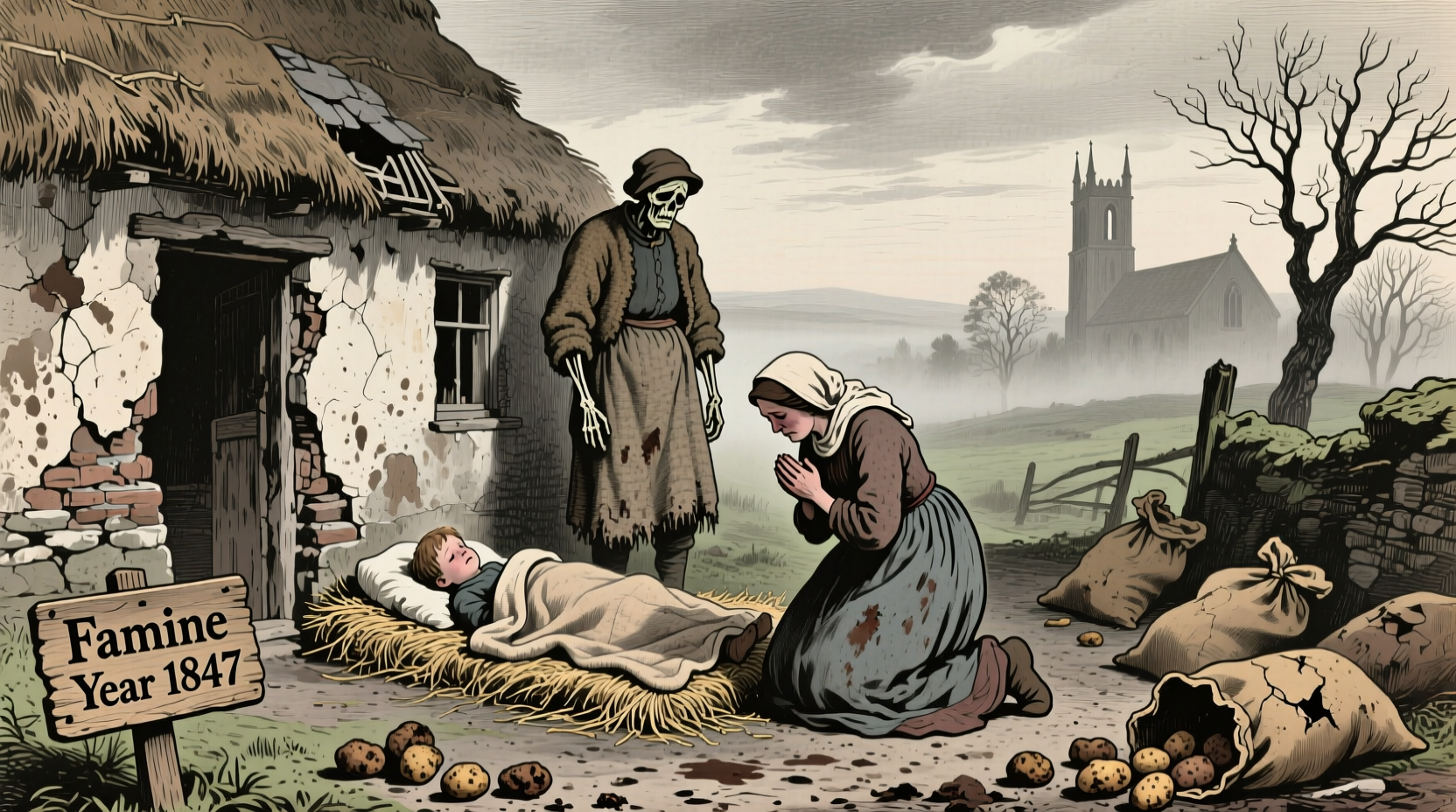
The pathogen Phytophthora infestans arrived in Ireland in 1845, likely from North America. This water mold thrived in Ireland's cool, damp climate, destroying potato crops within days. Unlike previous crop failures, this blight returned annually from 1845-1849, preventing recovery. The scientific understanding of plant diseases was virtually nonexistent at the time, leaving farmers powerless against the invisible destroyer of their staple food.
Human Cost: Beyond the Basic Timeline of Irish Famine
While knowing what year did the potato famine start in Ireland (1845) provides chronological context, the human impact reveals the true scale of tragedy:
- Approximately 1 million people died from starvation and related diseases
- Another 1 million emigrated, primarily to the United States, Canada, and Australia
- Ireland's population declined from 8.2 million in 1841 to 6.6 million in 1851
- The famine disproportionately affected the Irish-speaking rural poor
- By 1855, Ireland's population had fallen to approximately 5.5 million
Legacy of the Great Hunger in Modern Ireland
The question when was the Irish potato famine period might seem historical, but its consequences continue to shape Ireland today. The famine accelerated the decline of the Irish language, transformed land ownership patterns, and created the Irish diaspora that now numbers over 80 million worldwide. Modern Irish memorialization, including Famine memorials in Dublin and nationwide commemorations, acknowledges this pivotal moment in national identity.
Authoritative Sources for Further Research
For those seeking verified information about the exact dates of the Irish potato famine, these academic resources provide comprehensive documentation:
- Central Statistics Office Ireland - Official census data showing population decline
- National Library of Ireland - Digitized famine-era letters and documents
- RTÉ Archives - Irish national broadcaster's historical resources
- BBC History - Comprehensive overview with academic references
Frequently Asked Questions
How long did the Irish Potato Famine last?
The Irish Potato Famine lasted approximately seven years, from 1845 to 1852. The most severe period, known as "Black '47," occurred in 1847 when mortality rates peaked and mass emigration began.
What caused the Irish Potato Famine to end?
The famine gradually subsided as potato crops recovered from 1849-1852, combined with massive population reduction through death and emigration. Improved agricultural practices and crop diversification also contributed to the end of the crisis.
Why did the potato blight affect Ireland more severely than other countries?
Ireland's extreme dependence on a single potato variety (the Irish Lumper), combined with British colonial policies, tenant farming systems, and lack of alternative food sources for the rural poor, made Ireland uniquely vulnerable compared to other European nations experiencing the same blight.
How did the famine change Ireland's population long-term?
Ireland's population never recovered from the famine. From a peak of approximately 8.2 million in 1841, the population declined to 6.6 million by 1851 and continued falling to about 4.5 million by 1901. This demographic collapse fundamentally altered Irish society and created the foundation for the global Irish diaspora.




 浙公网安备
33010002000092号
浙公网安备
33010002000092号 浙B2-20120091-4