
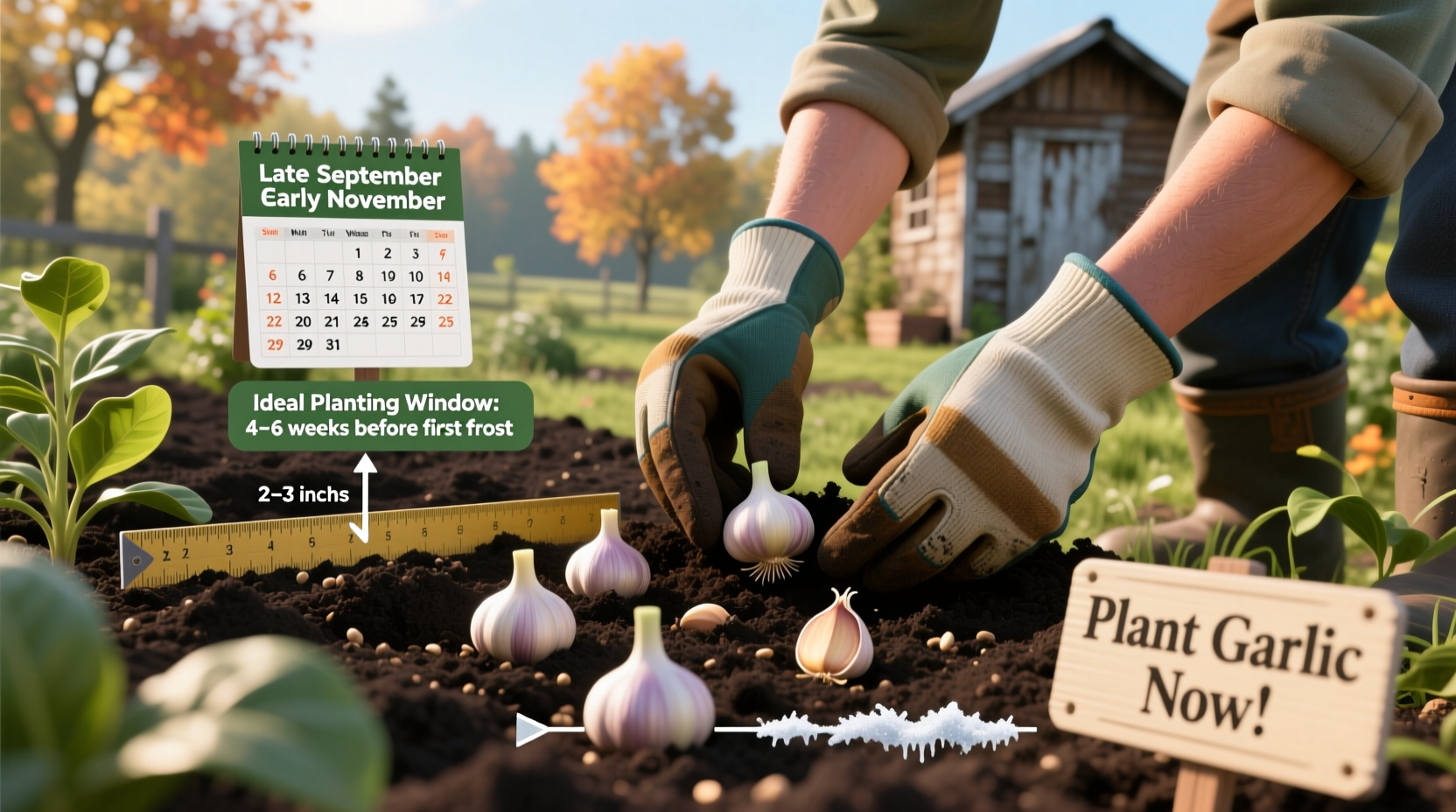
Plant garlic cloves 4-6 weeks before your region's first hard frost, typically in September to November for most temperate climates. Fall planting produces larger, more flavorful bulbs than spring planting. In USDA zones 1-5, plant in September; zones 6-8, October; zones 9-10, November; zones 11-12, December.
Timing your garlic planting correctly makes the difference between a bountiful harvest and disappointing bulbs. As a culinary historian who's traced garlic's journey from ancient Central Asian fields to modern kitchens, I've seen how proper planting transforms this essential ingredient. Let's explore exactly when and how to plant garlic for maximum flavor and yield.
Why Fall Planting Beats Spring for Garlic
Garlic requires a cold period called vernalization to form proper bulbs. When planted in fall, cloves develop roots before winter dormancy, then resume vigorous growth in spring. This extended growing season produces larger, more complexly flavored bulbs compared to spring-planted garlic.
| Planting Season | Root Development | Bulb Size | Flavor Complexity | Best For |
|---|---|---|---|---|
| Fall (4-6 weeks before first frost) | Established before winter | Large, full-sized bulbs | Rich, complex flavor profile | All hardneck varieties, most softnecks |
| Spring (as soon as soil workable) | Develops during growing season | Smaller, often single-cloved bulbs | Milder, less developed flavor | Warm climates (zones 9-12), emergency planting |
Garlic Planting Timeline: From Clove to Harvest
Understanding garlic's growth cycle helps you time your planting perfectly. This timeline shows what happens underground when you plant at the optimal time:
- September-October: Plant cloves 2-4 inches deep, pointy end up
- October-November: Roots develop while tops remain dormant
- December-February: Winter dormancy (critical for bulb formation)
- March-April: Rapid top growth begins as temperatures warm
- May-June: Bulb formation accelerates with longer daylight
- July: Harvest when 1/3 of leaves turn brown
Climate-Specific Planting Guide
Your exact planting window depends on your USDA hardiness zone. The key is planting early enough for root development but late enough to prevent premature top growth before winter.
| USDA Zone | First Frost Date | Optimal Planting Window | Special Considerations |
|---|---|---|---|
| 1-5 (Alaska, Northern Midwest) | August-September | August-September | Plant deeper (4-6 inches), heavy mulch after ground freezes |
| 6-8 (Northeast, Midwest, Pacific Northwest) | October-November | September-October | Standard 2-4 inch depth, mulch after soil cools |
| 9-10 (Southeast, California) | November-December | October-November | Choose softneck varieties, chill cloves in fridge for 40 days |
| 11-12 (Florida, Southern California, Hawaii) | Rare or no frost | December-January | Must chill cloves 40-60 days before planting, use only softnecks |
According to the USDA Plant Hardiness Zone Map, these planting windows align with regional climate patterns that have been verified through decades of agricultural research at land-grant universities.
Step-by-Step Planting Instructions
Follow these professional techniques for maximum garlic success:
- Prepare soil 2 weeks before planting: Amend with 3 inches of compost and balanced organic fertilizer
- Select quality cloves: Use largest cloves from organic bulbs (never grocery store garlic)
- Planting depth: 2 inches deep in heavy soil, 4 inches in sandy soil
- Spacing: 4-6 inches between cloves, 12-18 inches between rows
- Mulching: Apply 4-6 inches of straw after soil temperature drops below 50°F
Avoid These Common Planting Mistakes
Based on Cooperative Extension data from University of Minnesota Extension, these errors reduce yields by 30-50%:
- Planting too early: Causes premature top growth that freezes in winter
- Planting too shallow: Exposes cloves to temperature fluctuations
- Using grocery store garlic: Often treated to prevent sprouting
- Ignoring soil pH: Garlic prefers slightly acidic to neutral soil (6.0-7.0)
- Skipping mulch: Essential for temperature regulation and weed control
Special Considerations for Different Garlic Types
Not all garlic is created equal. Hardneck varieties (like Rocambole and Purple Stripe) require more chilling hours than softnecks (like Silverskin and Artichoke). In warmer climates (zones 9+), you'll need to refrigerate cloves for 40-60 days before planting to simulate winter conditions.
According to research from Oregon State University Extension, hardneck garlic typically needs 4-8 weeks of temperatures below 40°F for proper bulb formation, while softnecks require less cold exposure.
When to Harvest Your Garlic
Timing your harvest is just as crucial as planting. Watch for these signs:
- Lower 1/3 of leaves turn brown while top 2/3 remain green
- Bulb wrappers become dry and papery
- Individual cloves fill out the wrapper
Harvest too early and bulbs won't be fully developed. Wait too long and bulbs may split open, reducing storage life. The optimal harvest window is typically late June to August depending on your planting date and climate.
Proper Curing and Storage Techniques
After harvest, cure garlic in a warm, dry, shaded area with good airflow for 2-3 weeks. Once cured, trim roots and tops, then store in mesh bags in a cool (55-65°F), dark place with 60-70% humidity. Properly stored garlic can last 6-12 months depending on variety.
FAQ: Your Garlic Planting Questions Answered
Can I plant garlic in the spring instead of fall?
Yes, but with limitations. Spring-planted garlic typically produces smaller, single-cloved bulbs called "rounds" rather than full bulbs. In cold climates (zones 1-7), spring planting often yields disappointing results. In warmer zones (8+), spring planting can work if you chill cloves in the refrigerator for 40 days before planting to simulate winter conditions.
How deep should I plant garlic cloves?
Plant garlic cloves 2-4 inches deep, measured from the base of the clove to the soil surface. In heavy clay soils, plant shallower (2 inches); in sandy soils, plant deeper (4 inches). Always position cloves with the pointed end up and flat root end down. Proper depth protects cloves from temperature extremes while allowing easy shoot emergence.
What happens if I plant garlic too early in the fall?
Planting too early (more than 6 weeks before first frost) causes premature top growth that can't survive winter temperatures. This results in dead plants come spring. The ideal planting window allows 2-4 weeks for root development before the ground freezes, but prevents significant top growth. If you accidentally plant too early, apply mulch immediately after soil cools to moderate temperatures.
How do I prepare garlic cloves before planting?
Separate bulbs into individual cloves 1-2 days before planting, keeping the papery wrapper intact. Select the largest, healthiest cloves for planting (save smaller ones for cooking). Do not peel cloves. In warm climates (zones 9+), refrigerate cloves for 40 days before planting to provide necessary cold exposure. Never use grocery store garlic, as it's often treated to prevent sprouting.
Should I water garlic after planting in fall?
Water thoroughly immediately after planting to settle the soil around cloves, then water only if the soil becomes extremely dry before winter. Overwatering in fall can cause cloves to rot. Once established, garlic is relatively drought-tolerant through winter. Resume regular watering in early spring when active top growth begins.




 浙公网安备
33010002000092号
浙公网安备
33010002000092号 浙B2-20120091-4