
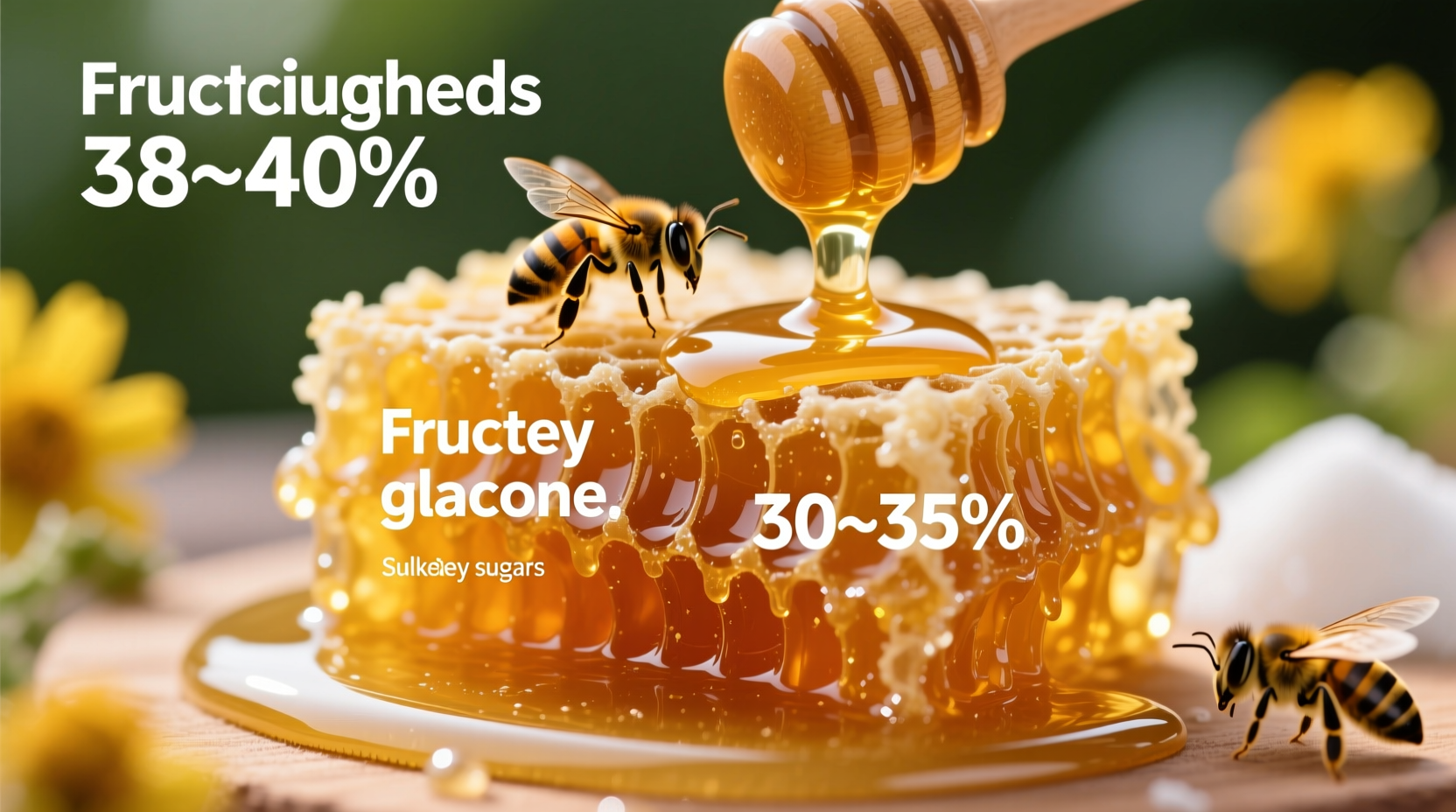
Honey contains two primary natural sugars: fructose (approximately 38-40%) and glucose (about 30-32%), with smaller amounts of sucrose, maltose, and other complex carbohydrates making up the remainder. This specific sugar composition gives honey its distinctive sweetness, viscosity, and crystallization properties.
Understanding what type of sugar is in honey isn't just academic—it directly impacts how you use this natural sweetener in cooking, baking, and daily consumption. Unlike table sugar which is pure sucrose, honey's unique sugar profile creates different culinary behaviors and metabolic effects that every health-conscious consumer should know.
The Science Behind Honey's Sugar Composition
Honey isn't simply "sugar"—it's a complex natural product created when bees process flower nectar. During this transformation, enzymes in bees' honey stomachs break down the sucrose in nectar into simpler sugars through a process called inversion. The resulting composition varies slightly depending on floral source, but consistently features two dominant monosaccharides.
According to USDA FoodData Central analysis of raw honey, the typical sugar breakdown appears as follows:
| Sugar Type | Percentage in Honey | Natural Source |
|---|---|---|
| Fructose | 38-40% | Nectar from flowers |
| Glucose | 30-32% | Nectar from flowers |
| Sucrose | 1-2% | Nectar (before inversion) |
| Maltose | 7-8% | Created during honey production |
| Other complex sugars | 15-17% | Various floral sources |
Why Fructose and Glucose Dominate Honey's Profile
The predominance of fructose and glucose in honey isn't accidental—it's the result of biological processes perfected over millions of years. When bees collect nectar, it typically contains about 70-80% water and sucrose as the primary sugar. As bees process this nectar in their honey stomachs, they add invertase enzymes that split sucrose into its component parts: glucose and fructose.
This enzymatic conversion serves multiple purposes for bees:
- Creates sugars that are more stable for long-term storage
- Reduces water content through evaporation during hive processing
- Prevents crystallization that would occur with pure sucrose
- Provides readily available energy for the hive
How Honey's Sugar Ratio Affects Real-World Use
The specific fructose-to-glucose ratio in honey creates practical differences you'll notice when using it compared to other sweeteners. This ratio varies by floral source, which explains why different honey varieties behave differently in your kitchen:
- High-fructose honeys (like acacia): Remain liquid longer, sweeter taste, better for cold applications
- High-glucose honeys (like clover): Crystallize faster, milder sweetness, better for baking
Understanding these differences helps you select the right honey for your purpose. For instance, if you're making a cold tea or salad dressing, a high-fructose honey like tupelo works best. For baking where you want controlled crystallization, a medium-ratio honey like wildflower provides ideal performance.
Honey vs. Other Sweeteners: A Practical Comparison
When evaluating what type of sugar is in honey compared to alternatives, consider these practical differences:
- Sweetness perception: Honey tastes about 25% sweeter than table sugar due to its higher fructose content, allowing you to use less for equivalent sweetness
- Moisture retention: Honey's sugar composition helps baked goods stay moist longer than those made with sucrose
- Caramelization: Honey browns at lower temperatures than table sugar due to its glucose content
- Freezing point: Honey remains liquid at lower temperatures than sucrose solutions
Common Misconceptions About Honey's Sugars
Several myths persist about honey's sugar composition that deserve clarification based on scientific analysis:
- "Honey is just sugar": While honey contains sugars, it also contains trace enzymes, amino acids, vitamins, and antioxidants not found in refined sugar
- "All honey has the same sugar profile": Different floral sources create varying fructose-glucose ratios—orange blossom honey differs significantly from manuka
- "Raw honey has different sugars": Processing affects trace elements but not the fundamental sugar composition, which is determined during bee processing
Practical Guidance for Using Honey's Natural Sugars
When incorporating honey into your diet or recipes, keep these evidence-based considerations in mind:
- Substitute honey for sugar at a 3:4 ratio (use 3/4 cup honey for every 1 cup sugar) and reduce liquid by 1/4 cup
- Lower oven temperatures by 25°F when baking with honey to prevent over-browning
- For consistent results, choose a specific honey variety rather than generic "honey" for recipes
- Store honey at room temperature—refrigeration accelerates crystallization of the glucose component
Health Considerations of Honey's Sugar Profile
The specific sugar composition of honey affects how your body processes it compared to other sweeteners. Research from the American Journal of Clinical Nutrition shows that honey's higher fructose content results in a slightly lower glycemic index (58) than table sugar (60-65), meaning it causes a somewhat slower rise in blood sugar.
However, it's crucial to understand that honey remains a concentrated source of carbohydrates. The National Honey Board emphasizes that while honey contains trace nutrients absent in refined sugar, it should still be consumed in moderation as part of a balanced diet—about 1-2 tablespoons daily for most adults.




 浙公网安备
33010002000092号
浙公网安备
33010002000092号 浙B2-20120091-4