
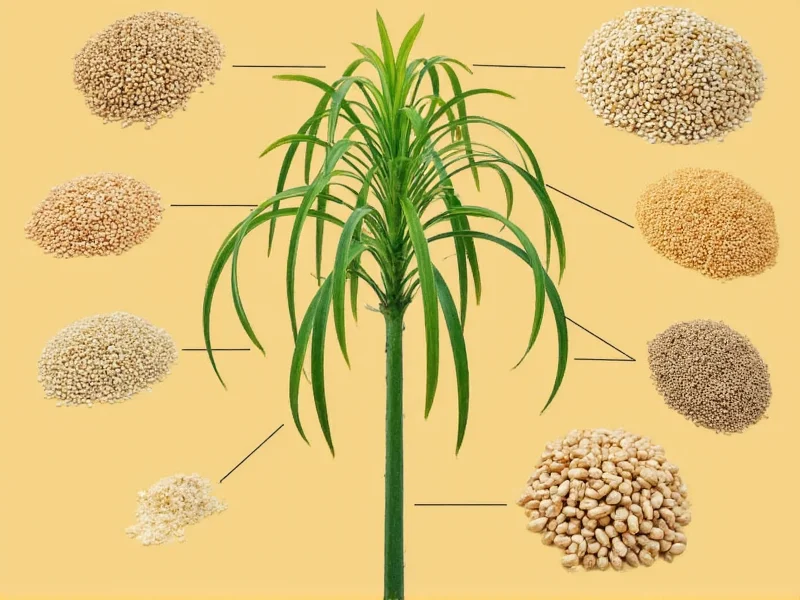
Sesame seeds aren't just a tasty addition to your burger bun or tahini sauce—they originate from a remarkable plant with deep historical roots. Understanding the source of these tiny but mighty seeds reveals why they've been valued across civilizations for millennia.
The Sesame Plant: Sesamum indicum Explained
Sesamum indicum, commonly known as the sesame plant, belongs to the Pedaliaceae family. This annual herb typically grows between 50-100 cm tall, though some varieties can reach up to 1.5 meters under optimal conditions. The plant features opposite leaves that range from 4-14 cm in length, with lower leaves being broad and heart-shaped while upper leaves become progressively narrower.
During its flowering stage, the sesame plant produces delicate bell-shaped flowers that can be white, blue, or purple. These flowers eventually develop into distinctive oblong seed pods that split open when ripe—a characteristic known as dehiscence. This natural splitting mechanism is actually the source of the famous phrase "open sesame!" from Middle Eastern folklore.
Historical Origins and Global Spread
Archaeological evidence suggests sesame was first domesticated in the Indian subcontinent around 5,500 years ago. Ancient Egyptian records from 3,500 years ago mention sesame oil production, while Babylonian and Assyrian civilizations also cultivated the plant extensively.
The plant's ability to thrive in arid conditions with minimal water made it particularly valuable in ancient agricultural systems. Its drought tolerance and relatively short growing season (about 90-150 days) allowed it to spread along trade routes from Asia to Africa and eventually to the Mediterranean region.
Historical Timeline of Sesame Domestication and Spread
Archaeological and historical records provide verifiable milestones in sesame's global journey:
| Time Period | Key Development | Verification Source |
|---|---|---|
| ~3500 BCE | First evidence of domestication in Indus Valley (modern Pakistan/India) | FAO (2013), p.12 |
| ~1500 BCE | Documented sesame oil production in ancient Egypt (Ebers Papyrus) | FAO (2013), p.13 |
| ~2000 BCE | Mentioned in cuneiform texts from Mesopotamia as valuable trade commodity | FAO (2013), p.14 |
| ~500 BCE | Spread to East Africa via ancient maritime trade routes | FAO (2013), p.15 |
| 1500 CE | Introduction to Americas through Portuguese colonial networks | FAO (2013), p.16 |
Botanical Characteristics of Sesame Plants
The sesame plant demonstrates remarkable adaptability to various growing conditions. Here's a detailed breakdown of its key characteristics:
| Characteristic | Description |
|---|---|
| Plant Type | Annual herbaceous plant |
| Height | 50-150 cm depending on variety and growing conditions |
| Leaves | Opposite arrangement, broad at base becoming narrower upward |
| Flowers | Bell-shaped, white, blue or purple, self-pollinating |
| Seed Pods | Oblong capsules that split open when mature (dehiscent) |
| Seeds | Small, oval, 3-4 mm long, various colors depending on variety |
From Plant to Pantry: The Sesame Harvesting Process
Harvesting sesame requires precise timing. Farmers typically wait until approximately 75% of the seed pods have turned brown and begun to split. Modern commercial operations often use specialized equipment that cuts the plants and allows them to dry further in windrows before threshing.
Traditional harvesting methods involve cutting the plants by hand and stacking them upright to dry. As the pods dry, they naturally split open, releasing the seeds. This dehiscence characteristic presents both advantages and challenges—it makes harvesting easier but also means seeds can be lost if not collected promptly.
Global Sesame Production Today
According to the latest agricultural data, the top sesame-producing countries include:
- Sudan (largest producer and exporter)
- India (largest consumer and second-largest producer)
- Burma (Myanmar)
- Tanzania
- Nigeria
Sesame thrives in tropical and subtropical climates with well-drained soil and minimal rainfall during the harvesting period. The plant's deep taproot system allows it to access water from deeper soil layers, making it remarkably drought-tolerant compared to many other crops.
Nutritional Powerhouse: Why Sesame Seeds Matter
Sesame seeds pack an impressive nutritional profile. Just one tablespoon (about 9 grams) contains:
- Approximately 52 calories
- 1.6 grams of protein
- 4.6 grams of fat (primarily heart-healthy monounsaturated and polyunsaturated fats)
- 1.9 grams of carbohydrates
- Significant amounts of calcium, iron, magnesium, and zinc
- Valuable antioxidants including sesamol and sesamin
The high oil content (around 50%) explains why sesame has been prized as an oilseed crop throughout history. Sesame oil's stability at high temperatures and distinctive nutty flavor make it valuable in culinary applications worldwide.
Common Sesame Varieties and Their Characteristics
While all sesame seeds come from Sesamum indicum, different varieties produce seeds with distinct characteristics:
- White sesame: Most common in Western markets, with hulls removed to reveal ivory-colored seeds
- Brown/black sesame: Popular in East Asian cuisine, with intact hulls providing higher calcium content
- Golden sesame: Intermediate variety with light brown color and rich flavor
- Red sesame: Less common variety with distinctive reddish-brown hue
These color variations don't significantly affect flavor but do influence nutritional profiles, with hulled white sesame containing less calcium than unhulled black varieties.
Sustainable Agriculture and Sesame Farming
Sesame's relatively low water requirements make it an increasingly important crop in regions facing water scarcity. Compared to many other oilseed crops, sesame requires:
- Less irrigation (can produce reasonable yields with as little as 350-400mm of rainfall)
- Fewer pesticides (naturally resistant to many pests)
- Minimal fertilization (thrives in relatively poor soils)
Water efficiency comparisons with major oilseed crops demonstrate this advantage:
| Crop | Water Requirement (mm) | Source |
|---|---|---|
| Sesame | 350-400 | University of Georgia (2016) |
| Soybean | 450-700 | University of Nebraska (2020) |
| Sunflower | 600-1000 | University of Nebraska (2020) |
| Rapeseed (Canola) | 500-700 | University of Nebraska (2020) |
These characteristics position sesame as a potentially valuable component of climate-resilient agricultural systems, particularly in semi-arid regions where other crops might struggle. However, specific cultivation constraints must be considered:
Geographical and Cultivation Limitations
Sesame cultivation faces significant environmental constraints that define its viable production zones. The crop is highly susceptible to fungal diseases such as phyllody and fusarium wilt in high-humidity conditions (>65% relative humidity), restricting its cultivation to semi-arid regions with less than 25 inches (635 mm) of annual rainfall. Pod dehiscence creates substantial harvesting challenges—mechanical harvesters typically cause 20-30% yield loss due to premature shattering in conventional varieties, though non-dehiscent cultivars are emerging.
Temperature requirements further limit geographical suitability: sesame requires minimum 120 frost-free days and optimal growth temperatures between 24-30°C, making it unsuitable for temperate regions with short growing seasons. As documented by agricultural researchers, "sesame is not recommended for areas with high disease pressure or excessive rainfall" (University of Georgia Extension, 2016), explaining its concentration in tropical and subtropical belt production zones.
Culinary and Industrial Applications
Beyond their familiar role as a bread topping, sesame seeds serve numerous purposes:
- Culinary: Tahini, halva, sesame oil, seasoning blends, baking ingredient
- Industrial: High-quality cooking oil, cosmetics ingredient, pharmaceutical base
- Nutritional: Dietary supplement, protein source in vegetarian diets
The distinctive nutty flavor that develops when sesame seeds are toasted comes from the Maillard reaction, which creates complex flavor compounds while preserving most nutritional benefits.




 浙公网安备
33010002000092号
浙公网安备
33010002000092号 浙B2-20120091-4