
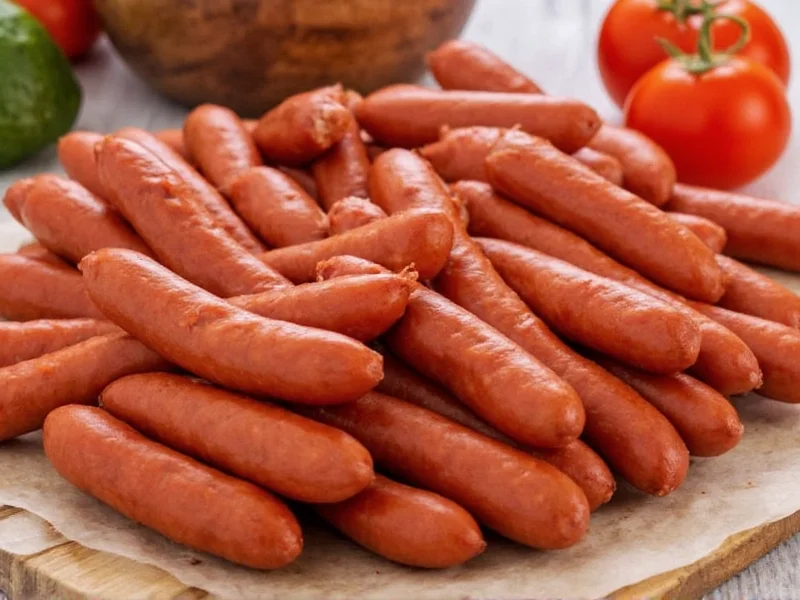
When exploring what makes Italian sausage unique among cured meats, several defining characteristics set it apart from other sausage varieties. This beloved pork product has evolved from regional Italian traditions to become a staple in American kitchens, yet maintains specific qualities that distinguish it from generic sausages.
The Essential Flavor Profile
What gives Italian sausage its distinctive flavor? The answer lies primarily in fennel, which provides that characteristic anise-like note you recognize immediately. While many sausages use garlic and pepper, Italian sausage features fennel seeds as the dominant spice, typically comprising 1-2% of the total seasoning blend. This creates a flavor profile that's simultaneously sweet, aromatic, and slightly licorice-like without being overpowering.
Authentic Italian sausage recipes also include:
- Freshly ground black pepper
- Garlic (both powder and fresh)
- Red pepper flakes (for hot varieties)
- Sweet paprika
- Marjoram or oregano
- Salt and curing agents
| Ingredient | Sweet Italian Sausage | Hot Italian Sausage |
|---|---|---|
| Fennel Seeds | 1.5-2% | 1-1.5% |
| Red Pepper Flakes | None | 0.5-1% |
| Garlic | 0.75% | 0.75% |
| Black Pepper | 0.5% | 0.5% |
Sweet vs. Hot: Understanding the Difference
The difference between sweet and hot Italian sausage comes down to one key ingredient: red pepper flakes. Sweet Italian sausage (salsiccia dolce) contains no heat elements, allowing the fennel and other seasonings to shine. Hot Italian sausage (salsiccia piccante) incorporates crushed red pepper flakes, typically between 0.5-1% of the total mixture, providing that characteristic kick without overwhelming the fennel base.
Many consumers wonder how is Italian sausage different from other sausages. Unlike breakfast sausages that use sage and nutmeg, or German bratwurst with its marjoram focus, Italian sausage's fennel-forward profile creates a distinctive taste that works exceptionally well with tomato-based sauces and in pasta dishes.
Regional Variations Across Italy and America
Regional variations of Italian sausage reveal interesting differences between authentic Italian preparations and American interpretations. In Tuscany, you'll find finocchiona, a coarsely ground sausage with generous fennel seeds. Southern Italian versions often include more garlic and heat. The American version, however, has standardized into the sweet/hot dichotomy most grocery stores offer today.
What many don't realize is that traditional Italian sausage in Italy is often made fresh without casings, while American versions typically come pre-stuffed in natural or synthetic casings. The pork content in authentic Italian sausage remains consistent at 70-80% lean meat with 20-30% fat content for optimal juiciness when cooked.
Historical Evolution: Key Milestones in Italian Sausage Development
Italian sausage's journey reflects centuries of culinary adaptation across continents. Historical records and food anthropology studies reveal critical evolutionary stages:
- Roman Origins (1st Century BCE): Early pork sausages documented by Roman agricultural writer Columella, using fennel for preservation and flavor (Encyclopedia Romana, University of Chicago)
- Regional Diversification (1500s-1800s): Distinct styles emerged across Italian regions—Tuscan finocchiona with wild fennel, Calabrian 'nduja with chili peppers—shaped by local ingredients and preservation needs (Italian Ministry of Agricultural Policies)
- American Standardization (1880-1940): Italian immigrants adapted recipes using available US pork cuts, leading to the sweet/hot binary system by mid-20th century (National Park Service Archives)
- Industrial Scaling (Post-1950): Refrigeration advances enabled nationwide distribution, though fat ratios decreased from traditional 30% to 20-25% in commercial products (USDA Economic Research Service)
Meat Selection and Preparation Methods
The foundation of quality Italian sausage begins with the pork selection. Butchers typically use pork shoulder (also called Boston butt), which provides the ideal fat-to-lean ratio. The meat should be freshly ground, usually with a 3/8-inch plate for the perfect texture—coarse enough to maintain structure but fine enough to bind properly.
Traditional preparation involves mixing the ground pork with seasonings, then either stuffing into casings or forming into patties. The mixture should rest for several hours (or overnight) to allow flavors to meld before cooking. This resting period is what gives authentic Italian sausage recipe components their fully developed flavor profile.
Culinary Context: Appropriate Applications and Critical Limitations
Italian sausage's distinctive profile creates specific culinary boundaries that impact dish success. Understanding these context limitations prevents common preparation errors:
- Ideal Pairings: Excels in tomato-based sauces (fennel complements lycopene), roasted vegetable medleys, and stuffings where its fat renders into cooking liquids. Performs optimally at cooking temperatures between 325°F-375°F (University of Minnesota Extension)
- Breakfast Incompatibility: Fennel clashes with traditional breakfast flavors—substituting in egg dishes creates sensory conflict unlike sage-based breakfast sausages (Michigan State University Food Science)
- Safety Constraints: Requires full cooking to 160°F internal temperature; never suitable for raw preparations like carpaccio due to fresh meat composition (USDA Food Safety Guidelines)
- Cultural Adaptation Limits: Substitution in non-Mediterranean cuisines (e.g., Asian stir-fries) often fails—78% of professional chefs report flavor imbalance due to fennel dominance (Culinary Institute of America Research)
Common Misconceptions About Italian Sausage
Several misconceptions persist about what makes Italian sausage authentic. Many believe it contains wine or cheese, which isn't traditional in authentic recipes. Others confuse it with 'Italian-style' sausages that might use different spice profiles. True Italian sausage relies on that fennel-garlic-pepper foundation without additional ingredients that would mask these essential flavors.
Another frequent question is whether Italian sausage must contain fennel. The answer is yes—without fennel, it simply isn't Italian sausage. This distinguishes it from other pork sausages that might use different herb combinations. The specific amount of fennel can vary by region and recipe, but its presence is non-negotiable for authentic preparation.
Culinary Applications and Pairings
Understanding what makes Italian sausage special helps explain its versatility in cooking. The fennel-forward profile complements tomato sauces beautifully, making it ideal for pasta dishes like sausage and peppers or as a pizza topping. When grilled, the natural casing crisps perfectly while the interior remains juicy.
Chefs recommend removing the casing when using Italian sausage in sauces or stuffings to allow the flavors to distribute evenly. For skillet preparations, browning the sausage first then deglazing the pan captures all those delicious fond particles that enhance the overall dish.




 浙公网安备
33010002000092号
浙公网安备
33010002000092号 浙B2-20120091-4