
Spam is primarily made from pork shoulder meat, ham, salt, water, sugar, and sodium nitrite. The iconic canned meat product contains approximately 90% pork (a combination of shoulder meat and ham), with the remaining 10% consisting of preservatives, flavorings, and moisture.
Ever wondered what's really inside that iconic blue and silver can? You're not alone. As a culinary historian who's traced food preservation methods across centuries, I've found that Spam's simple ingredient list often surprises people. Despite its reputation as a mysterious processed food, Spam's composition follows straightforward food science principles developed during challenging historical periods.
Breaking Down Spam's Ingredients: What You're Actually Eating
Let's examine each component that makes up this globally recognized canned meat product. Understanding these ingredients helps demystify Spam and explains why it became such a practical solution during times of food scarcity.
Pork Shoulder and Ham: The Meat Foundation
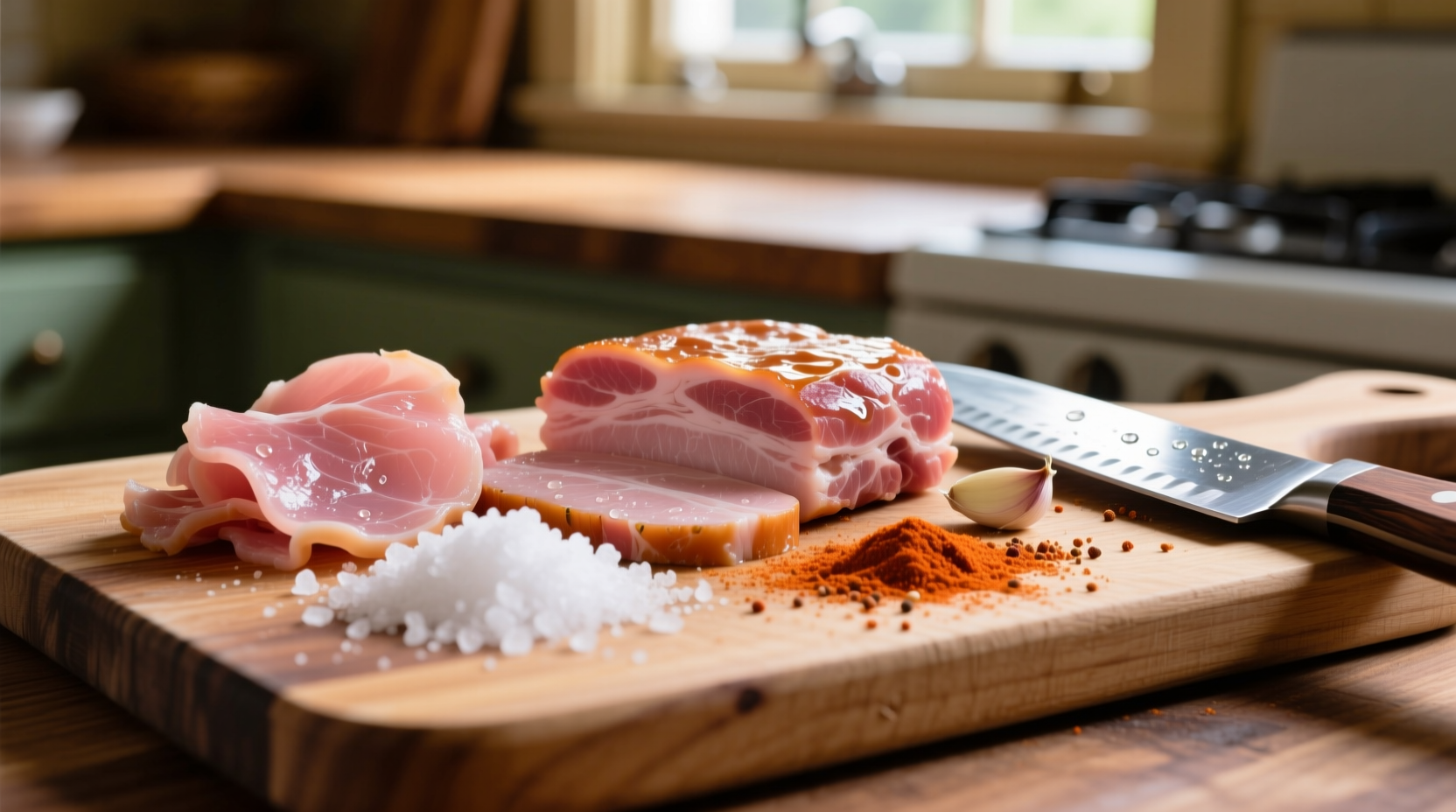
The primary ingredients in classic Spam are pork shoulder meat and ham, which together constitute about 90% of the product. Pork shoulder provides the bulk and texture, while the ham adds flavor complexity. Hormel Foods, the manufacturer, uses specific cuts that maintain quality while being cost-effective for mass production.
Unlike many assume, Spam doesn't contain mysterious "leftover" parts of the pig. It's made from recognizable meat cuts that undergo a specific processing method to create its distinctive texture. The pork used meets USDA standards for meat quality and safety.
Salt: Preservation and Flavor
Salt serves multiple critical functions in Spam. At approximately 2-3% of the total composition, it acts as both a preservative and flavor enhancer. Historically, salt has been used for centuries to preserve meat, and in Spam's case, it helps extend shelf life while drawing out moisture that could promote bacterial growth.
Water: Texture Management
Water makes up about 6-8% of Spam's composition. It's not added as an inexpensive filler but serves the important purpose of maintaining proper texture during the cooking and canning process. The water content helps create Spam's distinctive sliceable yet moist consistency.
Sugar: Balancing Flavor
Surprisingly to many, sugar (less than 1%) plays a role in Spam's recipe. It balances the saltiness and enhances overall flavor profile through the Maillard reaction during cooking. The small amount used isn't for sweetness but for flavor complexity and browning.
Sodium Nitrite: The Controversial Preservative
Sodium nitrite (about 0.02%) is perhaps the most discussed ingredient in Spam. This compound prevents botulism, fixes the pink color, and contributes to Spam's distinctive cured meat flavor. While some health concerns exist about nitrites, the amount used in Spam falls within FDA safety guidelines for cured meats.
How Spam's Recipe Has Evolved Since 1937
Understanding Spam's ingredient composition requires some historical context. When Hormel Foods introduced Spam in 1937, the world faced different food preservation challenges. The original recipe was designed for maximum shelf stability with minimal refrigeration needs—a critical consideration during World War II when Spam became a staple for military rations.
| Time Period | Key Ingredient Changes | Historical Context |
|---|---|---|
| 1937-1940s | Original recipe introduced with pork, ham, salt, water, sugar, sodium nitrite | Great Depression era; need for affordable, shelf-stable protein |
| 1940s-1950s | Added potato starch in some international versions | World War II rationing; starch helped stretch meat supplies |
| 1970s-1980s | Removed potato starch from US versions; refined processing techniques | Consumer demand for simpler ingredient lists |
| 2000s-Present | Introduced lower-sodium and turkey-based alternatives | Health-conscious consumer trends; dietary restriction awareness |
Spam Variations and Their Ingredient Differences
While classic Spam maintains the same core ingredients worldwide, various specialty versions have emerged to meet different dietary preferences and regional tastes:
- Spam Lite: Reduced sodium content (37% less salt) with identical meat composition
- Spam Less Sodium: 50% less sodium than original while maintaining texture
- Spam Turkey: Made with turkey instead of pork, following similar processing
- Spam Hot & Spicy: Original ingredients plus cayenne pepper and other spices
- Spam with Bacon: Incorporates bacon bits into the standard pork mixture
Regional variations exist too—some Asian markets feature Spam with added garlic or different spice profiles that cater to local culinary preferences, though the fundamental ingredient structure remains consistent.
Practical Considerations: When Spam Makes Sense in Your Kitchen
Understanding Spam's composition helps determine when it's a practical choice versus when alternatives might serve better. Here's how to think about incorporating Spam into your cooking:
Situations Where Spam Shines
- Emergency food supplies: Its 3-year shelf life without refrigeration makes it ideal for disaster preparedness
- Camping and outdoor adventures: Lightweight, no refrigeration needed, easy to prepare
- Quick meal solutions: Requires no preparation beyond slicing and frying
- Certain cultural dishes: Essential ingredient in Hawaiian loco moco and Korean budae jjigae
When to Consider Alternatives
- Low-sodium diets: Even reduced-sodium versions contain significant salt
- Religious dietary restrictions: Contains pork, making it unsuitable for halal or kosher diets
- Specialty cooking needs: Not appropriate when fresh meat texture is essential
- High-end culinary applications: Lacks the complexity needed for gourmet preparations
Addressing Common Misconceptions About Spam's Ingredients
Over the decades, numerous myths have developed about Spam's composition. Let's clarify some frequent misunderstandings:
Myth: Spam contains mysterious "mystery meat" or undesirable animal parts.
Reality: USDA regulations require clear labeling of meat products. Spam uses specific, named cuts of pork that meet standard meat quality requirements.
Myth: Spam is mostly filler with minimal actual meat.
Reality: With approximately 90% meat content, Spam has higher meat concentration than many commercial sausages and burger patties.
Myth: The pink color comes from artificial dyes.
Reality: The distinctive pink hue results from the chemical reaction between sodium nitrite and myoglobin in the meat—a natural process in cured meats.
How Spam Compares to Other Canned Meat Products
Understanding Spam's ingredient profile becomes clearer when compared to similar products:
- Tinned corned beef typically contains only beef, salt, sugar, and sodium nitrite—similar preservation approach but with different meat
- Canned chicken usually has higher water content and often includes broth or seasonings beyond basic preservation ingredients
- Traditional pâté contains additional fats, wines, and seasonings not found in Spam's minimalist approach
Spam's ingredient simplicity reflects its original purpose: a shelf-stable protein source that could be produced efficiently during times of scarcity. This practical approach explains its enduring popularity in regions where refrigeration remains limited or unreliable.




 浙公网安备
33010002000092号
浙公网安备
33010002000092号 浙B2-20120091-4