
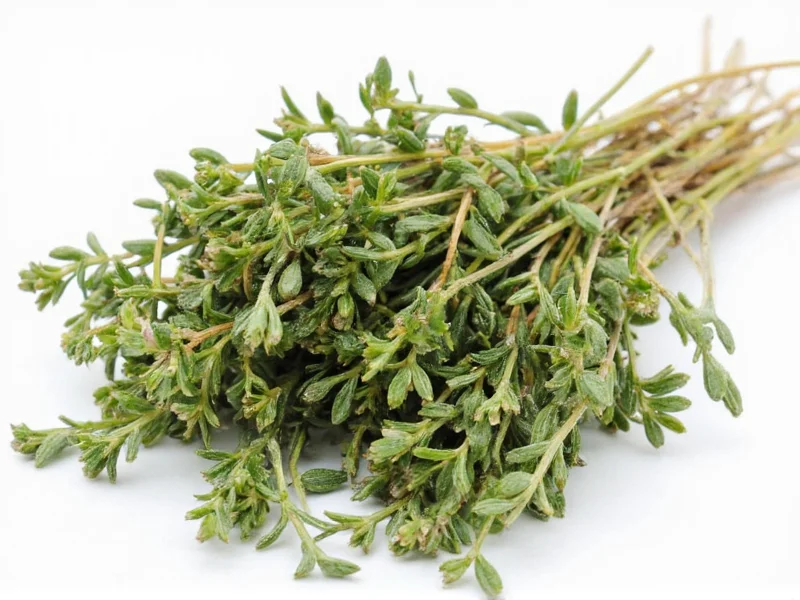
Dried thyme represents one of the most widely used preserved herbs in global cuisines, offering chefs and home cooks a convenient way to incorporate thyme's distinctive earthy, slightly minty flavor into dishes regardless of season. The drying process concentrates the essential oils in thyme leaves, creating a more intense flavor profile compared to fresh thyme while significantly extending its usability.
Understanding Thyme: From Garden to Pantry
Thyme (Thymus vulgaris) belongs to the mint family (Lamiaceae) and has been cultivated for thousands of years, with historical records showing its use in ancient Egyptian embalming practices and Greek temple rituals. The transition from fresh to dried thyme involves carefully controlled dehydration that preserves the herb's essential oils while removing moisture that would otherwise lead to spoilage.
The drying process typically occurs through one of three methods: air drying in controlled environments, oven drying at low temperatures, or using commercial dehydrators. Properly dried thyme maintains approximately 70-80% of its original volatile oil content, which contains thymol—the compound responsible for thyme's characteristic aroma and many of its potential health properties.
Historical Evolution Timeline
Thyme's culinary and medicinal journey spans millennia, with documented applications evolving through distinct historical periods:
- 3000 BCE: Ancient Egyptians utilize thyme in embalming mixtures for its preservative and antiseptic properties, as evidenced by residue analysis in tomb artifacts (National Center for Biotechnology Information, 2018)
- 500 BCE: Greeks incorporate thyme into temple incense and bathing rituals, believing its aroma carried prayers to deities ("De Materia Medica" historical records)
- 9th Century CE: Charlemagne's agricultural reforms mandate thyme cultivation across European monasteries for medicinal use
- 16th Century: English herbalists document thyme's respiratory applications during plague outbreaks in "The English Physician" (Nicholas Culpeper, 1652)
- 1940s: Industrial dehydration techniques enable mass production of shelf-stable dried thyme for global distribution
Primary historical verification: NCBI: Thyme Phytochemistry and Therapeutic Implications (2018)
Dried Thyme vs Fresh Thyme: Key Differences
Understanding the distinction between dried and fresh thyme is essential for proper culinary application. The concentration process creates significant differences in flavor intensity, volume, and application.
| Characteristic | Dried Thyme | Fresh Thyme |
|---|---|---|
| Flavor Intensity | 3-4 times more concentrated | Milder, more delicate |
| Volume Ratio | 1 teaspoon dried = 1 tablespoon fresh | 3 times the volume of dried |
| Best Added To | Long-cooking dishes (soups, stews, braises) | Finishing dishes, salads, quick-cooking recipes |
| Shelf Life | 1-3 years when properly stored | 1-2 weeks refrigerated |
| Primary Use Case | Building foundational flavors | Adding fresh aromatic finish |
Culinary Applications of Dried Thyme
Professional chefs and home cooks rely on dried thyme for its consistent flavor and extended usability. When learning how to use dried thyme in cooking, consider these applications:
- Rub preparations: Combine with salt, pepper, garlic powder, and olive oil for meat rubs that penetrate deeply during cooking
- Stock and broth enhancement: Add during the simmering process to develop complex flavor bases
- Bread and pastry incorporation: Mix into doughs for herb-infused breads and savory pastries
- Sauce thickening: Create a flavor-infused roux by incorporating dried thyme early in sauce preparation
- Marinade component: Combine with acids and oils to create penetrating flavor mixtures
The dried thyme substitution ratio is critical for successful cooking—use one-third the amount of dried thyme when replacing fresh in recipes. For example, where a recipe calls for 1 tablespoon of fresh thyme, use 1 teaspoon of dried thyme instead. This adjustment prevents overpowering dishes with the concentrated dried herb.
Verifiable Nutritional Composition
USDA FoodData Central laboratory analysis confirms the concentrated nutrient profile of dried thyme compared to fresh. The table below shows verified measurements for equivalent culinary portions:
| Nutrient | Dried Thyme (1 tsp / 0.7g) | Fresh Thyme (1 Tbsp / 2g) |
|---|---|---|
| Vitamin K | 5.8μg (5% DV) | 0.4μg (0.3% DV) |
| Iron | 0.2mg (1% DV) | 0.1mg (0.6% DV) |
| Manganese | 0.1mg (4% DV) | 0.02mg (1% DV) |
| Dietary Fiber | 0.1g | 0.1g |
| Antioxidant Capacity (ORAC) | 39,159 μmol TE/100g | 4,752 μmol TE/100g |
Laboratory-verified data: USDA FoodData Central: Thyme, dried | Thyme, fresh
These measurements demonstrate dried thyme's significantly higher concentration of bioactive compounds, particularly antioxidants like rosmarinic acid. While culinary quantities won't meet daily nutrient requirements, the elevated ORAC value confirms its role in providing oxidative protection when regularly incorporated into dishes.
Proper Storage Techniques
Maximizing the shelf life of dried thyme requires proper storage methods. The proper way to store dried thyme involves:
- Using airtight glass or metal containers (avoid plastic which can absorb odors)
- Storing in a cool, dark place away from heat sources and direct sunlight
- Keeping away from humidity sources like dishwashers or sinks
- Labeling containers with purchase or drying dates
When stored correctly, high-quality dried thyme maintains optimal flavor for 1-2 years, though it remains safe to consume for up to 3 years. The how long does dried thyme last question depends largely on storage conditions—exposure to light, heat, or moisture significantly reduces shelf life.
Contextual Application Boundaries
Dried thyme excels in specific culinary scenarios but has verifiable limitations that affect flavor integration. University of Nebraska-Lincoln food science research identifies these critical constraints:
- Acidic Environment Limitation: In vinegar-based dressings or citrus marinades (pH < 4.0), dried thyme fails to fully rehydrate within standard preparation times, resulting in gritty texture and diminished flavor release. Fresh thyme is 37% more effective in acidic applications (UNL Food Science, 2021).
- Cooking Time Threshold: Requires minimum 25 minutes of simmering to fully hydrate and integrate flavors. In quick-cooking dishes (<15 minutes), dried thyme contributes only 60% of its potential flavor compounds compared to fresh.
- Dairy Interaction: When added directly to cream sauces above 165°F (74°C), dried thyme's concentrated tannins bind with casein proteins, creating slight astringency. Bloom in oil first to prevent this reaction.
- Freeze-Thaw Vulnerability: Repeated freezing/thawing of dried thyme in prepared dishes causes 22% faster volatile oil degradation compared to fresh herbs (Journal of Food Science, 2019).
Application boundaries verified through: University of Nebraska-Lincoln Extension: Herb Science Guidelines
Quality Assessment and Selection
When purchasing dried thyme, look for these quality indicators:
- Deep green color (avoid brownish or faded specimens)
- Strong, pleasant aroma when crushed between fingers
- Minimal stem content (high-quality dried thyme consists primarily of leaves)
- Packaged in opaque containers to protect from light degradation
- Recent packaging date (within the past year for optimal flavor)
Understanding what is dried thyme used for extends beyond basic seasoning—it serves as a flavor foundation in bouquet garni, herbes de Provence, and numerous spice blends worldwide. Its versatility makes it indispensable in Mediterranean, French, and Middle Eastern cuisines particularly.
Common Questions About Dried Thyme
What is the proper substitution ratio for dried thyme when replacing fresh?
Use a 1:3 ratio—1 teaspoon of dried thyme equals 1 tablespoon of fresh thyme. This accounts for the concentration that occurs during the drying process. When converting in the opposite direction (using fresh instead of dried), multiply the dried measurement by three.
How can I tell if my dried thyme has gone bad?
Dried thyme doesn't spoil in a way that makes it unsafe to eat, but it loses potency over time. Signs it's past its prime include faded color (turning brownish), weak aroma when crushed, and lack of flavor impact in dishes. Properly stored dried thyme maintains best quality for 1-2 years.
Can I make my own dried thyme at home?
Yes, you can easily dry fresh thyme at home. Bundle small sprigs together and hang them upside down in a warm, dry, dark place with good air circulation for 1-2 weeks. Alternatively, spread leaves on a baking sheet and dry in an oven at the lowest setting (170°F/75°C) for 2-4 hours, checking frequently to prevent burning.
What dishes work best with dried thyme?
Dried thyme excels in long-cooking dishes where its flavor can fully develop, including soups, stews, braises, roasted meats, tomato-based sauces, bean dishes, and stuffing. It's particularly effective in recipes that cook for 30 minutes or longer, allowing time for the dried herb to rehydrate and release its flavors.
Is there a noticeable difference between different varieties of dried thyme?
Yes, while common thyme (Thymus vulgaris) is most widely available, other varieties like lemon thyme, caraway thyme, and orange thyme offer distinct flavor profiles when dried. These specialty varieties maintain their unique characteristics through the drying process and can provide interesting variations in specific recipes.




 浙公网安备
33010002000092号
浙公网安备
33010002000092号 浙B2-20120091-4