
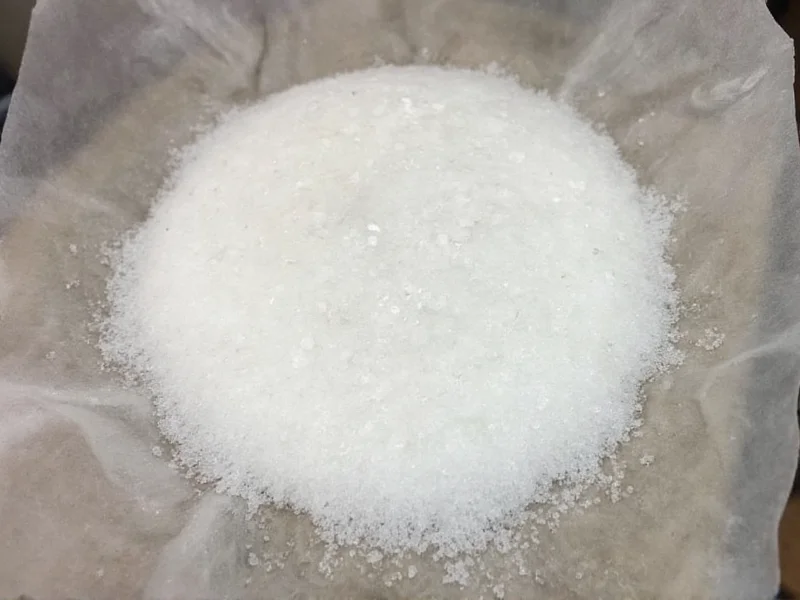
Understanding Demerara Sugar: Origins and Characteristics
Demerara sugar takes its name from the Demerara River in Guyana, where it was first commercially produced during British colonial rule. This specialty sugar represents one of the least processed forms of cane sugar available today, retaining some natural molasses content while undergoing minimal refining.
How Demerara Sugar Is Made
The production process begins with freshly harvested sugar cane, which is crushed to extract juice. This juice undergoes clarification and evaporation before crystallization. Unlike white sugar, Demerara sugar skips the centrifugation step that removes all molasses, resulting in those signature golden-brown crystals with a delicate caramel-like flavor.
Historical Evolution: From Colonial Plantations to Modern Production
Demerara sugar's development reflects significant agricultural and social transformations. Historical records from the British Library document this evolution through key milestones:
- 1658: Dutch colonization establishes sugar cultivation along Guyana's Demerara River
- 1746: First commercial sugar plantation founded in the Demerara region
- 1784: British takeover accelerates production with expanded plantation systems
- 1838: Abolition of slavery transitions labor to indentured workers from India and China
- 1970s: Guyanese government nationalizes sugar industry, modernizing production facilities
- Present: Ethically certified Demerara production follows Fair Trade standards while preserving traditional minimal-refining methods
This documented progression explains both the geographical specificity of authentic Demerara sugar and its transition from colonial commodity to contemporary specialty product.
Physical Properties and Identification
What sets Demerara sugar apart visually is its distinctive crystal structure. The grains are larger, coarser, and more opaque than regular brown sugar, typically measuring between 0.5-1.0 mm in diameter. When held to light, genuine Demerara sugar crystals display a translucent golden hue rather than the darker brown of muscovado sugar.
| Sugar Type | Crystal Size | Molasses Content | Best Uses |
|---|---|---|---|
| Demerara | Large (0.5-1.0mm) | 2-3% | Toppings, beverages, baking |
| Turbinado | Medium (0.3-0.6mm) | 2-3% | General purpose sweetening |
| Regular Brown | Small (0.1-0.3mm) | 3-10% | Baking, sauces |
| Muscovado | Very fine | 8-10% | Strong-flavored baking |
Demerara vs. Similar Sugars: Clearing the Confusion
Many consumers confuse Demerara sugar with turbinado and regular brown sugar, but key differences exist. While both Demerara and turbinado are centrifuged raw cane sugars, Demerara typically comes from Guyana and has slightly larger crystals. Regular brown sugar differs significantly as it's made by adding molasses back to refined white sugar.
When searching for authentic Demerara sugar benefits for baking, note that its lower moisture content compared to brown sugar makes it ideal for creating crunchy toppings on muffins and crumbles. The distinctive texture of Demerara sugar for coffee also provides a pleasant crunch that dissolves slowly, enhancing the drinking experience.
Culinary Applications and Best Practices
Chefs value Demerara sugar's unique properties for specific applications. Its large crystals create an appealing sparkle when sprinkled on baked goods before baking. The sugar's subtle molasses notes complement spice cakes, gingerbread, and fruit-based desserts without overwhelming other flavors.
For home bakers exploring what is Demerara sugar used for, consider these applications:
- As a finishing sugar for cookies and scones
- In crumble toppings for pies and crisps
- To sweeten coffee or tea where texture matters
- In spice rubs for meats where caramelization is desired
- As a partial substitute for white sugar in cookie recipes
Practical Limitations: Contextual Use Boundaries
Demerara sugar's distinctive properties create important usage constraints that affect culinary outcomes. Research from the University of Nebraska-Lincoln Food Safety program identifies specific scenarios where substitution fails:
- Cold beverages: Crystals dissolve incompletely in iced drinks, leaving granular residue (unlike fine white sugar)
- Delicate confections: Unsuitable for meringues or custards where coarse texture causes graininess
- Clear caramel applications: Molasses content accelerates browning, making it inappropriate for light-colored caramel sauces
- Yeast-based doughs: Lower solubility may inhibit yeast activation compared to refined sugars
These context boundaries confirm that while versatile, Demerara sugar requires recipe-specific evaluation rather than universal substitution.
Nutritional Profile Comparison
While often marketed as a healthier alternative, Demerara sugar nutrition facts reveal only marginal differences from white sugar. Both contain approximately 15 calories per teaspoon with nearly identical carbohydrate content. The slight nutritional advantage comes from trace minerals like calcium, iron, and potassium present in the minimal molasses content.
Understanding Demerara sugar vs brown sugar nutrition shows that while both contain small amounts of minerals, the differences are nutritionally insignificant for most consumers. The primary distinction remains in texture and flavor profile rather than health benefits.
Purchasing and Storage Recommendations
When shopping for genuine Demerara sugar, look for products labeled as such with visible large golden crystals. Specialty food stores, well-stocked supermarkets, and online retailers typically carry it. Proper storage in an airtight container away from moisture prevents the crystals from clumping.
For those exploring where to buy Demerara sugar near me, check the natural foods section of major grocery chains or specialty baking supply stores. The growing popularity of artisanal sugars has made Demerara more widely available than in previous decades.
Common Misconceptions Addressed
Several myths surround Demerara sugar. Despite claims about its health benefits, it remains nutritionally similar to other sugars. The difference between Demerara and turbinado sugar is often overstated—many manufacturers use the terms interchangeably, though traditional Demerara comes specifically from Guyana.




 浙公网安备
33010002000092号
浙公网安备
33010002000092号 浙B2-20120091-4