
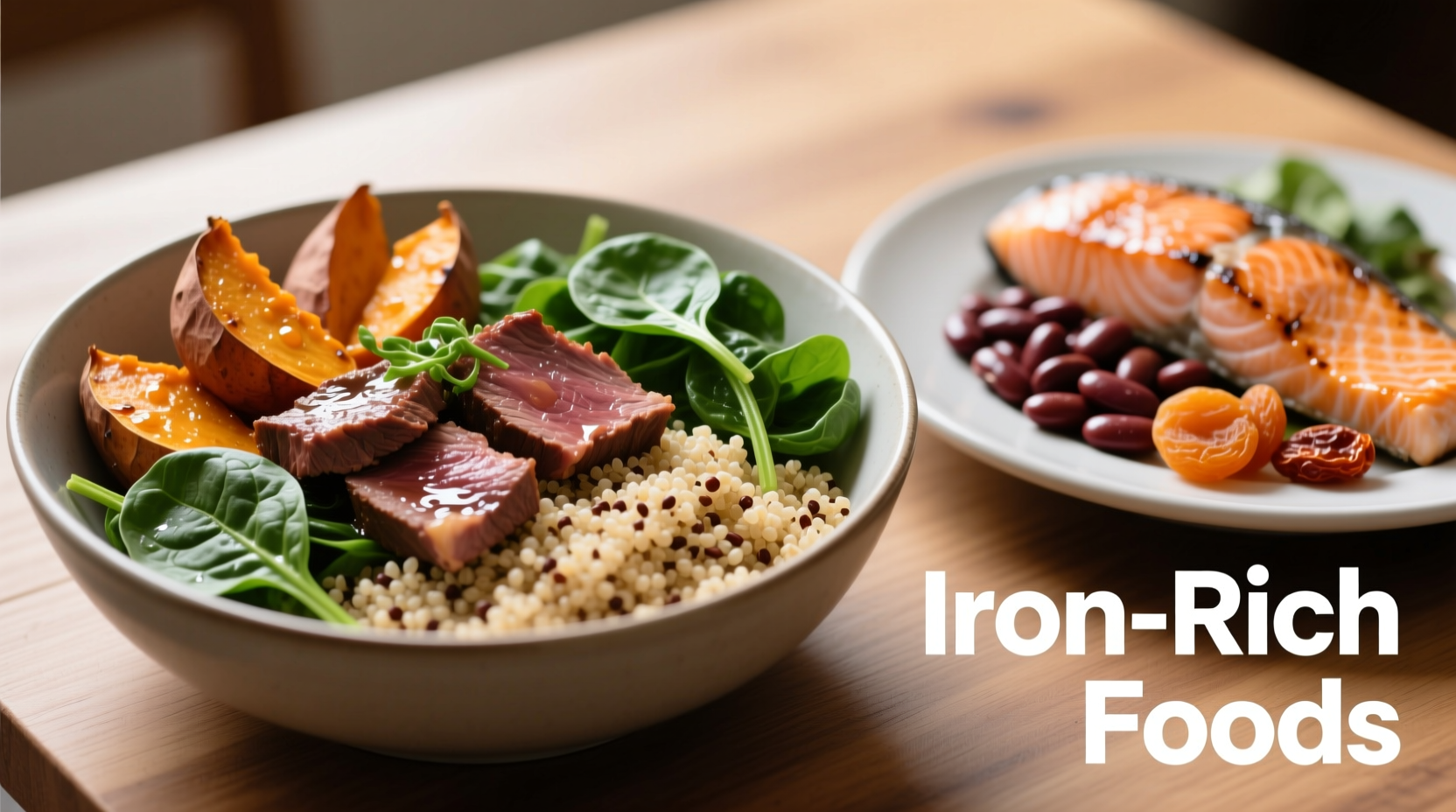
Defining Iron-Rich: What Makes a Food Truly High in Iron?
When evaluating iron content, nutrition science uses specific thresholds. According to the National Institutes of Health, a food qualifies as iron-rich when a single serving provides 20% or more of the Daily Value (DV) for iron—which equals 3.6 mg for adults. This standard helps distinguish genuinely iron-dense options from those with minimal amounts.
Iron exists in two primary forms with different absorption rates:
- Heme iron (found in animal products): 15-35% absorption rate
- Non-heme iron (found in plant foods): 2-20% absorption rate
Understanding this distinction explains why nutritionists often recommend combining plant-based iron sources with vitamin C-rich foods to boost absorption by up to six times.
Top Iron-Rich Foods Ranked by Nutritional Value
Not all iron sources deliver equal benefits. This comparison shows iron content per standard serving alongside absorption factors:
| Food | Iron (mg) | % DV | Absorption Boosters |
|---|---|---|---|
| Oysters (3 oz) | 8.0 | 44% | Naturally high in zinc |
| Beef liver (3 oz) | 5.2 | 29% | Heme iron form |
| Lentils (1 cup cooked) | 6.6 | 37% | Pair with bell peppers |
| Spinach (1 cup cooked) | 6.4 | 36% | Cook with lemon juice |
| Fortified breakfast cereal | 18.0 | 100% | Check for reduced phytates |
Data sourced from USDA FoodData Central (2023 release). Note that absorption rates vary significantly based on individual health status and meal composition.
Practical Iron Optimization Strategies
Simply consuming iron-rich foods isn't enough—timing and combinations matter. Research from the Mayo Clinic shows these evidence-based approaches significantly improve iron utilization:
Absorption Enhancers
- Vitamin C foods: Citrus fruits, strawberries, bell peppers (increases non-heme iron absorption)
- Meat proteins: Consuming small amounts of meat with plant iron sources
- Cooking in cast iron: Adds 1-3 mg of absorbable iron to meals
Absorption Inhibitors to Manage
- Calcium supplements: Space 2+ hours from iron-rich meals
- Tannins in tea/coffee: Avoid within 1 hour of iron consumption
- Phytates in whole grains: Soak or sprout grains to reduce impact
Special Dietary Considerations
Different populations have unique iron requirements and challenges:
Vegetarian and Vegan Diets
Plant-based eaters need nearly double the iron of meat-eaters due to lower non-heme iron absorption. The Harvard T.H. Chan School of Public Health recommends combining three strategies:
- Consume vitamin C with every iron-containing meal
- Choose fermented plant proteins (tempeh, natto)
- Use cast iron cookware regularly
Women's Health Needs
Menstruating women require 18 mg daily (vs 8 mg for men). During pregnancy, needs jump to 27 mg. The American College of Obstetricians and Gynecologists emphasizes that iron-rich foods should complement (not replace) prenatal supplements when medically indicated.
Athletic Performance
Endurance athletes lose iron through sweat, foot strike hemolysis, and increased metabolic demands. Sports nutrition guidelines recommend monitoring ferritin levels and strategically timing iron-rich meals around training sessions for optimal performance.
When Food Isn't Enough: Recognizing Deficiency
While iron-rich foods prevent deficiency in most people, certain conditions require medical intervention. The World Health Organization identifies these red flags:
- Chronic fatigue unresponsive to rest
- Pale skin and brittle nails
- Shortness of breath during mild activity
- Rapid heartbeat
If you experience multiple symptoms, consult a healthcare provider for proper testing. Self-treating with supplements without medical guidance can cause iron overload, particularly dangerous for individuals with hemochromatosis.
Building Your Iron-Rich Meal Plan
Creating balanced meals that maximize iron absorption requires strategic planning. Try these nutritionist-approved combinations:
- Breakfast: Fortified cereal with strawberries and pumpkin seeds
- Lunch: Lentil soup with tomato broth and a side of orange slices
- Dinner: Grass-fed beef stir-fry with broccoli and bell peppers
For optimal results, maintain consistent iron intake throughout the day rather than concentrating it in one meal. This approach aligns with the body's limited capacity to absorb iron at any single sitting.




 浙公网安备
33010002000092号
浙公网安备
33010002000092号 浙B2-20120091-4