
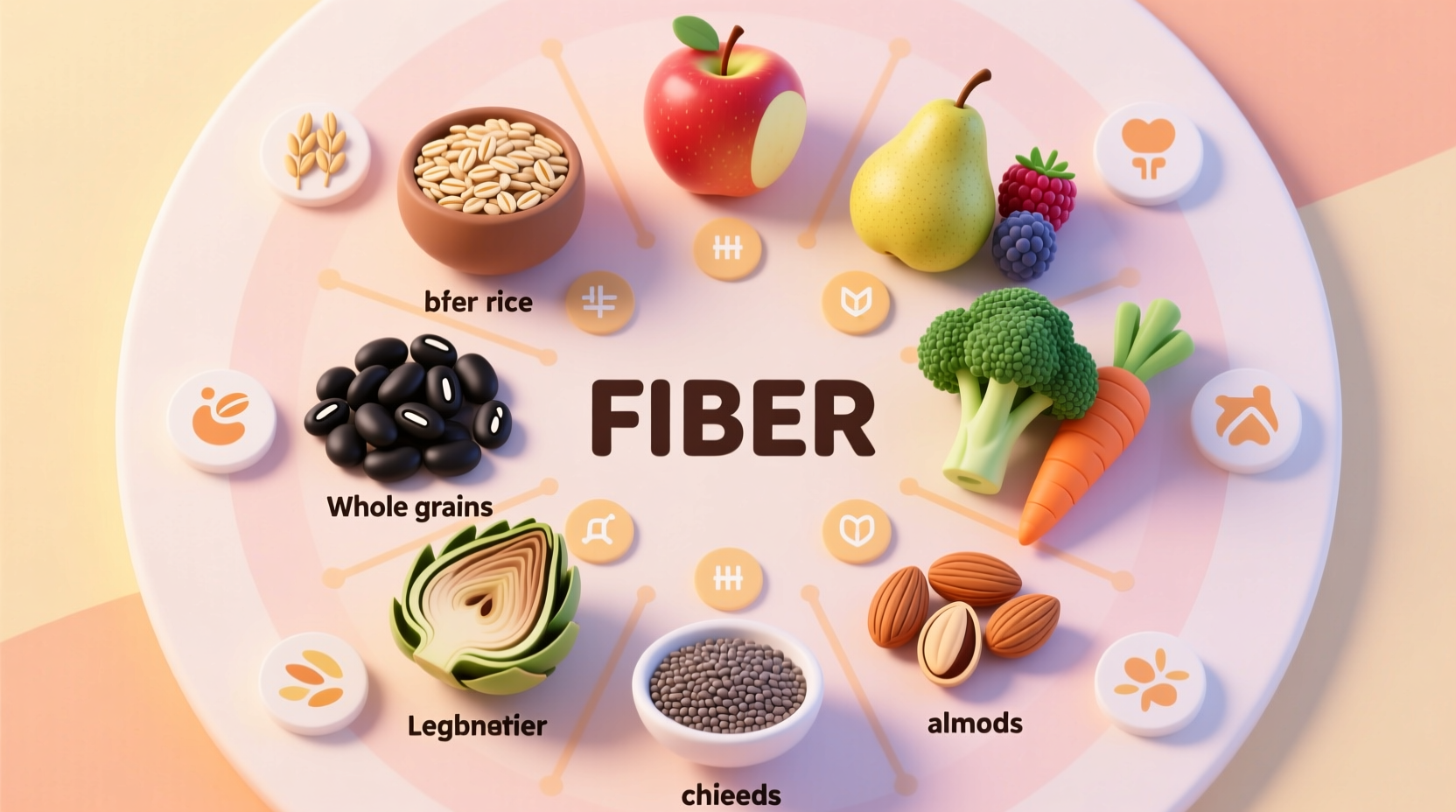
Adults need 25-38 grams of dietary fiber daily according to the National Institutes of Health, yet most Americans consume only 15 grams. The solution? Incorporate these scientifically verified high-fiber foods into your regular diet for measurable health improvements.
Why Fiber Matters More Than You Think
Fiber isn't just for digestion. Research from the American Heart Association shows adults consuming 30+ grams daily have 20% lower risk of cardiovascular disease. Soluble fiber specifically reduces LDL cholesterol by binding bile acids, while insoluble fiber maintains optimal gut motility. The key is understanding which foods deliver each type effectively.
Understanding Fiber Types and Their Food Sources
Foods contain two essential fiber types working differently in your body:
- Soluble fiber dissolves in water, forming a gel that slows digestion (found in oats, beans, apples)
- Insoluble fiber adds bulk to stool, speeding waste through your system (found in whole wheat, vegetables, nuts)
Both types deliver unique health benefits, making it crucial to include diverse fiber sources in your diet.
Top 5 Fiber Powerhouse Categories
1. Legumes: The Fiber Champions
Just one cup of cooked lentils delivers 15.6 grams of fiber—over half your daily needs. Black beans (15g), chickpeas (12.5g), and split peas (16.3g) consistently rank highest in USDA FoodData Central measurements. Pro tip: Soak dried beans overnight to improve digestibility while preserving fiber content.
2. Whole Grains: Beyond Basic Bread
When comparing fiber content, bran flakes (7g per 3/4 cup) outperform oatmeal (4g per cup). But for maximum impact, choose whole grain options like:
- Barley (6g per cooked cup)
- Bulgur (8g per cooked cup)
- Quinoa (5g per cooked cup)
Remember that 'whole grain' labeling doesn't guarantee high fiber—always check nutrition facts.
3. Fruits: Nature's Sweet Fiber Delivery
While apples and pears get attention, raspberries (8g per cup) and blackberries (7.6g) contain double the fiber of most fruits. Don't discard peels—leaving apple skin on adds 2g more fiber per medium fruit. For dried options, 1/4 cup of prunes delivers 3g fiber with natural sorbitol for gentle digestive support.
4. Vegetables: The Underrated Fiber Sources
Artichokes lead with 10.3g per medium vegetable, followed by green peas (8.8g per cooked cup) and broccoli (5.1g per cooked cup). Cooking method matters: steaming preserves more fiber than boiling, which leaches nutrients into water.
| Food | Serving Size | Total Fiber (g) | Soluble Fiber (g) |
|---|---|---|---|
| Split Peas | 1 cup cooked | 16.3 | 5.1 |
| Raspberries | 1 cup | 8.0 | 4.0 |
| Artichoke | 1 medium | 10.3 | 3.5 |
| Chia Seeds | 2 tbsp | 10.0 | 4.0 |
5. Nuts and Seeds: Small Packages, Big Impact
Two tablespoons of chia seeds provide 10g fiber—more than most vegetables. Flaxseeds (6g per 2 tbsp) and almonds (3.5g per ounce) offer substantial fiber with healthy fats. For maximum benefit, grind flaxseeds before consumption to access their full fiber potential.
Practical Fiber Integration Strategies
Increasing fiber intake requires careful planning to avoid discomfort. The Mayo Clinic recommends:
- Add 5g fiber weekly until reaching target (prevents bloating)
- Pair high-fiber foods with adequate water (1:4 fiber-to-water ratio)
- Spread intake across meals rather than consuming large amounts at once
Important Considerations for Specific Health Conditions
Fiber needs vary significantly based on individual health status. People with irritable bowel syndrome may need to limit certain high-FODMAP fiber sources like beans initially. Those with Crohn's disease in remission benefit from gradual fiber reintroduction under medical supervision. Always consult your healthcare provider before making significant dietary changes if managing digestive disorders.
Common Fiber Myths Debunked
"All whole grains are high fiber"—false. Some products contain minimal whole grains with added fiber. "Fiber supplements equal food fiber"—incomplete truth. Whole foods provide additional nutrients and phytochemicals supplements lack. "More fiber is always better"—dangerous misconception. Excessive fiber (over 70g daily) can cause nutrient malabsorption and digestive distress.




 浙公网安备
33010002000092号
浙公网安备
33010002000092号 浙B2-20120091-4