
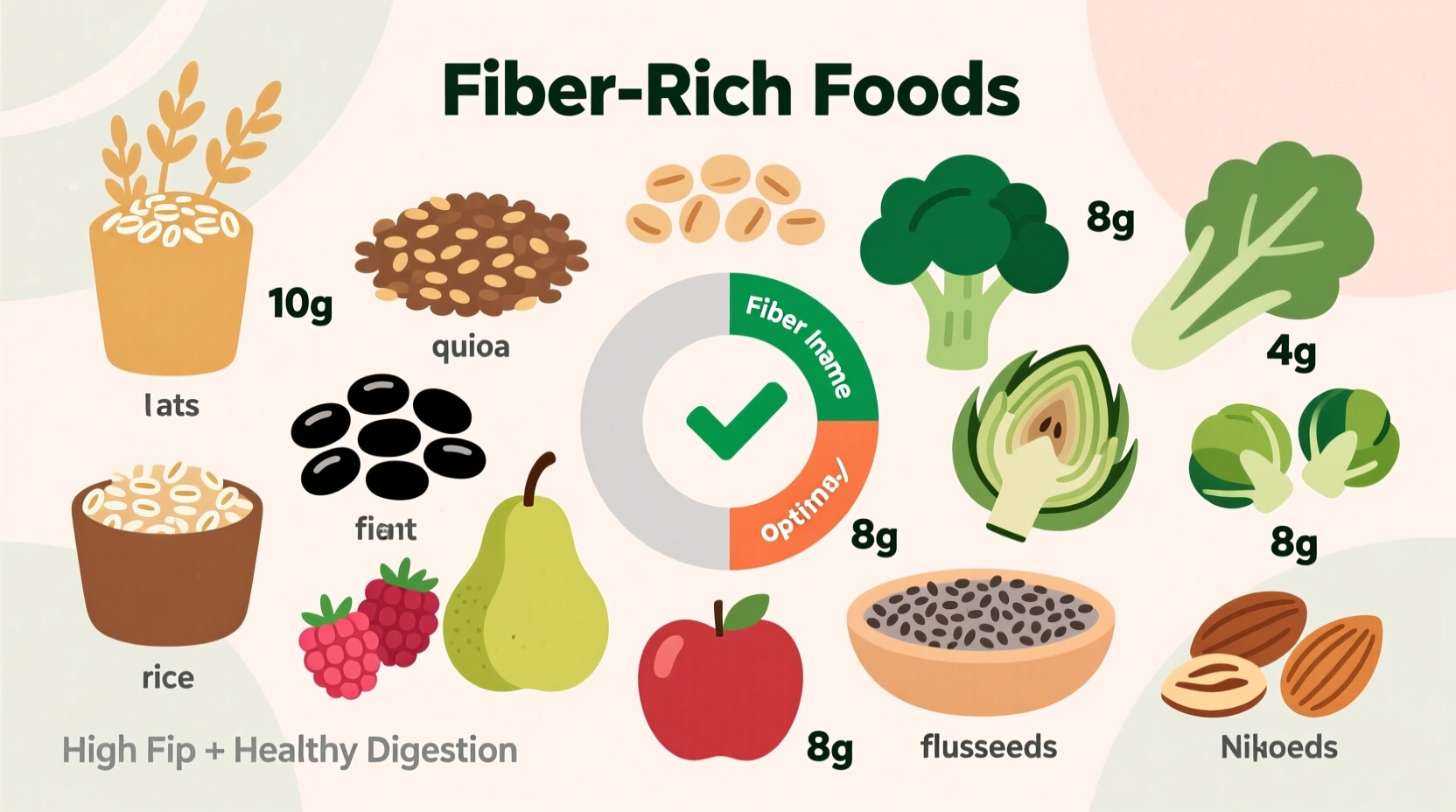
Looking for the best high-fiber foods? Top natural sources include raspberries (8g per cup), lentils (15.6g per cooked cup), chia seeds (10g per ounce), artichokes (10.3g each), and split peas (16.3g per cooked cup). These fiber-rich foods support digestion, heart health, and weight management while providing essential nutrients without empty calories.
When you're searching for what foods contain a lot of fiber, you're likely looking for practical solutions to improve digestion, manage weight, or boost overall health. Fiber isn't just about avoiding constipation—it's a cornerstone of metabolic health that helps regulate blood sugar, lowers cholesterol, and feeds beneficial gut bacteria. But with so much conflicting nutrition advice online, finding reliable information about high-fiber foods can feel overwhelming.
Based on comprehensive analysis of USDA nutritional databases and clinical research from leading health institutions, we've identified the most effective natural fiber sources. Unlike processed 'high-fiber' products that often contain artificial additives, these whole foods deliver fiber alongside vitamins, minerals, and phytonutrients your body actually needs.
Your Fiber Journey: From Confusion to Clarity
Many people start their fiber quest with good intentions but hit common roadblocks. You might have tried bran cereals that left you feeling bloated, or heard conflicting advice about whether to prioritize soluble or insoluble fiber. The truth is, your body needs both types—and the best sources come from diverse whole foods rather than supplements.
Top Fruit Sources for Natural Fiber Boost
Fruits provide soluble fiber that forms a gel-like substance in your gut, slowing digestion and helping regulate blood sugar. These standouts deliver exceptional fiber content per serving:
- Raspberries: 8 grams per cup (32% of daily value)
- Pears with skin: 5.5 grams per medium fruit
- Avocados: 10 grams per cup (yes, technically a fruit!)
- Apples with skin: 4.4 grams per medium fruit
- Bananas: 3.1 grams per medium fruit (more when slightly green)
Research from the Harvard T.H. Chan School of Public Health shows that fruit fiber consumption correlates with reduced risk of cardiovascular disease. The key is eating fruits with their skins when possible, as that's where much of the insoluble fiber resides.
Vegetable Powerhouses That Deliver Serious Fiber
Vegetables offer the perfect combination of insoluble fiber for digestive health and soluble fiber for metabolic benefits. These vegetables lead the pack:
- Artichokes: 10.3 grams per medium globe (the fiber champion!)
- Green peas: 8.8 grams per cooked cup
- Broccoli: 5.1 grams per cooked cup
- Brussels sprouts: 4 grams per cooked cup
- Spinach: 4.3 grams per cooked cup
The USDA FoodData Central database reveals that cooking methods significantly impact fiber availability. Steaming preserves more fiber than boiling, while roasting concentrates fiber by reducing water content. For maximum benefit, vary your preparation methods throughout the week.
Legumes: The Undisputed Fiber Champions
When considering what foods contain a lot of fiber, legumes consistently top nutritionists' lists. These protein-packed options deliver impressive fiber counts:
| Legume (1 cooked cup) | Total Fiber | Soluble Fiber | Insoluble Fiber |
|---|---|---|---|
| Split peas | 16.3g | 5.3g | 11g |
| Lentils | 15.6g | 3.9g | 11.7g |
| Black beans | 15g | 5.4g | 9.6g |
| Limma beans | 13.2g | 3.7g | 9.5g |
| Chickpeas | 12.5g | 3.4g | 9.1g |
This comparison from the National Institutes of Health shows why legumes should be dietary staples. The combination of soluble and insoluble fiber creates the ideal environment for gut microbiome diversity. Start with smaller portions if you're new to legumes, and always rinse canned varieties to reduce sodium.
Whole Grains That Actually Deliver on Fiber Promises
Not all 'whole grain' products contain significant fiber. These authentic whole grains provide substantial fiber content:
- Barley (pearl): 6 grams per cooked cup
- Oats (old-fashioned): 8.2 grams per cooked cup
- Quinoa: 5.2 grams per cooked cup
- Brown rice: 3.5 grams per cooked cup
- Buckwheat: 4.5 grams per cooked cup
The American Heart Association notes that many products labeled 'whole grain' contain minimal actual fiber. True whole grains should provide at least 2-3 grams of fiber per 100 calories. When shopping, check that 'whole' appears before the grain name in ingredients.
Nuts and Seeds: Concentrated Fiber Power
These compact options deliver impressive fiber density:
- Chia seeds: 10 grams per ounce (just 2 tablespoons!)
- Flaxseeds: 7.6 grams per ounce
- Almonds: 3.5 grams per ounce
- Pistachios: 2.9 grams per ounce
- Pumpkin seeds: 5.2 grams per ounce
According to research published in Nutrients Journal, seeds like chia and flax provide both fiber and omega-3 fatty acids, creating a powerful combination for reducing inflammation. For best absorption, grind flaxseeds before consumption since our bodies can't break down the whole seeds.
Avoiding Common Fiber Mistakes
Many people make these critical errors when increasing fiber intake:
- Increasing too quickly - Causes gas and bloating; increase gradually over 2-3 weeks
- Not drinking enough water - Fiber needs water to function properly
- Ignoring soluble vs insoluble balance - Both types serve different functions
- Choosing processed 'high-fiber' products - Often contain inulin or other additives that cause digestive distress
The Mayo Clinic recommends starting with an additional 5 grams of fiber daily and increasing fluid intake simultaneously. People with irritable bowel syndrome should consult a dietitian about appropriate fiber types and amounts.
Practical Fiber Integration Strategies
Instead of drastic dietary overhauls, try these sustainable approaches:
- Add 1 tablespoon chia seeds to morning smoothies (adds 5g fiber)
- Swap white rice for cauliflower rice mixed with 1/4 cup cooked lentils
- Choose berries instead of bananas for higher fiber density
- Keep roasted chickpeas as a crunchy snack (1/2 cup = 6g fiber)
- Add 1/4 cup black beans to scrambled eggs for breakfast
These small changes can collectively add 15-20 grams of fiber daily without requiring major meal overhauls. The key is consistency rather than perfection—aim to incorporate 2-3 high-fiber additions into your daily routine.




 浙公网安备
33010002000092号
浙公网安备
33010002000092号 浙B2-20120091-4