
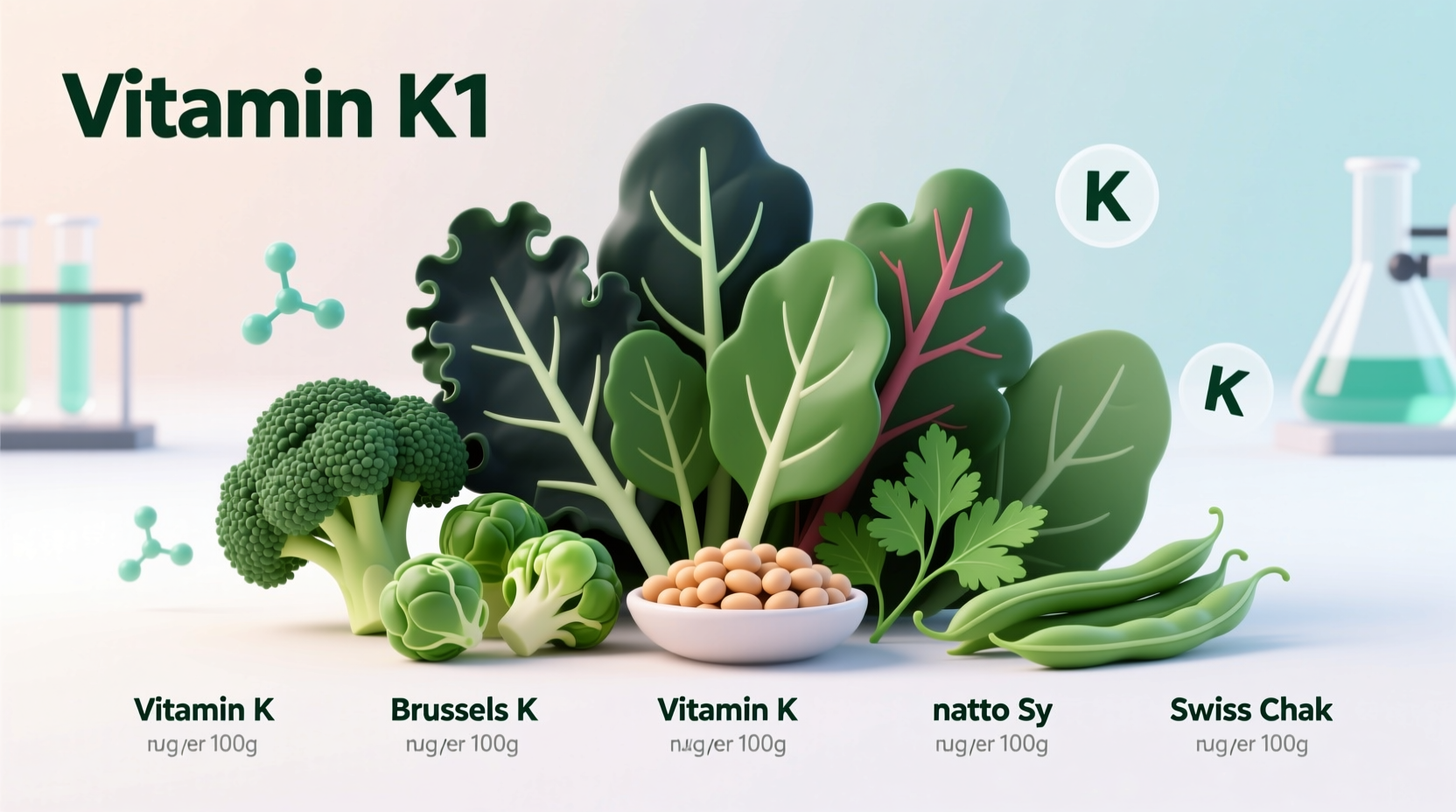
The top vitamin K-rich foods include kale (547 mcg per cup cooked), spinach (444 mcg per cup cooked), broccoli (220 mcg per cup cooked), Brussels sprouts (219 mcg per cup cooked), and collard greens (530 mcg per cup cooked). These leafy greens and cruciferous vegetables provide more than 100% of your daily vitamin K needs in a single serving, making them essential for blood clotting, bone health, and cardiovascular function.
Understanding which foods deliver optimal vitamin K intake is crucial for maintaining proper blood coagulation and supporting bone density. Vitamin K exists primarily in two forms: K1 (phylloquinone), found in plant foods, and K2 (menaquinone), present in animal products and fermented foods. The recommended daily intake is 90 mcg for women and 120 mcg for men, though individual needs may vary based on health conditions and medications.
Why Vitamin K Matters for Your Health
Vitamin K plays several critical roles in your body that many people overlook. Beyond its well-known function in blood clotting, this nutrient activates proteins that help direct calcium to your bones and teeth while preventing harmful calcium deposits in your arteries. Recent research from the National Institutes of Health shows that adequate vitamin K intake correlates with reduced risk of osteoporosis and cardiovascular disease.
Unlike many vitamins, your body can't store vitamin K efficiently, making regular dietary intake essential. The vitamin K cycle in your body is continuous—you need consistent consumption to maintain optimal levels. This is particularly important for older adults, as vitamin K absorption decreases with age.
Top Vitamin K Food Sources by Category
Leafy Green Powerhouses
Dark leafy greens dominate the vitamin K charts, delivering extraordinary amounts in modest portions. These foods contain vitamin K1, which your body efficiently converts to the active form.
| Food | Preparation | Vitamin K (mcg) | % Daily Value |
|---|---|---|---|
| Kale | 1 cup cooked | 547 | 456% |
| Collard greens | 1 cup cooked | 530 | 442% |
| Spinach | 1 cup cooked | 444 | 370% |
| Swiss chard | 1 cup cooked | 299 | 249% |
| Mustard greens | 1 cup cooked | 279 | 233% |
Cruciferous Vegetables
Broccoli, Brussels sprouts, and cabbage provide substantial vitamin K along with cancer-fighting compounds. These vegetables offer the added benefit of vitamin C and fiber.
One cup of cooked Brussels sprouts delivers 219 mcg of vitamin K—nearly double your daily requirement. Steaming preserves more nutrients than boiling, making it the ideal preparation method for maximizing vitamin K absorption.
Vitamin K2 Sources
Fermented foods and animal products provide vitamin K2, which has unique benefits for bone and cardiovascular health. Unlike K1, K2 remains active in your bloodstream longer, providing sustained benefits.
Natto (fermented soybeans) stands out as the richest K2 source, delivering 850 mcg per 3.5 ounce serving. Other excellent sources include:
- Goose liver pâté (369 mcg per 3.5 oz)
- Hard cheeses like Gouda (21 mcg per oz)
- Egg yolks (17 mcg per large egg)
- Chicken liver (14 mcg per 3.5 oz)
Practical Considerations for Vitamin K Consumption
How Cooking Affects Vitamin K Levels
Vitamin K is fat-soluble and relatively stable during cooking, but preparation methods impact final nutrient content. Research from the USDA FoodData Central shows that:
- Steaming preserves more vitamin K than boiling (which leaches nutrients into water)
- Adding healthy fats like olive oil enhances absorption
- Raw spinach contains 145 mcg per cup, while cooked delivers 444 mcg due to volume reduction
Important Considerations for Blood Thinner Users
If you take warfarin or similar anticoagulants, maintaining consistent vitamin K intake is critical. Sudden increases or decreases can interfere with medication effectiveness. The American Heart Association recommends:
- Keeping daily vitamin K intake stable rather than eliminating high-K foods
- Monitoring INR levels regularly when dietary changes occur
- Consulting your healthcare provider before making significant dietary changes
Newer anticoagulants like apixaban and rivaroxaban aren't affected by vitamin K intake, but always verify with your physician.
Maximizing Vitamin K Absorption
To get the most from vitamin K-rich foods:
- Pair leafy greens with healthy fats (avocado, olive oil, nuts)
- Include a variety of K1 and K2 sources for comprehensive benefits
- Aim for consistent daily intake rather than sporadic large doses
- Consider fermented foods for better K2 absorption
Vitamin K Through History: An Evolutionary Perspective
Vitamin K's discovery timeline reveals how our understanding has evolved:
- 1929: Danish scientist Henrik Dam discovers vitamin K while studying cholesterol metabolism
- 1935: Isolated from cabbage and named "koagulationsvitamin" (Koagulation in Danish)
- 1940s: Recognized as essential for blood clotting, leading to medical applications
- 1970s: Connection to bone health identified through osteocalcin research
- 2000s: Vitamin K2's cardiovascular benefits documented in population studies
- Present: Ongoing research into vitamin K's role in inflammation reduction and cognitive health
This progression shows how vitamin K has moved from being viewed solely as a clotting factor to recognized as a multi-functional nutrient essential for overall health.
Creating a Vitamin K-Rich Meal Plan
Incorporating vitamin K foods into your daily routine doesn't require drastic changes. Try these practical strategies:
Breakfast: Add spinach to your morning smoothie (1 cup raw provides 145 mcg) or include avocado on whole grain toast with a side of fermented vegetables.
Lunch: Prepare a kale and broccoli salad with olive oil dressing, or enjoy a collard green wrap with hummus and roasted vegetables.
Dinner: Serve roasted Brussels sprouts alongside grilled chicken with a side of fermented kimchi for a K1 and K2 powerhouse meal.
Remember that consistency matters more than massive single doses. Spreading your vitamin K intake throughout the day supports steady blood levels and optimal utilization by your body.




 浙公网安备
33010002000092号
浙公网安备
33010002000092号 浙B2-20120091-4