
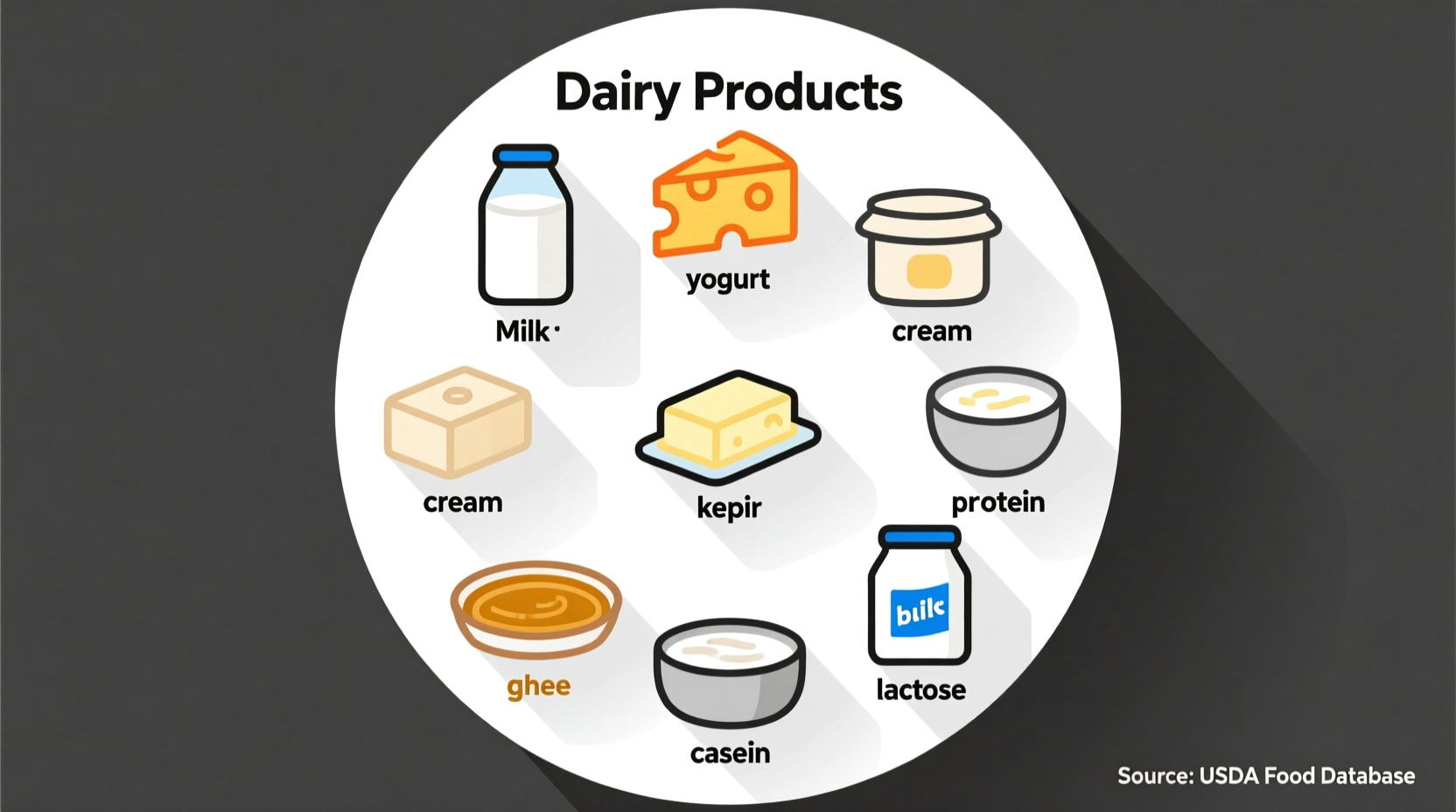
Dairy products are foods made primarily from mammalian milk, most commonly cow's milk, but also from goats, sheep, and buffalo. The core dairy category includes milk, cheese, yogurt, butter, and cream. However, many processed foods contain hidden dairy ingredients that people with lactose intolerance, milk allergies, or dietary restrictions need to identify.
Understanding exactly which foods qualify as dairy products is essential whether you're managing dietary restrictions, following specific nutrition plans, or simply expanding your culinary knowledge. This comprehensive guide clarifies the dairy landscape with scientifically accurate information, helping you make informed food choices without confusion.
What Exactly Qualifies as a Dairy Product?
Dairy products originate from the milk of mammals, with cow's milk dominating the American market (representing over 90% of dairy consumption according to USDA data). The defining characteristic is that these foods maintain milk's fundamental nutritional components, particularly calcium, protein, and fats.
While many assume dairy simply means "milk and cheese," the category encompasses a much wider range of products. Understanding these distinctions matters significantly for those with lactose intolerance (affecting approximately 36% of Americans according to NIH studies), milk allergies, or dietary preferences like veganism.
Your Complete Dairy Products Reference List
Let's break down dairy products into clear categories based on their production process and milk content:
| Dairy Category | Common Products | Lactose Content | Typical Milk Source |
|---|---|---|---|
| Fresh Dairy | Milk (whole, skim, 2%), Buttermilk, Half-and-half | High (11-12g per cup) | Cow |
| Cheeses | Cheddar, Mozzarella, Swiss, Cream cheese, Cottage cheese | Varies (aged cheeses lower) | Cow, Goat, Sheep |
| Fermented Dairy | Yogurt, Kefir, Sour cream | Moderate (fermentation reduces lactose) | Cow |
| Fats & Oils | Butter, Ghee, Cream | Low to none (butter: 0.1g per tbsp) | Cow |
| Processed Dairy | Ice cream, Sherbet, Dairy-based protein powders | Varies by product | Cow |
Common Misconceptions About Dairy Products
Many people incorrectly assume certain products are dairy-free when they contain milk derivatives, while others mistakenly believe some items contain dairy when they don't. Let's clarify these borderline cases:
Products Often Mistaken as Dairy-Free
- Casein and whey - These milk proteins appear in protein bars, processed meats, and even some margarines
- Lactose - Found in medications, instant soups, and baked goods as a filler
- Butter flavoring - Common in popcorn, snacks, and coffee creamers
Products Typically Dairy-Free (Despite Common Beliefs)
- Ghee - While made from butter, the clarification process removes milk solids
- Most hard cheeses - Aged cheddar, parmesan, and swiss contain minimal lactose
- Some protein isolates - Plant-based options clearly labeled as such

Context Matters: When Dairy Classification Changes
The classification of certain products as "dairy" depends significantly on context. For example:
Nutritional guidelines consider cheese and yogurt as dairy because they provide similar calcium and protein benefits as milk. However, allergen labeling regulations require even trace milk derivatives like casein to be declared as dairy ingredients. Meanwhile, vegan certification standards exclude any animal-derived ingredients, including ghee and lactose.
This context dependency explains why someone following a lactose-free diet might tolerate aged cheeses but need to avoid milk, while someone with a milk allergy must avoid all dairy proteins regardless of lactose content.
Practical Guidance for Different Dietary Needs
Your approach to dairy products should align with your specific health requirements:
For Lactose Intolerance
Many people with lactose intolerance can enjoy certain dairy products. Fermented options like yogurt and kefir contain live cultures that help digest lactose. Hard, aged cheeses naturally contain less lactose than fresh cheeses or milk. Consider lactase enzyme supplements when consuming higher-lactose dairy items.
For Milk Allergies
If you have a true milk allergy (an immune response to milk proteins), you must avoid all dairy products and derivatives. Read labels carefully for casein, whey, lactalbumin, and other milk proteins that appear in unexpected products like deli meats and canned tuna.
For Vegan Diets
Vegans avoid all animal-derived ingredients. While plant-based alternatives have improved significantly, be aware that some "dairy-free" products may contain honey or vitamin D3 derived from lanolin (sheep's wool).
Navigating Hidden Dairy in Processed Foods
Dairy ingredients frequently appear in processed foods under various names. When reading labels, watch for these dairy derivatives:
- Anhydrous milkfat
- Butter solids
- Casein and caseinates
- Curds
- Whey and whey solids
- Lactose
- Milk by-products
The Food Allergen Labeling and Consumer Protection Act (FALCPA) requires clear labeling of major allergens including milk, but products manufactured before 2006 or imported foods may not follow these standards. Always check ingredient lists thoroughly if you have dairy sensitivities.
Dairy Alternatives Worth Considering
For those avoiding dairy, numerous alternatives provide similar functionality in cooking and nutrition:
- Calcium-fortified plant milks - Almond, soy, oat, and pea milk options
- Nut-based cheeses - Improving rapidly in texture and flavor
- Coconut yogurt - Good probiotic alternative to dairy yogurt
- Olive oil or avocado - For butter substitutes in cooking
When choosing alternatives, check nutrition labels as many lack the protein content of dairy products. Soy milk typically provides the closest protein match to cow's milk.




 浙公网安备
33010002000092号
浙公网安备
33010002000092号 浙B2-20120091-4