
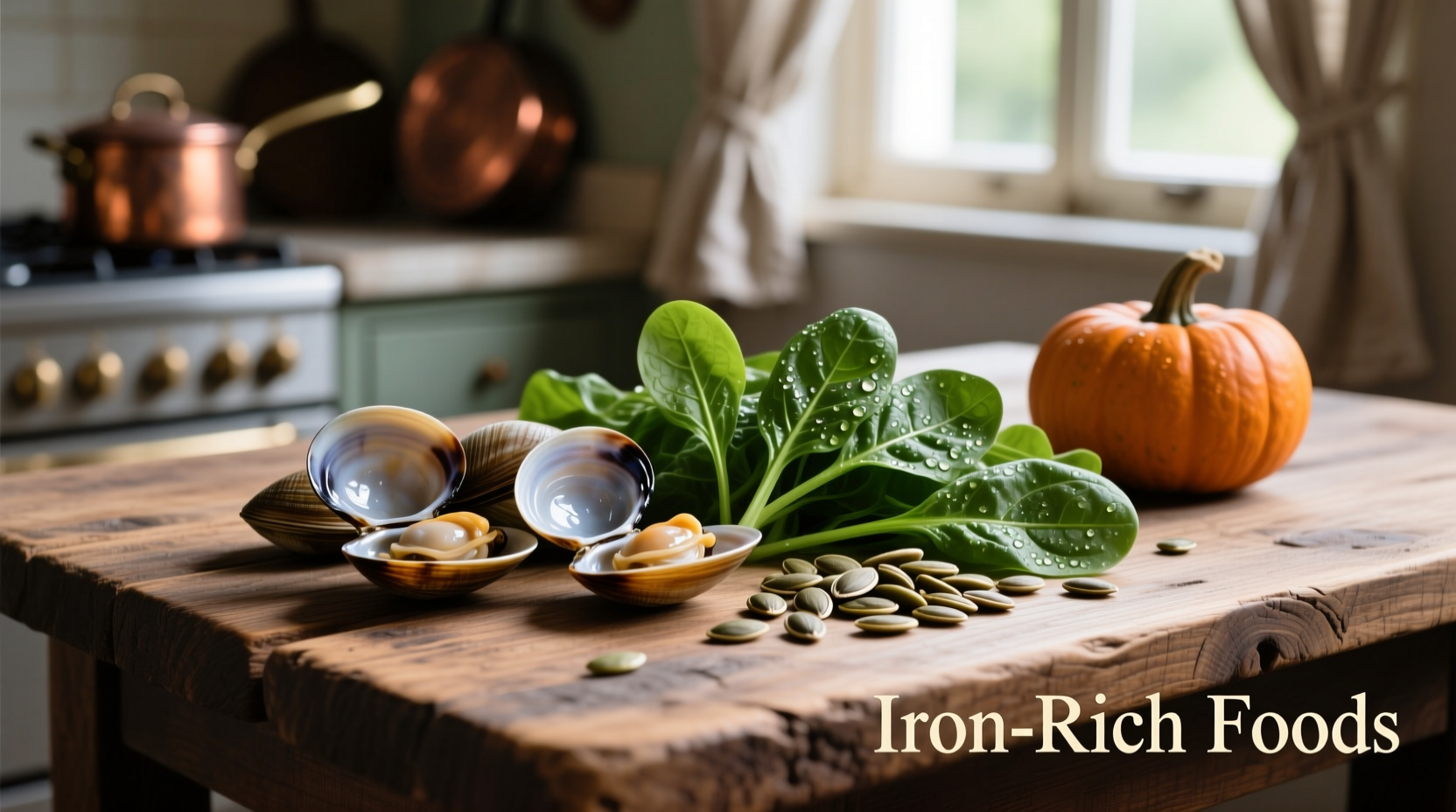
The food highest in iron is clams, providing approximately 23.8 mg of iron per 3.5-ounce (100g) serving. Other top contenders include organ meats like liver (6.8-13 mg per 3.5 oz), and plant-based options such as spirulina (28.5 mg per 100g, though consumed in smaller quantities). Understanding which foods deliver the most bioavailable iron is essential for preventing deficiency.
Iron deficiency affects over 1.2 billion people worldwide according to the World Health Organization. Whether you're managing anemia, following a plant-based diet, or simply optimizing your nutrition, knowing precisely which foods deliver the highest iron content—and how your body actually uses it—can transform your health strategy.
Understanding Iron Types and Your Body's Needs
Not all iron is created equal. Your body processes two distinct types:
- Heme iron (from animal sources): 15-35% absorption rate
- Non-heme iron (from plant sources): 2-20% absorption rate
Daily requirements vary significantly by demographic. Women of childbearing age need 18 mg daily, while men and postmenopausal women require just 8 mg. Pregnant women need 27 mg—nearly double the standard adult requirement according to the NIH Office of Dietary Supplements.
Top Iron Powerhouses: The Complete Ranking
When evaluating iron density, we must consider both concentration per serving and bioavailability. Here's how the top contenders compare based on USDA FoodData Central measurements:
| Food Source | Iron (mg per 100g) | Iron Type | Bioavailability |
|---|---|---|---|
| Clams | 23.8 | Heme | High (15-35%) |
| Organ meats (liver) | 6.8-13.0 | Heme | High (15-35%) |
| Spirulina | 28.5 | Non-heme | Low-Moderate (2-20%) |
| Pumpkin seeds | 8.8 | Non-heme | Moderate (enhanced with vitamin C) |
| Spinach (cooked) | 3.6 | Non-heme | Low (oxalates reduce absorption) |
While spirulina shows an exceptionally high iron concentration on paper, its non-heme iron has significantly lower bioavailability than the heme iron found in clams and organ meats. This critical distinction explains why plant-based iron sources often require strategic pairing to maximize absorption.
Maximizing Your Iron Absorption: Practical Strategies
Simply consuming iron-rich foods isn't enough—your body's ability to utilize that iron depends on several factors. Research from Harvard T.H. Chan School of Public Health shows these evidence-based techniques dramatically improve iron uptake:
Strategic Food Pairing
Combine non-heme iron sources with vitamin C-rich foods to boost absorption by up to 300%. Try these effective combinations:
- Lentil soup with lemon juice
- Spinach salad with strawberries
- Fortified cereal with orange slices
Avoid Absorption Blockers
Timing matters. The Mayo Clinic recommends avoiding these inhibitors within 1-2 hours of iron-rich meals:
- Calcium supplements (reduces absorption by 50-60%)
- Tea and coffee (tannins reduce absorption by 50-70%)
- High-fiber bran products (phytates interfere with absorption)
Special Considerations for Different Dietary Patterns
Your iron strategy must adapt to your specific dietary needs and health circumstances:
For Vegetarians and Vegans
Plant-based eaters face unique challenges. While lentils, tofu, and fortified cereals provide decent iron amounts, their non-heme iron requires careful planning. The Vegetarian Resource Group recommends consuming 1.8 times more iron than meat-eaters to compensate for lower absorption rates.
Pregnancy Iron Requirements
Pregnant women need nearly triple the standard iron intake. The American College of Obstetricians and Gynecologists emphasizes that iron deficiency during pregnancy increases risks of preterm delivery and low birth weight. Prenatal vitamins typically contain 27 mg of elemental iron, but food sources remain essential for optimal absorption.
Context Boundaries: When Food Isn't Enough
While dietary iron is crucial, certain medical conditions require professional intervention. If you experience persistent fatigue, shortness of breath, or pale skin despite consuming iron-rich foods, consult a healthcare provider. Conditions like celiac disease, inflammatory bowel disease, or heavy menstrual bleeding often necessitate medical treatment beyond dietary adjustments.
Recognizing Iron Deficiency: Key Warning Signs
Your body sends clear signals when iron stores run low. Watch for these common symptoms:
- Unusual fatigue and weakness
- Pale skin and brittle nails
- Shortness of breath during mild activity
- Restless leg syndrome
- Pica (craving non-food items like ice or dirt)
Left untreated, iron deficiency anemia can lead to serious complications including heart problems and developmental delays in children. The Centers for Disease Control and Prevention recommends regular screening for at-risk populations.




 浙公网安备
33010002000092号
浙公网安备
33010002000092号 浙B2-20120091-4