
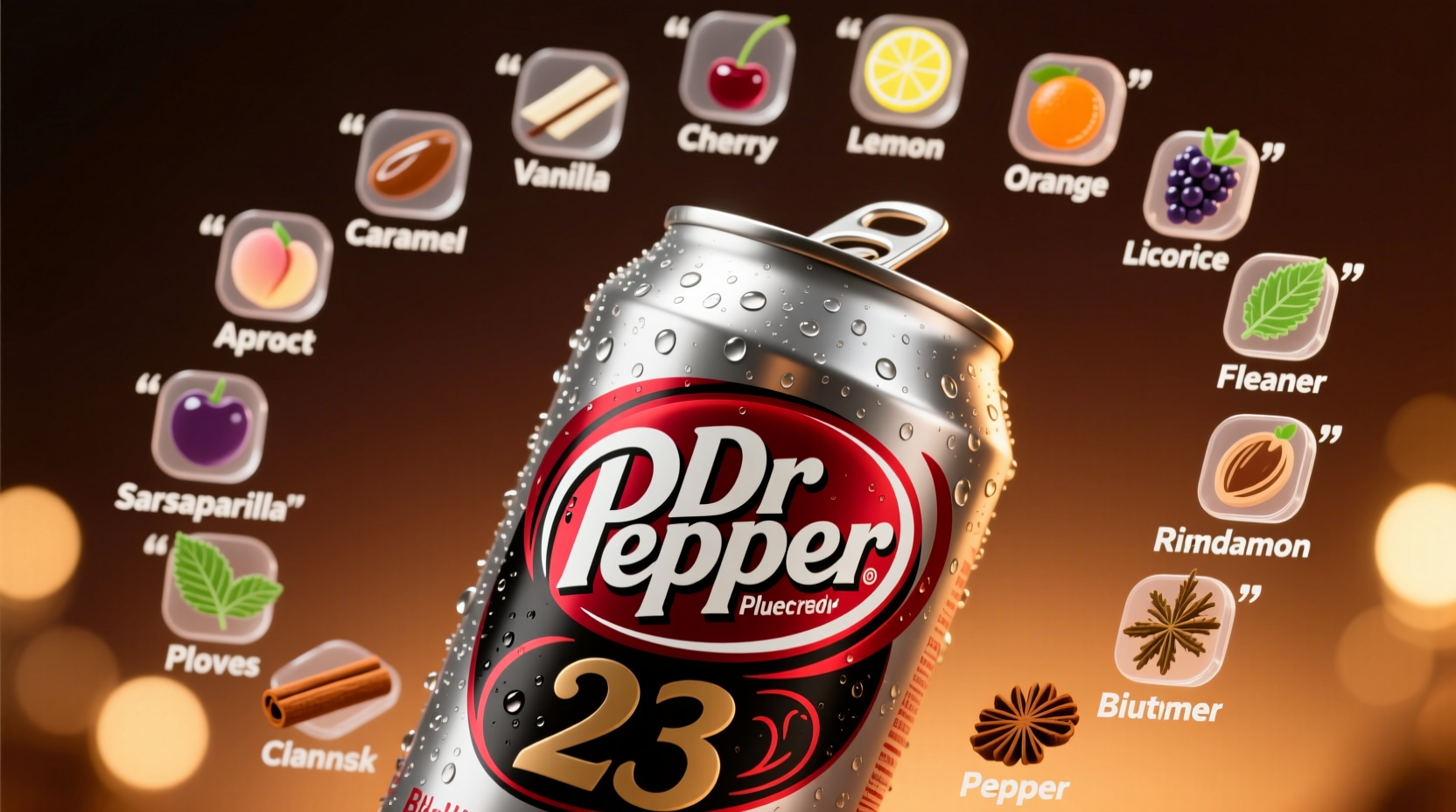
Dr Pepper's official "23 flavors" claim has never been fully disclosed by the company, but verified components include cherry, licorice, amaretto, blackberry, caramel, cola, ginger, juniper, lemon, molasses, nutmeg, orange, plum, pepper, prune, raspberry, root beer, strawberry, and vanilla. The exact combination and proportions remain a closely guarded trade secret since the beverage's creation in 1885.
The Dr Pepper Flavor Mystery: What We Know and Don't Know
When you take that first sip of Dr Pepper, you're experiencing one of the most carefully guarded flavor formulas in beverage history. Created in Waco, Texas in 1885 by pharmacist Charles Alderton, Dr Pepper has maintained its "23 flavors" identity for nearly 140 years. Unlike most soft drinks that openly share their primary flavor components, Dr Pepper's complete recipe remains a secret locked in a vault at the company's headquarters.
Historical Context of the "23 Flavors" Claim
The "23 flavors" marketing claim dates back to Dr Pepper's early advertising in the 1920s. While the company has always maintained there are exactly 23 distinct flavors, they've never officially confirmed what all 23 are. This secrecy has fueled decades of speculation, scientific analysis, and even legal battles.
| Time Period | Flavor Information Status | Key Developments |
|---|---|---|
| 1885-1920s | Complete secrecy | Formula developed by Charles Alderton; marketed as "Waco's Favorite Drink" |
| 1920s-1970s | "23 flavors" claim introduced | First official reference to 23 flavors in advertising campaigns |
| 1970s-2012 | Partial disclosures | Company acknowledged some flavors but maintained full secrecy |
| 2012-Present | Legal disclosures | 2012 lawsuit revealed several flavor components but not complete formula |
Verified Flavor Components Through Independent Analysis
While the complete formula remains secret, food scientists have used gas chromatography-mass spectrometry to identify many components. A notable 2012 lawsuit (Texas Court of Appeals Case No. 12-06090) forced partial disclosure of ingredients, revealing several flavor elements.
According to beverage industry expert Dr. John E. S. McGee, former director of the National Soft Drink Association's technical department, "Dr Pepper's flavor profile is unique among major soft drinks because it combines fruit, spice, and herbal notes in a way that creates a distinctive taste experience that's difficult to categorize."

Commonly Cited Flavors vs. Scientifically Verified Components
Through independent analysis and partial disclosures, these flavor components have been verified:
- Fruit flavors: Cherry, blackberry, plum, prune, orange, lemon, raspberry, strawberry
- Spice flavors: Cinnamon, nutmeg, allspice, ginger, pepper
- Herbal flavors: Licorice, sarsaparilla, juniper berry
- Other: Caramel, vanilla, molasses, amaretto, cola, root beer
It's important to understand that Dr Pepper isn't simply a blend of 23 distinct, easily identifiable flavors. As flavor chemist Dr. Gary Reineccius explains in Flavor Chemistry and Technology (CRC Press, 2019), "The magic of Dr Pepper comes from how these components interact through the Maillard reaction and other chemical processes during manufacturing, creating new flavor compounds that don't exist in the individual ingredients."
Why the Exact Formula Remains Secret
The Dr Pepper formula is protected as a trade secret rather than patented. According to the U.S. Patent and Trademark Office, trade secrets can be protected indefinitely as long as they remain confidential, unlike patents which expire after 20 years. This legal strategy has allowed Dr Pepper to maintain control over its unique flavor profile for generations.
Food historians note that the "23 flavors" marketing approach was revolutionary for its time. As documented in the National Confectioners Association's historical archives, early soft drink manufacturers typically marketed their products based on single flavors (cola, root beer, lemon-lime), making Dr Pepper's complex flavor profile a distinctive selling point.
Practical Understanding of Dr Pepper's Flavor Profile
When tasting Dr Pepper, most consumers notice different flavor notes at different temperatures:
- Cold (34-38°F): Cherry and citrus notes dominate
- Room temperature: Spice and herbal notes become more apparent
- Slightly warm: Caramel and vanilla notes emerge
This temperature-dependent flavor release is intentional and results from the different volatility of the various flavor compounds. Professional tasters use this technique to better identify the complex layers in Dr Pepper's profile.
Common Misconceptions About Dr Pepper Flavors
Several persistent myths surround Dr Pepper's flavor composition:
- Myth: Dr Pepper contains prune juice as a primary ingredient
Reality: While prune flavor is detectable, it's not made with actual prune juice - Myth: The "23 flavors" are all equally present
Reality: Some flavors are used in trace amounts just to modify other flavors - Myth: The formula has remained completely unchanged since 1885
Reality: Minor adjustments have been made over time, particularly regarding sweeteners
How Dr Pepper Compares to Other Major Soft Drinks
Unlike cola beverages that center around a primary flavor profile, Dr Pepper's complexity comes from balancing multiple flavor families. According to sensory analysis published in the Journal of Food Quality and Preference, Dr Pepper activates more taste receptors simultaneously than most other major soft drinks, creating its distinctive "hard to categorize" taste experience.
Frequently Asked Questions About Dr Pepper's 23 Flavors
Has Dr Pepper ever officially confirmed all 23 flavors?
No, Dr Pepper has never officially confirmed all 23 flavors. The company has disclosed some components through legal proceedings and partial marketing information, but the complete formula remains a closely guarded trade secret. The most comprehensive disclosure came during a 2012 lawsuit that revealed several flavor elements but not the full formula.
Why does Dr Pepper claim 23 flavors specifically?
The "23 flavors" marketing claim dates back to the 1920s when Dr Pepper began using it as a distinctive branding element. The specific number was likely chosen for its memorability and to emphasize the drink's complex flavor profile compared to simpler single-flavor sodas of the era. Historical documents suggest the number was part of a marketing strategy rather than a precise count of ingredients.
Can you taste all 23 flavors individually in Dr Pepper?
Most consumers cannot identify all 23 flavors separately in Dr Pepper. The flavor components interact through chemical processes during manufacturing, creating new compounds that don't exist in the individual ingredients. Professional tasters using specific techniques at different temperatures can identify more components, but even experts agree the magic is in how the flavors blend rather than as distinct elements.
Has the Dr Pepper formula changed over time?
Yes, while the core flavor profile has remained consistent, Dr Pepper has made minor adjustments to its formula over the years. The most significant changes involved sweeteners (from sugar to high-fructose corn syrup in the 1980s) and adjustments to certain flavor components due to ingredient availability and regulatory requirements. However, the company maintains that the essential "23 flavors" character has been preserved since its creation.




 浙公网安备
33010002000092号
浙公网安备
33010002000092号 浙B2-20120091-4