
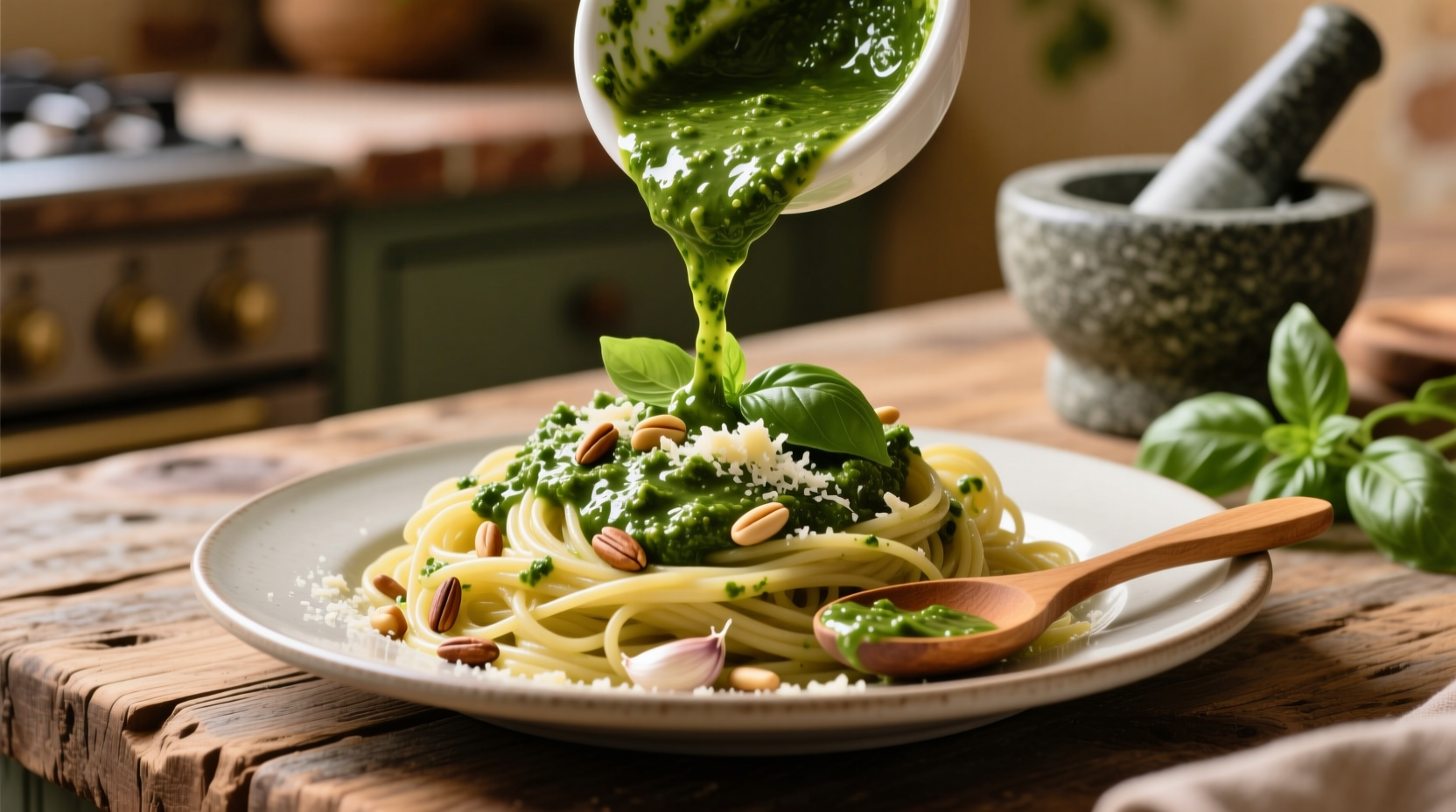
Pesto sauce delivers a vibrant, herbaceous punch with fresh basil taking center stage, complemented by rich nuttiness from pine nuts or walnuts, sharp garlic notes, salty umami depth from Parmesan cheese, and the grassy finish of high-quality olive oil. This classic Italian sauce balances bright, earthy, and savory elements in every bite.
Ever wonder what makes pesto so irresistibly delicious? Whether you're encountering this vibrant green sauce for the first time or looking to deepen your appreciation, understanding pesto's complex flavor profile transforms how you experience this culinary treasure. Authentic pesto offers a symphony of fresh, earthy, and savory notes that elevate everything from pasta to sandwiches.
The Core Flavor Profile: What Makes Pesto Unique
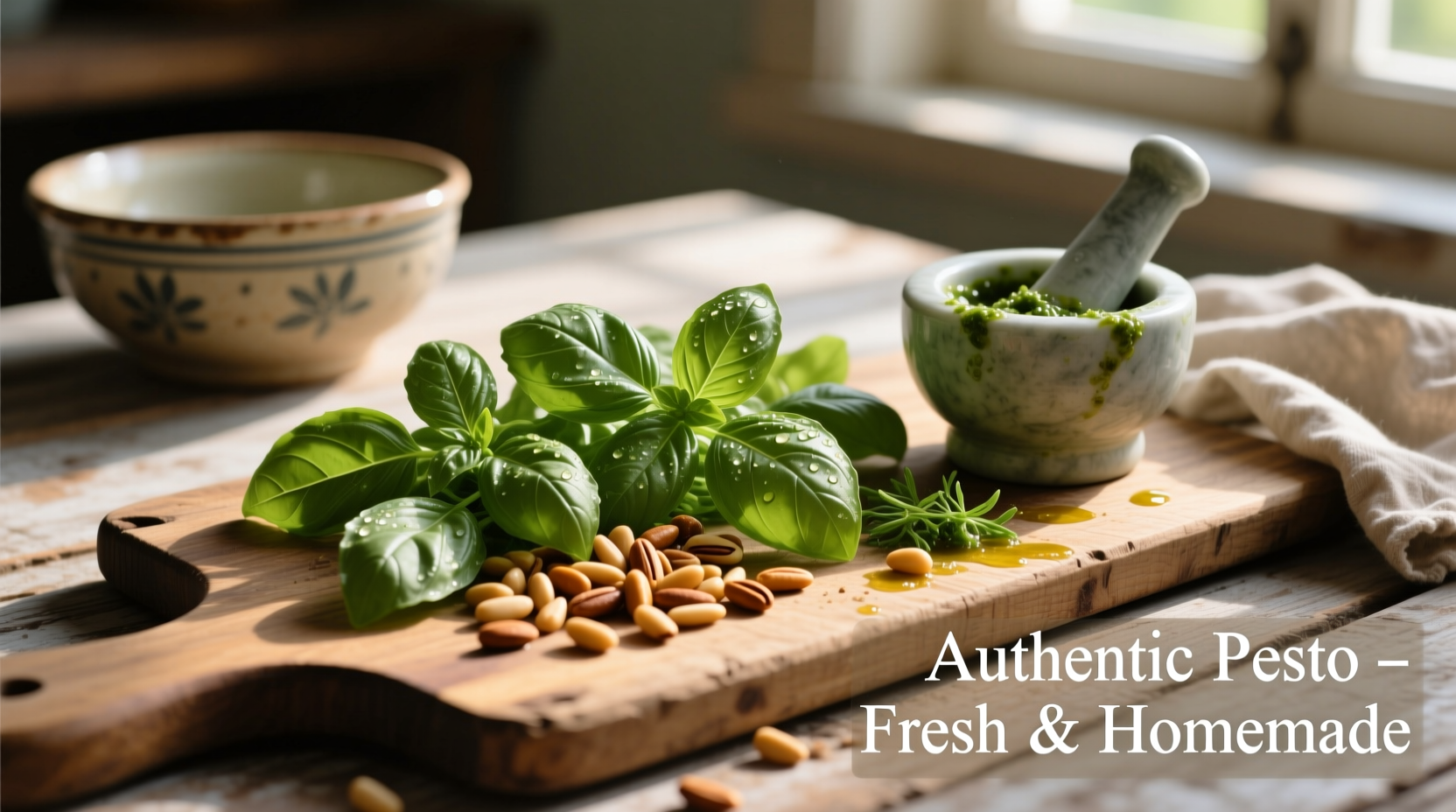
Traditional Genovese pesto creates its signature taste through five essential components working in harmony. Fresh basil provides that unmistakable herbal brightness with subtle peppery notes. When perfectly prepared, pesto should taste vibrant and alive, not bitter or muted. The magic happens when these elements combine:
- Fresh basil - Delivers the primary herbal flavor with sweet, peppery, and slightly minty notes
- Pine nuts or walnuts - Contribute rich, toasty nuttiness that balances the herbs' brightness
- Freshly grated Parmesan - Adds salty, umami depth and creamy texture
- Garlic - Provides a sharp, aromatic kick that enhances other flavors
- Extra virgin olive oil - Brings everything together with grassy, peppery notes
How Ingredient Quality Affects Pesto Taste
The quality of each component dramatically impacts the final flavor. Freshly picked basil creates a sweeter, more vibrant sauce compared to older leaves that develop bitterness. High-quality extra virgin olive oil with grassy, peppery notes enhances rather than overwhelms the delicate herbal flavors. Understanding these variations helps you identify exceptional pesto:
| Ingredient Variation | Flavor Impact | Quality Indicator |
|---|---|---|
| Fresh basil vs. older basil | Sweet, vibrant vs. bitter, muted | Bright green color, no dark spots |
| Pine nuts vs. walnuts | Delicate nuttiness vs. earthier flavor | No rancid smell, uniform color |
| Young vs. aged Parmesan | Milder vs. sharper, saltier umami | Fragrant, crystalline texture |
| First cold press EVOO | Grassy, peppery finish | Green-gold color, fresh aroma |
Texture and Aroma: The Complete Sensory Experience
Pesto's appeal extends beyond taste to encompass texture and aroma. Properly made pesto has a slightly coarse texture from the hand-pounded ingredients, not the smooth consistency of machine-processed versions. The aroma should immediately hit you with fresh basil notes, followed by the nuttiness and garlic. When tasting, notice how the flavors evolve:
- First impression - Bright herbal notes from fresh basil
- Middle palate - Rich nuttiness and savory cheese notes develop
- Finish - Clean, grassy olive oil notes with subtle garlic lingering
According to culinary research from the University of Gastronomic Sciences in Italy, the traditional mortar and pestle preparation method releases essential oils differently than blenders, creating more complex flavor compounds. This explains why handmade pesto often tastes brighter and more nuanced than machine-made versions.
Regional Variations and Their Flavor Differences
While Genovese pesto represents the classic version, regional variations across Italy create distinct taste experiences. Understanding these differences helps you select the right pesto for your culinary needs:
- Traditional Genovese - Balanced herbal notes with delicate pine nut flavor
- Sicilian pesto - Includes tomatoes and almonds, creating a slightly sweet, earthier profile
- Tropea red onion pesto - Features Calabrian onions for a milder, sweeter garlic note
- Trapanese pesto - Uses almonds instead of pine nuts for a more robust nuttiness
Food historians note that pesto's flavor profile has evolved significantly since its origins in ancient Rome, where mortar-crushed herbs and oil created early versions of this sauce. The modern basil-based version emerged in Genoa during the 19th century, establishing the flavor profile most recognize today.
Why Some Pesto Tastes Bitter (And How to Avoid It)
Bitterness in pesto usually stems from three common issues: using basil that's past its prime, over-processing the ingredients, or using low-quality olive oil. Fresh basil should have a sweet aroma without any dark spots or yellowing. When preparing pesto, pulse ingredients rather than continuous blending to prevent releasing bitter compounds from the basil stems. For optimal flavor, consume pesto within 3-5 days as oxidation causes both color and flavor degradation.
Perfect Pairings: What Foods Complement Pesto's Flavor
Pesto's versatility shines when matched with complementary foods. Its herbal brightness cuts through rich proteins, while its nuttiness enhances simple carbohydrates. Consider these pairings to maximize pesto's flavor potential:
- Pasta - Toss with trofie, linguine, or gnocchi for classic preparation
- Proteins - Elevates grilled chicken, fish, or white beans
- Bread - Spread on focaccia or used as a dip for crusty bread
- Veggies - Toss with roasted potatoes or as a vegetable marinade
- Eggs - Swirl into scrambled eggs or omelets
Chef Antonio Rodriguez notes that "the perfect pesto should dance on your palate - starting with that herbal brightness, developing into savory richness, and finishing clean without any single element overpowering the others." This balance separates exceptional pesto from ordinary versions.
Fresh vs. Store-Bought: Understanding the Taste Difference
Homemade pesto typically offers brighter, more complex flavors compared to commercial versions. Store-bought pesto often contains preservatives and stabilizers that mute the fresh herbal notes. The vibrant green color of fresh pesto comes from chlorophyll in the basil, while oxidized or processed versions turn darker. When evaluating store-bought options, check for:
- Short ingredient list matching traditional components
- No artificial preservatives or colorants
- Visible flecks of basil rather than uniform green color
- Fresh aroma when opened, not oily or stale
For the most authentic taste experience, make pesto fresh using the traditional mortar and pestle method, which creates a more complex emulsion than blenders. If using a blender, pulse rather than continuous processing to preserve flavor integrity.




 浙公网安备
33010002000092号
浙公网安备
33010002000092号 浙B2-20120091-4