
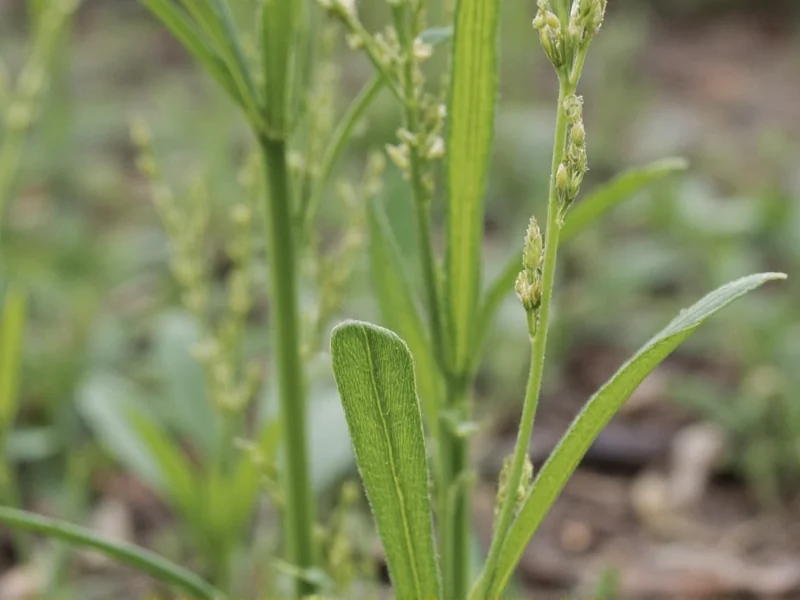
The sesame seed plant, scientifically known as Sesamum indicum, has been cultivated for thousands of years as one of the oldest oilseed crops in human history. Understanding what this plant looks like is essential for gardeners, farmers, and anyone interested in identifying this valuable crop in the field or garden.
Botanical Characteristics of Sesame Plants
Sesame plants belong to the Pedaliaceae family and thrive in tropical and subtropical climates worldwide. These annual plants develop a deep taproot system that helps them withstand dry conditions once established. The plant's appearance changes significantly throughout its growth cycle, making visual identification at different stages important for proper cultivation and harvesting.
Detailed Physical Description
Stem and Growth Habit
Sesame plants grow upright with square, slightly hairy stems that become woody as the plant matures. The height varies considerably depending on variety and growing conditions:
| Growth Stage | Typical Height | Stem Characteristics |
|---|---|---|
| Seedling (2-3 weeks) | 2-6 inches | Thin, green, delicate |
| Vegetative (4-6 weeks) | 1-3 feet | Thickening, square cross-section |
| Flowering (7-10 weeks) | 3-5 feet | Hairy, becoming woody at base |
| Mature (10-14 weeks) | 4-8 feet | Fully woody at base, branched |
Leaf Structure and Appearance
Sesame leaves grow in opposite pairs along the stem and vary in shape depending on their position on the plant. Lower leaves tend to be broader and more oval, while upper leaves become increasingly lance-shaped. The leaves typically measure 1-5 inches in length with a smooth or slightly toothed margin. They display prominent veins and have a slightly rough texture due to fine hairs. The color ranges from light to dark green, sometimes with a purplish tint on stems and leaf veins in certain varieties.
Flower Features and Blooming Pattern
One of the most distinctive visual elements of the sesame plant is its beautiful, trumpet-shaped flowers. These blooms appear in the leaf axils (where the leaf meets the stem) and come in various colors depending on the variety:
- White or ivory varieties
- Pink or light purple
- Deep purple
- Yellow
Each flower lasts only a single day, opening early in the morning and wilting by afternoon. The flowers have five petals fused at the base forming a bell shape, approximately 1-2 inches long. The interior often features yellow stamens and a single pistil. Flowering typically begins 40-60 days after planting and continues for several weeks.
Seed Pod Development and Structure
After pollination, sesame flowers develop into distinctive rectangular seed pods that are the plant's most recognizable feature. These pods:
- Measure 1.5-3 inches long and 0.2-0.4 inches wide
- Have four vertical compartments (locules) running their length
- Start green and fleshy, turning brown and dry as they mature
- Feature a unique dehiscence mechanism where they split open from the top downward when ripe
This splitting action (called pod shattering) releases the hundreds of tiny seeds contained within. Farmers must harvest sesame plants before this natural shattering occurs to prevent seed loss.
Seed Characteristics
The sesame seeds themselves are small, oval-shaped, and flattened, typically measuring 2-4 mm in length. They come in various colors depending on the variety:
- White or ivory (most common commercially)
- Brown
- Black
- Red
Each seed pod contains 50-200 seeds arranged in neat rows within the four compartments. When mature, the seeds have a smooth, shiny surface and contain 45-60% oil content, which explains their historical importance as an oilseed crop.
Growth Cycle and Seasonal Changes
Sesame plants follow a predictable growth pattern that affects their appearance throughout the season. In optimal conditions with warm temperatures (77-86°F) and well-drained soil, sesame completes its life cycle in 90-150 days. The plant transitions from vegetative growth to flowering as day length changes, with most varieties being day-length sensitive.
As the plant matures, the lower leaves often yellow and drop, particularly when the plant is directing energy toward seed production. The stems become increasingly woody and may develop a slight purple hue in some varieties. The seed pods progress from green and plump to dry and brown, signaling harvest time when approximately 70-80% of pods have turned brown.
Distinguishing Sesame from Similar Plants
When identifying sesame plants in the field, it's helpful to distinguish them from similar-looking species:
- Compared to castor bean plants: Sesame has smaller, more delicate flowers and rectangular seed pods rather than the spiky, spherical pods of castor bean
- Compared to foxglove: While both have bell-shaped flowers, foxglove flowers are larger, arranged in tall spikes, and the plant lacks sesame's distinctive seed pods
- Compared to snapdragon: Snapdragons have similar flower shapes but grow as perennials in many zones and lack the square stems and seed pods of sesame
Geographical Distribution and Growing Conditions
Sesame plants thrive in tropical and subtropical regions with long, warm growing seasons. Major commercial production occurs in:
- India (largest producer)
- Sudan
- Myanmar
- Tanzania
- Nigeria
The plant prefers well-drained sandy loam soils and cannot tolerate waterlogged conditions. It demonstrates remarkable drought tolerance once established, thanks to its deep taproot system that can reach depths of 3-5 feet. Sesame grows best in full sun and requires temperatures above 70°F for optimal growth.
Historical and Cultural Significance
Sesame holds the distinction of being one of the oldest cultivated oilseed crops, with archaeological evidence dating back 3,500-4,000 years. Ancient Egyptians, Babylonians, and Indians all cultivated sesame for its valuable oil and seeds. The phrase "open sesame" from Arabian folklore references the plant's unique seed pods that automatically split open when ripe.
Today, sesame remains an important crop worldwide, valued not only for its culinary uses but also for its high-quality oil that resists rancidity. Understanding what the sesame plant looks like helps connect modern consumers with this ancient agricultural tradition.




 浙公网安备
33010002000092号
浙公网安备
33010002000092号 浙B2-20120091-4