
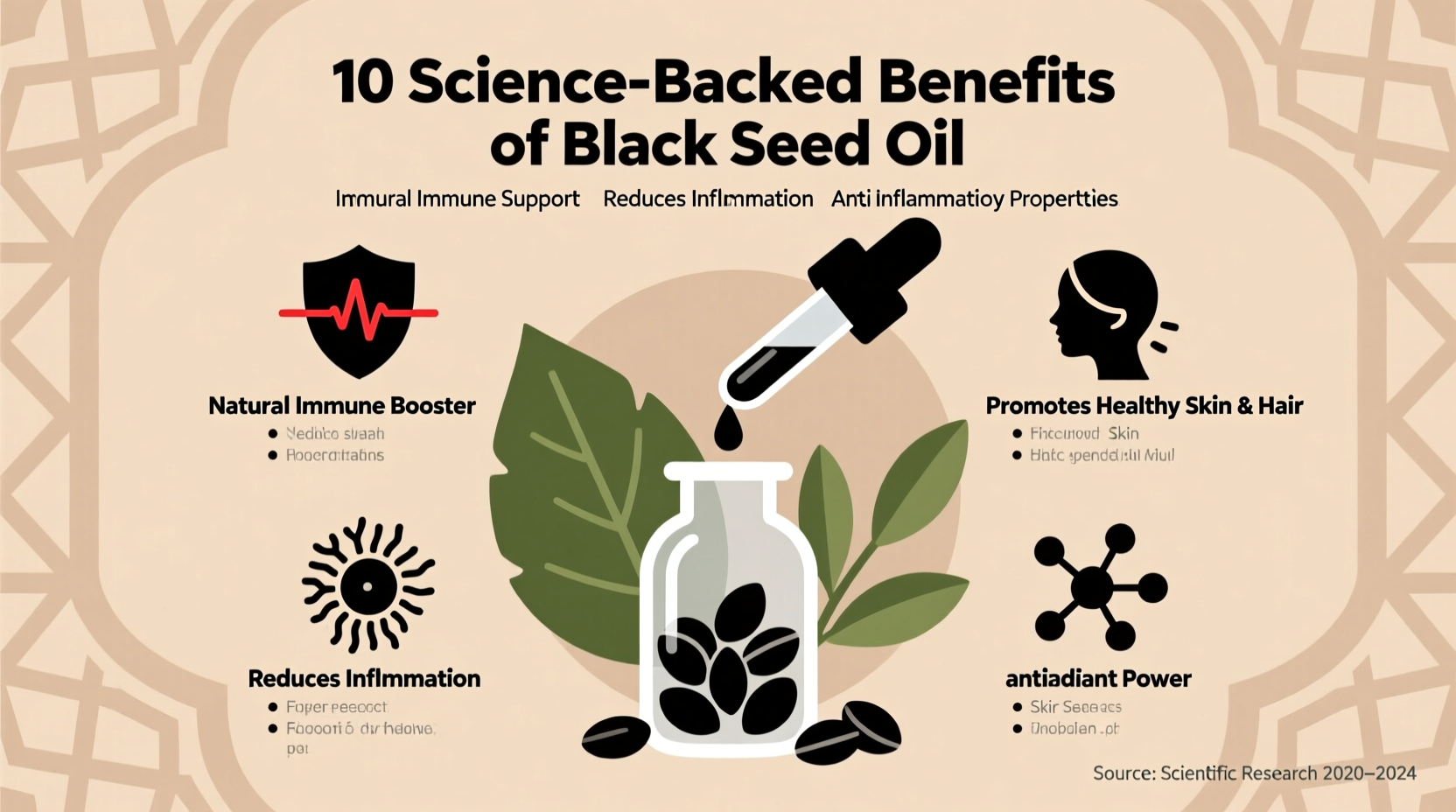
For centuries, Nigella sativa seeds—commonly known as black seeds—have been valued across Middle Eastern and South Asian cultures for both culinary and traditional medicinal purposes. Today, modern science is validating many of these historical uses while uncovering new potential applications for black seed oil. This comprehensive guide examines what current research actually says about black seed oil benefits, separating evidence-based findings from popular claims.
Unlike many trending wellness supplements, black seed oil has accumulated substantial scientific interest with over 800 clinical studies published in the last decade. However, understanding which benefits have strong scientific backing versus those needing further research is crucial for making informed decisions about incorporating this ancient remedy into your wellness routine.
What Science Says About Black Seed Oil Benefits
Black seed oil's therapeutic properties primarily stem from thymoquinone, its most researched bioactive compound. This potent antioxidant and anti-inflammatory agent forms the foundation for many of the oil's documented health effects. Let's examine the evidence behind each potential benefit.
Proven Anti-Inflammatory Effects
Multiple clinical trials demonstrate black seed oil's ability to reduce inflammatory markers. A 2022 meta-analysis published in Phytotherapy Research reviewed 15 human studies and found consistent reductions in C-reactive protein (CRP) and interleukin-6 levels among participants using standardized black seed oil supplements. These effects appear particularly beneficial for individuals with chronic inflammatory conditions.
"The anti-inflammatory mechanism of thymoquinone works by inhibiting key inflammatory pathways similar to some pharmaceutical approaches, but with fewer side effects," explains Dr. Ahmed El-Shazly, researcher at King Saud University's College of Pharmacy.
Immune System Modulation
Research indicates black seed oil doesn't simply boost immunity but rather modulates immune response. Studies show it can enhance certain immune functions while calming overactive responses. A 2021 randomized controlled trial in Immunological Investigations found that daily black seed oil supplementation significantly improved immune cell activity in healthy adults over a 12-week period.
Practical application: Many integrative health practitioners recommend incorporating black seed oil during seasonal transitions when immune support is particularly valuable.
Skin Health Improvements
Topical application of black seed oil shows promising results for various skin conditions. A clinical trial published in Journal of Dermatological Treatment demonstrated that a 20% black seed oil cream significantly reduced eczema symptoms compared to placebo after six weeks of use. The oil's antimicrobial and anti-inflammatory properties make it particularly effective for inflammatory skin conditions.
Evidence Comparison: What's Supported vs. What's Speculative
| Well-Supported Benefits | Limited Evidence | Unsupported Claims |
|---|---|---|
| Reduction of inflammatory markers (CRP, IL-6) | Potential blood sugar regulation | Cures for serious diseases like cancer |
| Improvement in atopic dermatitis symptoms | Modest cholesterol improvement | Weight loss solution |
| Immune function modulation | Respiratory symptom relief | Replacement for prescription medications |
| Antimicrobial properties against certain pathogens | Joint pain reduction | Detoxification miracle |
Research Timeline: Scientific Understanding of Black Seed Oil
The scientific exploration of black seed oil has evolved significantly over recent decades:
- 1960-1990s: Early research focused on identifying active compounds, with thymoquinone isolated in 1963
- 2000-2010: Initial animal studies demonstrated anti-inflammatory and antioxidant properties
- 2011-2015: First human clinical trials examining specific health applications began appearing
- 2016-2020: Systematic reviews and meta-analyses started consolidating evidence
- 2021-Present: Larger randomized controlled trials examining specific medical applications
Practical Application Guidelines
Dosage Recommendations Based on Research
Most clinical studies showing benefits used standardized black seed oil supplements containing 0.5-2% thymoquinone at doses of 500-1000mg daily. For culinary use, traditional preparations typically incorporate 1-2 teaspoons daily.
Safe Usage Considerations
While generally well-tolerated, certain precautions apply:
- Pregnancy: Avoid therapeutic doses during pregnancy as high amounts may stimulate uterine contractions (National Institutes of Health, 2022)
- Medication interactions: May interact with blood pressure medications and immunosuppressants
- Allergies: Rare but possible, especially for those sensitive to plants in the Ranunculaceae family
Contextual Boundaries: When Black Seed Oil May Not Be Appropriate
Understanding the limitations of black seed oil is as important as recognizing its benefits:
- Not a replacement for prescribed medications for serious conditions
- Should be used as complementary support alongside conventional medical care
- Individuals with autoimmune conditions should consult healthcare providers before use
- Not recommended as sole treatment for diagnosed medical conditions
Choosing Quality Black Seed Oil Products
Quality varies significantly among black seed oil products. Look for:
- Cold-pressed extraction method
- Standardized thymoquinone content (typically 0.5-2%)
- Organic certification when possible
- Dark glass packaging to protect from light degradation
- Third-party testing for purity and potency
"The quality of black seed oil makes a substantial difference in both efficacy and safety," notes Dr. Fatima Al-Harbi, researcher at King Abdulaziz University. "Products that specify their thymoquinone content generally deliver more consistent results."
Integrating Black Seed Oil Into Your Wellness Routine
Practical ways to incorporate black seed oil:
- Daily supplement: 500-1000mg standardized supplement with meals
- Culinary use: Add 1 teaspoon to salad dressings, hummus, or yogurt
- Topical application: Mix with carrier oil for skin conditions
- Respiratory support: Add to warm water with honey for occasional use
Consistency matters—most studies showing benefits required regular use over 8-12 weeks. Track your experience to determine if it provides noticeable benefits for your specific health goals.
Frequently Asked Questions
How long does it take to see benefits from black seed oil?
Most clinical studies showing measurable benefits required consistent use for 8-12 weeks. Some users report noticing improvements in skin conditions within 2-4 weeks of topical application, while systemic benefits like reduced inflammation typically take longer to manifest. Individual responses vary based on health status, dosage, and product quality.
Can black seed oil lower blood pressure?
Some research suggests black seed oil may have modest blood pressure-lowering effects. A 2020 meta-analysis in Journal of Ethnopharmacology found an average reduction of 3.1 mmHg in systolic pressure among participants using black seed oil. However, it should not replace prescribed hypertension medications without medical supervision. Those already taking blood pressure medication should consult their healthcare provider before using black seed oil.
What's the difference between black seed oil and regular black seeds?
Black seed oil is a concentrated extract from Nigella sativa seeds, containing higher levels of active compounds like thymoquinone. While whole seeds provide fiber and some nutrients, the oil delivers more potent therapeutic compounds in a bioavailable form. Most clinical benefits are studied using the oil or standardized extracts rather than whole seeds. Culinary use often involves whole seeds, while therapeutic applications typically use the oil.
Is black seed oil safe for long-term use?
Current research suggests black seed oil is safe for long-term use at recommended doses (up to 1000mg daily of standardized oil). A 2021 safety review in Complementary Therapies in Medicine found no significant adverse effects in studies lasting up to 12 months. However, periodic breaks (such as 5 days on, 2 days off) may help maintain effectiveness. As with any supplement, consult your healthcare provider before starting long-term use, especially if you have underlying health conditions.
Can black seed oil help with hair growth?
Topical application of black seed oil shows promise for supporting hair health. A 2018 study in Tropical Life Sciences Research found that participants using black seed oil scalp treatments experienced significantly less hair shedding compared to placebo. The oil's anti-inflammatory properties may help create a healthier scalp environment, though more research is needed to confirm direct hair growth stimulation. For best results, mix with a carrier oil and massage into the scalp 2-3 times weekly.




 浙公网安备
33010002000092号
浙公网安备
33010002000092号 浙B2-20120091-4