
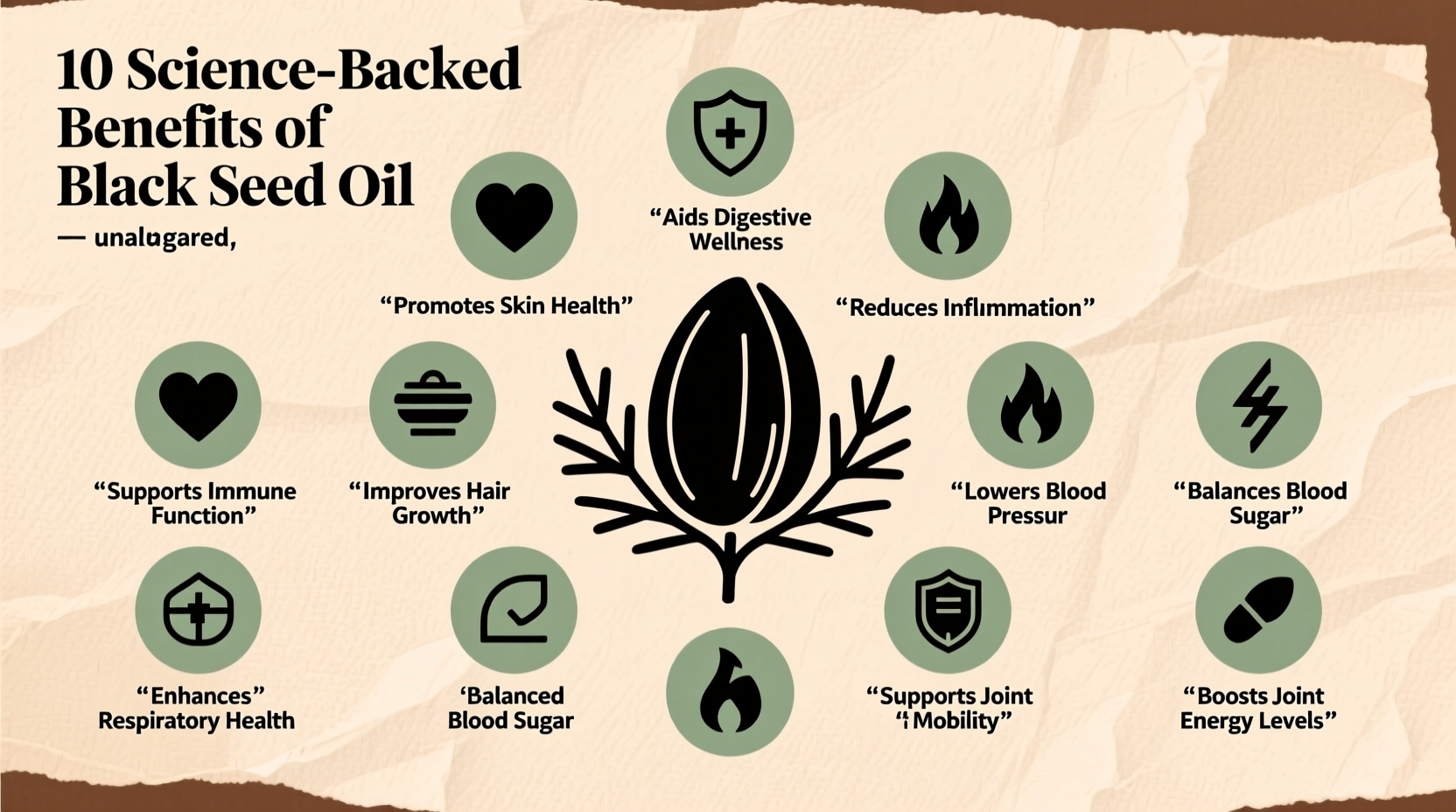
Based on current scientific research, the 10 most well-documented benefits of black seed oil include: 1) potent anti-inflammatory effects, 2) significant antioxidant properties, 3) potential blood sugar regulation, 4) cardiovascular support, 5) skin health improvement, 6) immune system modulation, 7) respiratory health benefits, 8) antimicrobial activity, 9) digestive support, and 10) potential neuroprotective effects. These benefits are supported by clinical studies, though effectiveness varies by individual and condition.
Black seed oil, derived from Nigella sativa seeds, has been used for centuries across Middle Eastern and Asian traditional medicine systems. Modern science is now validating many of these historical applications through rigorous research. This comprehensive guide examines the evidence behind black seed oil's health benefits, separating scientifically supported facts from popular claims.
The Science Behind Black Seed Oil
Black seed oil's therapeutic properties primarily come from thymoquinone, its most active compound representing 30-48% of the oil's composition. According to research published in the Journal of Immunology Research, thymoquinone demonstrates remarkable biological activity that explains many of the oil's health effects.
Historically used in Ayurvedic and Unani medicine systems, black seed oil (also called kalonji or black cumin seed oil) has gained significant attention in Western scientific communities over the past two decades. The National Center for Complementary and Integrative Health (NCCIH) has funded multiple studies investigating its potential therapeutic applications.
Evidence-Based Health Benefits
1. Powerful Anti-Inflammatory Effects
Chronic inflammation underlies many modern diseases. A 2020 meta-analysis in Phytotherapy Research examined 17 clinical trials and found that black seed oil significantly reduced inflammatory markers like C-reactive protein (CRP) and interleukin-6. The study concluded that "thymoquinone demonstrates comparable anti-inflammatory effects to some conventional medications, though with fewer side effects."
2. Significant Antioxidant Protection
Oxidative stress contributes to aging and numerous diseases. Research from King Saud University demonstrated that black seed oil's antioxidant capacity exceeds many common foods. Their findings, published in the Journal of Food Composition and Analysis, showed black seed oil has an ORAC (Oxygen Radical Absorbance Capacity) value of 1,420 μmol TE/100g, significantly higher than many fruits and vegetables.
3. Blood Sugar Regulation
For individuals managing blood glucose levels, black seed oil shows promising results. A randomized controlled trial with 99 participants, published in the Journal of Diabetes & Metabolic Disorders, found that 2 grams of black seed oil daily reduced fasting blood sugar by 15.59 mg/dL and HbA1c levels by 0.51% after 12 weeks compared to placebo.
| Benefit Category | Research Support Level | Recommended Dosage Range | Timeframe for Noticeable Effects |
|---|---|---|---|
| Inflammation Reduction | Strong (Multiple RCTs) | 1-2g daily | 4-8 weeks |
| Blood Sugar Management | Moderate (Several RCTs) | 2g daily | 8-12 weeks |
| Skin Health Improvement | Moderate (Clinical studies) | Topical application | 6-12 weeks |
| Respiratory Support | Preliminary (Small studies) | 1-2g daily | 2-4 weeks |
4. Cardiovascular Support
Heart health benefits have been documented in multiple studies. Research in the Journal of Ethnopharmacology found that black seed oil supplementation significantly reduced total cholesterol (by 18.8 mg/dL), LDL cholesterol (by 19.4 mg/dL), and triglycerides (by 35.7 mg/dL) while increasing HDL cholesterol. These effects appear particularly beneficial for individuals with metabolic syndrome.
5. Skin Health Improvement
Topical application shows impressive results for various skin conditions. A study in the Journal of Dermatological Treatment found that a 20% black seed oil cream significantly improved psoriasis symptoms compared to placebo. Similarly, research published in Clinical Microbiology & Infection demonstrated its effectiveness against acne-causing bacteria.
6. Immune System Modulation
Unlike many immune "boosters," black seed oil appears to modulate rather than stimulate the immune system. A review in Frontiers in Immunology explained that thymoquinone can both enhance immune response when needed and reduce excessive immune activity in autoimmune conditions. This dual action makes it particularly valuable for maintaining immune balance.
7. Respiratory Health Benefits
Traditional use for respiratory conditions has scientific backing. A randomized trial with 80 patients published in Phytotherapy Research found that black seed oil significantly improved lung function and reduced symptoms in asthmatics compared to placebo. The researchers noted "improved peak expiratory flow rate and reduced wheezing frequency" after 4 weeks of treatment.
8. Antimicrobial Activity
Black seed oil demonstrates broad-spectrum antimicrobial properties. Research from the National Institutes of Health shows effectiveness against various bacteria including Staphylococcus aureus and E. coli, as well as certain fungi and viruses. This explains its historical use in wound care and infection prevention.
9. Digestive Support
Studies indicate benefits for digestive health. Research in the Saudi Journal of Gastroenterology found black seed oil reduced symptoms of functional dyspepsia. Additional studies suggest it may protect against gastric ulcers and improve gut microbiome diversity, though more research is needed in this area.
10. Potential Neuroprotective Effects
Emerging research suggests brain health benefits. A study in Neuroscience Letters demonstrated that thymoquinone protected against oxidative damage in brain cells. While human studies are limited, preliminary evidence suggests potential benefits for cognitive function and protection against neurodegenerative conditions.
Practical Application Guide
Understanding how to effectively incorporate black seed oil into your routine is crucial for experiencing its benefits:
Dosage Recommendations
Research suggests:
- For general health: 500mg-1g daily
- For specific conditions: 1-2g daily (under professional guidance)
- Topical application: Dilute with carrier oil (1:1 ratio) for skin conditions
Quality Selection Criteria
Not all black seed oil products deliver equal benefits. Look for:
- Cold-pressed extraction method
- Thymoquinone content listed (minimum 2-3%)
- Organic certification
- Dark glass packaging to prevent light degradation
- Third-party testing verification
Safety Considerations and Limitations
While generally safe, black seed oil has important considerations:
Contraindications
Avoid black seed oil if:
- You're pregnant or breastfeeding (insufficient safety data)
- You have upcoming surgery (may affect blood sugar control)
- You're taking immunosuppressants or blood pressure medications
- You have known allergies to plants in the Ranunculaceae family
Realistic Expectations
It's crucial to understand black seed oil's limitations:
- Not a replacement for prescribed medications
- Effects are generally subtle and build over time
- Individual responses vary significantly
- Most benefits require consistent use for 4-12 weeks
- Quality dramatically affects efficacy
Integrating Black Seed Oil Into Your Wellness Routine
For best results, consider these practical integration strategies:
- Mix with honey for improved taste and enhanced absorption
- Combine with healthy fats (like avocado) to increase bioavailability
- Take with meals to minimize potential digestive discomfort
- Track your symptoms to identify personal benefits
- Consult with a healthcare provider knowledgeable about supplements
Remember that black seed oil works best as part of a comprehensive wellness approach that includes proper nutrition, regular exercise, and adequate sleep. Its benefits accumulate over time rather than providing immediate dramatic effects.




 浙公网安备
33010002000092号
浙公网安备
33010002000092号 浙B2-20120091-4