
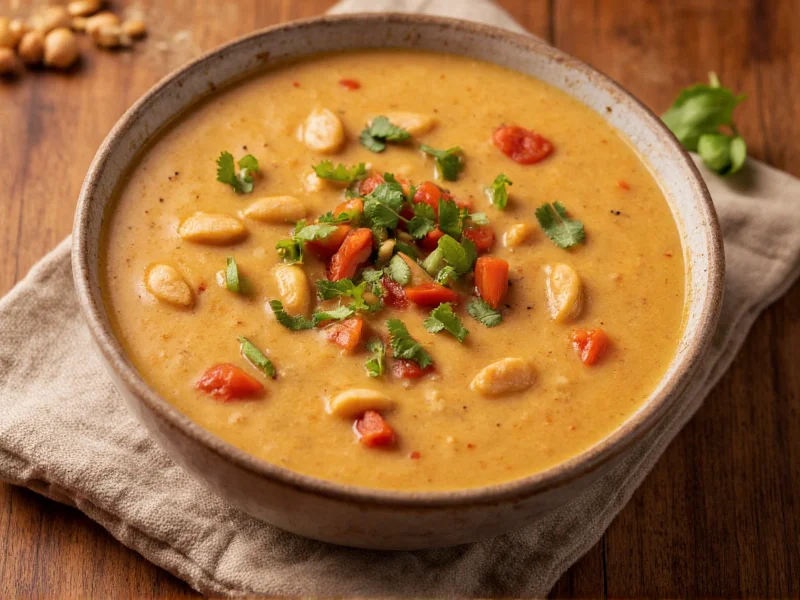
The Cultural Roots of West African Peanut Soup
West African peanut soup, called maafe in the Wolof language of Senegal and nkatenkwei in Twi (Ghana), represents centuries of culinary tradition across the region. This dish emerged after peanuts (native to South America) were introduced to Africa by Portuguese traders in the 16th century. By the 18th century, peanuts had become a staple crop in West Africa, leading to the development of this protein-rich stew as documented by the Food and Agriculture Organization (FAO) of the United Nations (http://www.fao.org/3/y4679e/y4679e06.htm). The soup varies significantly by country:
| Country | Local Name | Distinguishing Features |
|---|---|---|
| Senegal | Maafe | Tomato-based, often includes eggplant and cassava |
| Ghana | Groundnut Soup | Thicker consistency, frequently served with rice balls |
| Mali | Tigaden | Often includes dried fish for umami depth |
| Nigeria | Obe Nkanga | Uses palm oil, often includes bitterleaf vegetables |
Traditional preparation and consumption follow specific cultural boundaries. According to the Smithsonian National Museum of African Art (https://africa.si.edu/learn/for-families/food/), maafe is typically reserved for communal gatherings and celebrations, reflecting its role as a symbol of hospitality in West African culture. It is rarely served as an everyday meal in many communities, and deviations from traditional ingredients—such as sweetened peanut butter—are considered inauthentic. Unlike Americanized versions that sometimes resemble dessert-like peanut stews, authentic West African peanut soup balances savory, spicy, and slightly sweet elements without overwhelming sweetness. The dish traditionally serves as a communal meal, reflecting West African hospitality and resourcefulness in creating nutrient-dense food from locally available ingredients.
Essential Ingredients for Authentic Flavor
Creating an authentic west african peanut soup recipe requires understanding the role of each component. The foundation consists of:
- Peanuts: Traditional recipes use freshly ground peanuts, but natural, unsweetened peanut butter works well for home cooking. Avoid brands with added sugar or hydrogenated oils.
- Protein: Chicken (thighs preferred), beef, fish, or tofu provide substance. In coastal regions, dried fish adds depth.
- Aromatics: Onions, garlic, and ginger form the flavor base.
- Heat: Scotch bonnet or habanero peppers (used whole for subtle heat or chopped for intense spice).
- Liquid: Tomato puree or fresh tomatoes with broth or water.
- Vegetables: Common additions include sweet potatoes, carrots, spinach, or eggplant depending on region.
West african peanut soup nutritional benefits come from this balanced combination—peanuts provide healthy fats and protein, vegetables contribute vitamins, and spices offer anti-inflammatory properties. The dish naturally accommodates dietary preferences: vegan versions substitute meat with mushrooms or extra vegetables, while gluten-free adaptations require no special modifications.
Step-by-Step Authentic Preparation
Follow this method for a traditional west african peanut soup that honors the dish's heritage while being accessible for home cooks:
- Prepare protein: Brown chicken thighs or beef in a large pot. Remove and set aside.
- Sauté aromatics: In the same pot, cook onions until translucent, then add minced garlic and ginger.
- Add tomatoes: Stir in tomato puree and cook until oil separates (5-7 minutes).
- Incorporate peanut base: Whisk 1 cup natural peanut butter with 2 cups broth until smooth, then add to pot.
- Simmer: Return protein to pot with additional broth (4-6 cups total), sweet potatoes, and a whole Scotch bonnet pepper.
- Cook slowly: Simmer covered for 45-60 minutes until meat is tender and flavors meld.
- Finish: Stir in leafy greens (spinach or kale) during the last 10 minutes of cooking.
For the best west african peanut soup for beginners, resist the urge to rush the simmering process—this allows the peanut flavors to fully develop and prevents separation. If using pre-ground peanut butter, whisk it with warm broth before adding to prevent clumping, a common issue in easy west african peanut soup adaptations.
Regional Variations Worth Exploring
Understanding west african peanut soup cultural significance means recognizing its diversity across the continent. In Senegal, maafe often includes eggplant and cassava, while Ghanaian versions feature a thicker consistency achieved through prolonged simmering. Nigerian obe nkanga incorporates palm oil for distinctive color and flavor, and Malian tigaden traditionally uses dried fish for umami depth.
When adapting a traditional maafe recipe for modern kitchens, consider these authentic touches:
- Add a teaspoon of smoked paprika to mimic traditional open-fire cooking
- Use tamarind paste instead of tomatoes for a Mali-inspired variation
- Incorporate baobab powder for vitamin C and tanginess (common in Burkina Faso versions)
- Finish with crushed peanuts for texture contrast
These regional differences highlight why there's no single "correct" west african peanut stew—each community has perfected the dish using locally available ingredients while maintaining the essential peanut-tomato-spice foundation.
Common Preparation Mistakes to Avoid
Even experienced cooks encounter challenges with west african peanut soup. Here are frequent pitfalls and solutions:
- Peanut butter separation: Caused by adding cold peanut butter to hot liquid. Solution: Always whisk peanut butter with room-temperature broth before incorporating.
- Bland flavor: Results from insufficient layering of flavors. Solution: Sauté aromatics thoroughly and consider adding a small piece of kombu seaweed while simmering for umami.
- Overly thick consistency: Common when reducing too much. Solution: Maintain proper liquid-to-peanut ratio (aim for 6 cups liquid to 1 cup peanut butter).
- Bitter aftertaste: Occurs when burning spices. Solution: Cook tomato base until oil separates from solids before adding other ingredients.
For those exploring vegan west african peanut soup variations, replace meat-based broths with mushroom or vegetable stock, and consider adding smoked salt to compensate for the absence of meat flavors. The dish's versatility makes it ideal for dietary adaptations while preserving its essential character.
Serving Traditions and Modern Pairings
In West Africa, peanut soup traditionally accompanies starches that help balance its richness. Common pairings include:
- Fufu (pounded cassava or plantain)
- Jollof rice
- Couscous (in northern regions)
- Rice balls (in Ghanaian preparations)
When serving west african peanut soup in contemporary settings, consider these authentic yet accessible pairings:
- Steamed jasmine rice with a side of sautéed greens
- Quinoa for added protein in vegetarian versions
- Simple cucumber salad with lime to cut through the richness
- Warm naan bread for dipping
The soup's complex flavor profile—simultaneously savory, slightly sweet, and gently spicy—makes it remarkably versatile. Leftovers often taste better the next day as flavors continue to meld, a characteristic that contributes to its popularity as both everyday fare and special occasion dish across West African communities.




 浙公网安备
33010002000092号
浙公网安备
33010002000092号 浙B2-20120091-4