
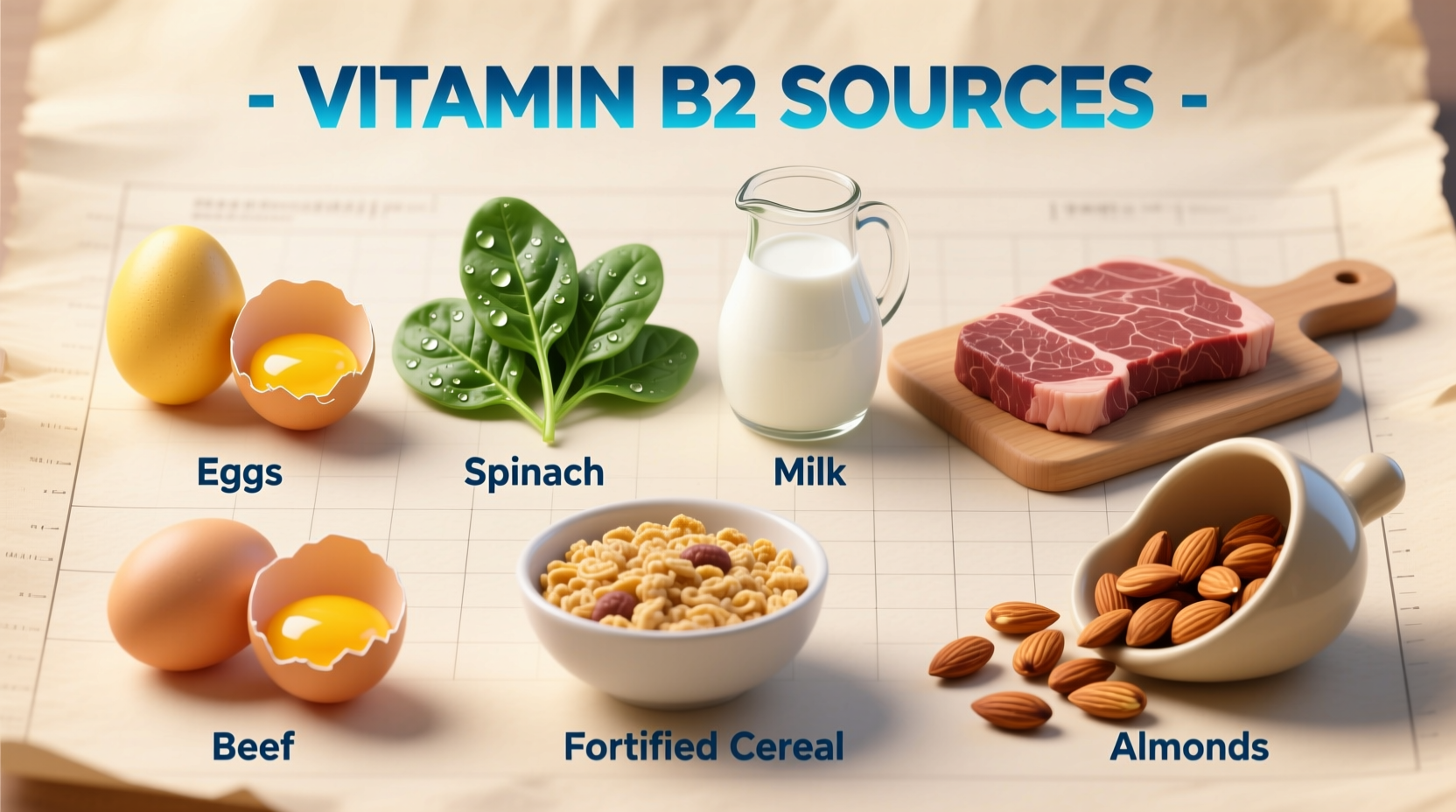
Understanding where to find vitamin B2 in your diet is crucial for maintaining energy levels, supporting cellular function, and keeping your skin and eyes healthy. This essential nutrient, also known as riboflavin, plays a vital role in converting food into energy and acts as an antioxidant in your body. Unlike some vitamins, your body doesn't store riboflavin efficiently, so regular dietary intake is necessary for optimal health.
Top Food Sources of Vitamin B2
When planning meals to meet your riboflavin requirements, certain foods stand out as nutritional powerhouses. The National Institutes of Health identifies these as the most concentrated natural sources of vitamin B2:
| Food Source | Serving Size | Vitamin B2 (mg) | % Daily Value |
|---|---|---|---|
| Beef liver | 3 ounces | 2.9 | 123% |
| Fortified breakfast cereal | 1 cup | 1.3-1.7 | 77-100% |
| Yogurt, plain, fat-free | 1 cup | 0.6 | 35% |
| Milk, 2% fat | 1 cup | 0.4 | 27% |
| Eggs | 2 large | 0.5 | 29% |
| Almonds | 1 ounce | 0.3 | 18% |
| Mushrooms, portabella | ½ cup | 0.2 | 12% |
Data sourced from the NIH Office of Dietary Supplements and USDA FoodData Central. The Daily Value for riboflavin is based on 1.3 mg for adults.
Animal-Based Vitamin B2 Powerhouses
Dairy products consistently rank among the top sources of riboflavin in Western diets. Milk, cheese, and yogurt not only provide substantial riboflavin but also offer excellent bioavailability—the percentage of the nutrient your body can actually absorb and use. According to research published by the National Academy of Medicine, the riboflavin in dairy has approximately 90% bioavailability.
Organ meats, particularly liver, contain exceptionally high concentrations of riboflavin. While some people avoid organ meats due to taste preferences, they represent one of nature's most nutrient-dense food sources. A single 3-ounce serving of beef liver provides more than your entire daily requirement of riboflavin.
Plant-Based Sources for Vegetarians and Vegans
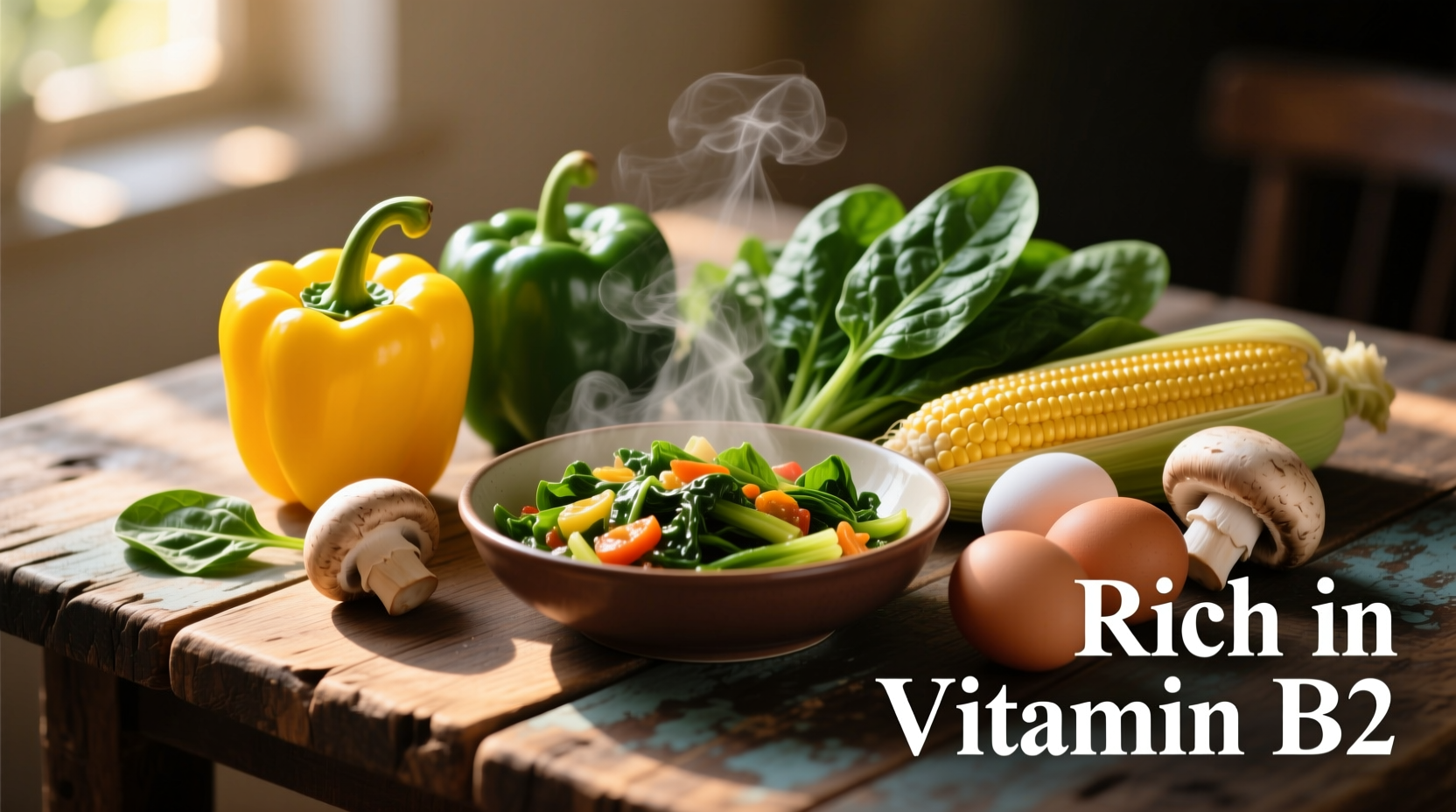
For those following plant-based diets, several excellent riboflavin sources exist. Almonds stand out as one of the richest plant sources, with one ounce providing nearly 20% of your daily needs. Mushrooms, particularly portabella and shiitake varieties, offer moderate amounts of riboflavin while adding savory umami flavor to dishes.
Fortified foods play a crucial role in plant-based nutrition. Many breakfast cereals, plant-based milks, and nutritional yeast are fortified with riboflavin. Nutritional yeast, a popular vegan ingredient, provides about 0.5 mg of riboflavin per tablespoon—making it an exceptionally concentrated source.
Daily Requirements and Practical Meal Planning
The Recommended Dietary Allowance (RDA) for riboflavin varies by age and gender:
- Adult men: 1.3 mg per day
- Adult women: 1.1 mg per day
- Pregnant women: 1.4 mg per day
- Nursing mothers: 1.6 mg per day
Meeting these requirements is straightforward with strategic food choices. Consider this sample day:
- Breakfast: Fortified cereal (1.3 mg) with almond milk (0.2 mg)
- Lunch: Spinach salad with mushrooms (0.2 mg) and almonds (0.3 mg)
- Dinner: Scrambled eggs (0.5 mg) with cheese (0.2 mg)
This simple meal plan provides approximately 2.5 mg of riboflavin—well above the daily requirement.
Cooking Considerations for Vitamin B2 Preservation
Riboflavin has unique stability characteristics you should know. Unlike many vitamins, riboflavin remains stable during cooking but is highly sensitive to light exposure. The U.S. Food and Drug Administration notes that riboflavin breaks down when exposed to light, which is why milk is typically sold in opaque containers.
To maximize riboflavin retention in your cooking:
- Store milk and dairy products in their original containers
- Cook vegetables in minimal water to prevent nutrient leaching
- Avoid prolonged exposure of foods to direct sunlight
- Use glass or ceramic containers rather than clear plastic for food storage
Special Considerations for Vitamin B2 Intake
Certain populations have increased riboflavin requirements or face challenges meeting their needs:
- Pregnant and breastfeeding women need approximately 30% more riboflavin
- Individuals with chronic alcohol use often have impaired riboflavin absorption
- People with certain genetic disorders like riboflavin transporter deficiency require medical supervision
- Vegans should pay special attention to fortified foods and nutritional yeast
Signs of riboflavin deficiency include cracked lips, sore throat, inflammation of the mouth and tongue, and skin disorders. Severe deficiency can lead to anemia and neurological symptoms, though this is rare in developed countries.
Practical Tips for Boosting Your Vitamin B2 Intake
Incorporating more riboflavin into your diet doesn't require drastic changes. Try these simple strategies:
- Add a handful of almonds to your morning yogurt
- Choose fortified plant-based milks if you're dairy-free
- Sprinkle nutritional yeast on popcorn or pasta dishes
- Include eggs in your weekly meal rotation
- Store milk in the refrigerator away from light
Remember that riboflavin works synergistically with other B vitamins, so consuming a variety of whole foods naturally rich in B vitamins provides the most comprehensive nutritional benefit.
Frequently Asked Questions
What happens if I don't get enough vitamin B2?
Riboflavin deficiency can cause cracked lips, sore throat, inflammation of the mouth and tongue, and skin disorders. Severe deficiency may lead to anemia and neurological issues, though this is uncommon in developed countries with diverse food availability.
Can I get too much vitamin B2 from food?
It's extremely difficult to overdose on riboflavin through food sources alone. Your body excretes excess riboflavin through urine, which may turn bright yellow—a harmless side effect. No upper intake level has been established for riboflavin because of its low toxicity.
Which cooking methods preserve the most vitamin B2?
Since riboflavin is water-soluble but heat-stable, steaming or stir-frying preserves more riboflavin than boiling. Avoid prolonged exposure to light during food preparation and storage, as riboflavin breaks down when exposed to light.
Are there vegan sources of vitamin B2 that don't require fortified foods?
Yes, mushrooms (particularly shiitake and portabella varieties) and almonds provide natural plant-based riboflavin. However, for optimal intake, many nutritionists recommend including fortified plant milks or nutritional yeast in vegan diets, as these provide more concentrated sources.




 浙公网安备
33010002000092号
浙公网安备
33010002000092号 浙B2-20120091-4