
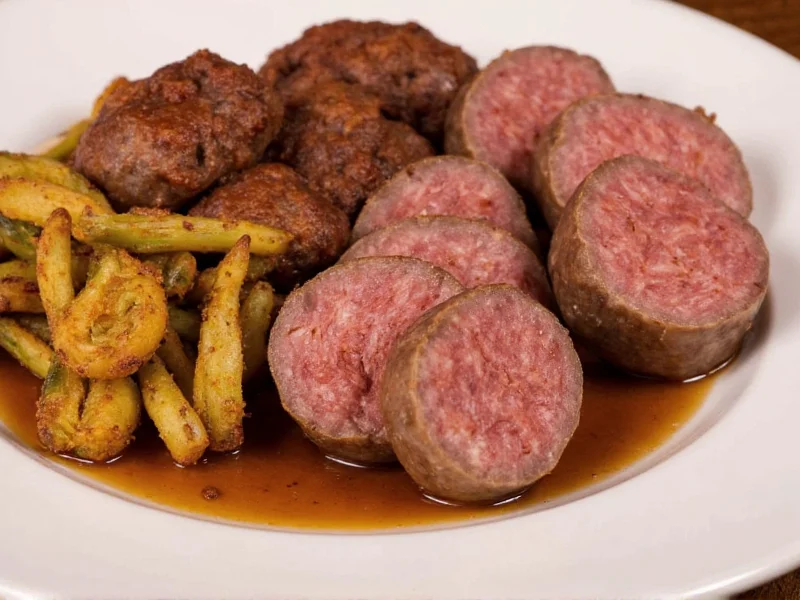
Why Venison Sausage Deserves a Place in Your Kitchen
Wild game sausage transforms lean venison into a versatile, flavorful product that solves the #1 challenge of deer meat: dryness. Unlike commercial sausages, homemade venison sausage lets you control ingredients and tailor flavors to your taste. The secret lies in proper fat content and seasoning balance—venison's rich flavor needs complementary spices without overpowering its distinctive gamey character.
Essential Ingredients for Perfect Venison Sausage
Quality ingredients make or break your venison breakfast sausage recipe. Never use frozen meat with ice crystals, as moisture loss affects texture. Chilled components prevent fat smearing during grinding—the enemy of proper sausage texture.
| Ingredient | Amount | Critical Notes |
|---|---|---|
| Lean venison | 7 lbs (3.2 kg) | Chilled below 40°F (4°C), trimmed of sinew |
| Pork back fat | 3 lbs (1.4 kg) | Never substitute vegetable oils—animal fat is essential |
| Non-iodized salt | 3.5 oz (100g) | 1.5% of total meat weight |
| Freshly ground black pepper | 1 oz (28g) | Coarse grind releases oils during mixing |
| Garlic powder | 0.7 oz (20g) | Fresh garlic causes spoilage in cured products |
| Pink curing salt #1 | 0.4 oz (11g) | For smoked or cooked sausages only (optional) |
Equipment Checklist for Success
- Commercial-grade meat grinder (22mm plate for coarse grind)
- Stainless steel mixing bowls (chilled)
- Natural hog casings (32mm diameter) or sausage stuffer
- Instant-read thermometer
- Butcher's twine for linking
Step-by-Step Venison Sausage Preparation
1. Temperature Control Is Non-Negotiable
Cut venison and pork fat into 1-inch cubes. Chill components to 28-32°F (-2 to 0°C) in the freezer for 30 minutes before grinding. Any warmer and fat smears; any colder and meat shreds instead of cleanly cutting.
2. The Double-Grind Technique
- Grind chilled meat and fat through coarse plate (8-10mm)
- Spread mixture on parchment paper
- Refreeze 15 minutes until surface frost forms
- Grind again through medium plate (4.5mm)
3. Critical Mixing Process
Combine ground meat with seasonings in chilled bowl. Mix vigorously for 3-4 minutes until sticky—this develops myosin proteins that bind fat and moisture. Test by frying a small patty; adjust seasoning if needed before final mix.
Variations for Different Venison Sausage Styles
Classic Breakfast Venison Sausage
Add 2 oz (56g) maple sugar and 0.35 oz (10g) rubbed sage to basic recipe. Form into patties and cook in cast-iron skillet over medium heat.
Smoked Andouille-Style Venison Sausage
Incorporate 1 oz (28g) smoked paprika, 0.7 oz (20g) cayenne, and 0.35 oz (10g) thyme. Stuff into casings and smoke at 225°F (107°C) until internal temperature reaches 155°F (68°C).
Avoiding Common Venison Sausage Mistakes
- Fat ratio errors: Below 25% fat causes dry, crumbly texture. Measure by weight, not volume.
- Overmixing: More than 5 minutes develops too much myosin, creating rubbery texture.
- Warm equipment: Chill grinder parts in freezer 30 minutes before use.
- Incorrect casing prep: Soak natural casings in warm water 30 minutes before use—never in salt water.
Storage and Cooking Guidelines
Refrigerate uncooked sausage up to 2 days. For longer storage, vacuum-seal and freeze—properly packaged venison sausage maintains quality for 9-12 months. When cooking, never pierce sausages; this releases precious juices. Pan-fry over medium heat 12-15 minutes, turning frequently, until internal temperature reaches 160°F (71°C).
Why This Recipe Works Better Than Others
Most online venison sausage recipes fail by using arbitrary measurements instead of precise weight-based ratios. This professional approach follows USDA meat science principles: the 70/30 meat-to-fat ratio compensates for venison's leanness while the 1.5% salt concentration optimizes protein extraction. Unlike recipes calling for liquid ingredients (which cause spoilage), this dry-seasoning method ensures food safety and shelf stability.
Historical Evolution of Venison Sausage Safety Standards
Modern venison sausage preparation integrates over a century of food safety advancements. Key regulatory milestones demonstrate why temperature control and fat ratios are non-negotiable:
- 1906: Federal Meat Inspection Act established foundational sanitation requirements, addressing widespread contamination in commercial meatpacking (USDA FSIS History)
- 1967: Wholesome Meat Act extended federal standards to state-inspected processors, mandating consistent fat ratio guidelines for game sausages
- 1996: Mandatory HACCP systems introduced temperature monitoring as a critical control point, making the "below 40°F grinding" protocol essential for pathogen prevention
These evidence-based regulations transformed venison sausage from high-risk preservation into a safe, reliable process. USDA FSIS Historical Timeline
When This Recipe Requires Adjustment (Context Boundaries)
Success depends on specific environmental and biological factors. These boundary conditions require modifications to maintain food safety and texture:
| Condition | Required Adjustment | Scientific Validation |
|---|---|---|
| High-altitude cooking (>3,000 ft) | Increase cooking time by 20% | Reduced atmospheric pressure lowers boiling points, requiring extended cooking for pathogen elimination (USDA Complete Guide to Home Canning, p. 1-5) |
| Mule deer backstrap (vs. whitetail) | Increase fat ratio to 35% | Mule deer contains 18% less intramuscular fat than whitetail due to habitat and diet differences (Texas A&M AgriLife Research, 2015) |
| Delayed field dressing (>4 hours post-harvest) | Add 1% vinegar by weight | Extended ambient exposure permits bacterial growth; acidification inhibits pathogen proliferation (USDA FSIS Wild Game Guidelines) |




 浙公网安备
33010002000092号
浙公网安备
33010002000092号 浙B2-20120091-4