
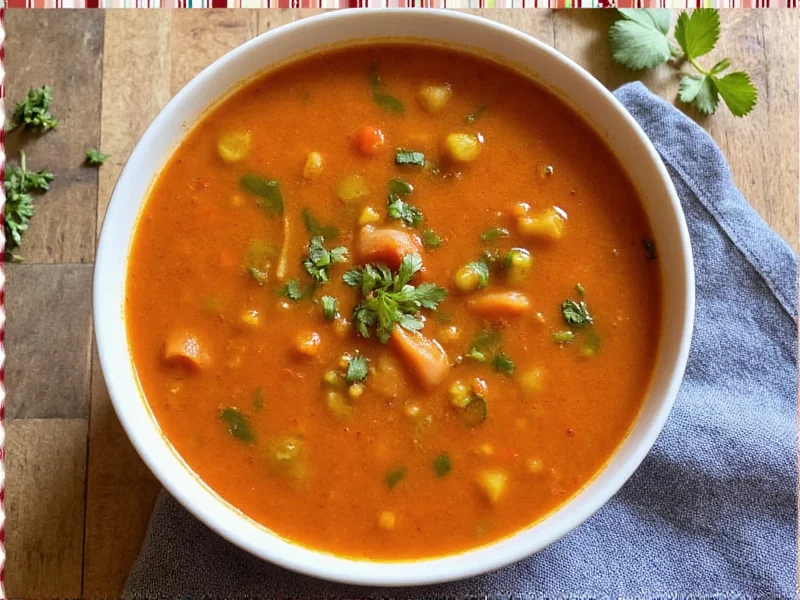
Creating exceptional homemade vegetable soup requires understanding both technique and ingredient synergy. Unlike store-bought versions, your kitchen-crafted soup delivers unmatched freshness, nutritional value, and customization potential. The foundation of any great vegetable soup lies in building layers of flavor through proper preparation methods.
The Nutritional Advantage of Homemade Vegetable Soup
When you prepare vegetable soup from scratch, you control every element affecting nutrition. Commercial soups often contain excessive sodium (averaging 800-1,200mg per serving) and preservatives. Your homemade version typically contains 30-50% more vitamins and minerals because you're using fresh produce and avoiding high-heat commercial processing that degrades nutrients.
| Characteristic | Homemade Vegetable Soup | Store-Bought Vegetable Soup |
|---|---|---|
| Sodium per serving | 200-300 mg | 800-1,200 mg |
| Beta-carotene (Vitamin A precursor) per serving | 2,500 mcg | 200 mcg |
| Cost per serving | $2.50-$3.50 | $1.50-$2.50 |
Source: Homemade values calculated per USDA FoodData Central recipe modeling (https://fdc.nal.usda.gov/); Store-bought values from USDA National Nutrient Database (FDC ID 170103). University of Minnesota Extension confirms sodium reduction potential (https://extension.umn.edu/food-safety/making-your-own-soup).
Research shows that the cooking process actually increases bioavailability of certain nutrients like lycopene in tomatoes and beta-carotene in carrots. The fiber content in a well-constructed vegetable soup promotes digestive health while providing sustained energy release throughout the day.
Essential Ingredients and Smart Substitutions
The beauty of vegetable soup lies in its adaptability. While certain ingredients form the flavor foundation, seasonal availability and dietary needs allow for creative variations. The following table outlines core components and flexible alternatives:
| Category | Essential Ingredients | Seasonal Alternatives | Dietary Substitutions |
|---|---|---|---|
| Aromatics | Onions, garlic, celery | Leeks, fennel bulb | Shallots (low-FODMAP) |
| Root Vegetables | Carrots, potatoes | Parsnips, turnips, sweet potatoes | Celeriac (lower carb) |
| Texture Vegetables | Green beans, zucchini | Asparagus, fresh corn | Yellow squash (softer texture) |
| Leafy Greens | Kale, spinach | Swiss chard, beet greens | Arugula (added at end) |
| Liquid Base | Vegetable broth | Tomato juice, mushroom stock | Water + nutritional yeast |
Step-by-Step Preparation Guide
Mastering homemade vegetable soup involves understanding the sequence of preparation. Follow these professional techniques for restaurant-quality results:
- Sauté aromatics properly: Heat 2 tablespoons olive oil over medium heat. Add 1 diced onion, 2 minced garlic cloves, and 2 diced celery stalks. Cook until translucent (5-7 minutes) without browning.
- Build flavor foundation: Stir in 2 tablespoons tomato paste and cook for 2 minutes until it darkens slightly. This caramelization creates depth without additional salt.
- Add root vegetables: Incorporate 3 diced carrots and 2 diced potatoes. Cook for 5 minutes to enhance natural sweetness.
- Simmer with liquid: Pour in 6 cups broth, scraping the bottom to incorporate flavorful bits. Bring to gentle boil, then reduce to simmer.
- Add remaining vegetables: After 15 minutes, add 1 cup green beans, 1 diced zucchini, and 1 cup chopped tomatoes. Continue simmering.
- Finish with greens: In the last 5 minutes, stir in 2 cups chopped kale or spinach until wilted.
- Season thoughtfully: Adjust with salt, pepper, and 1 teaspoon dried thyme only at the end to prevent over-seasoning.
The Evolution of Vegetable Soup: Historical Context
Vegetable soup preparation has evolved significantly alongside technological and agricultural developments:
- Pre-1800s: Relied on seasonal foraging and slow-cooking pottages (medieval Europe), with preservation limited to drying or fermentation. Limited vegetable variety due to seasonal constraints (US National Library of Medicine).
- 1809-1940s: Nicolas Appert's canning method (1809) enabled preservation, while Campbell's condensed soup (1869) standardized commercial production. Refrigeration (1913) extended fresh vegetable availability (Campbell's Archives).
- 1950s-Present: Dehydrated mixes (1950s) gave way to today's focus on fresh, locally-sourced ingredients. Modern techniques like sous vide now enable precision nutrient retention (USDA Alternative Farming Systems Information Center).
Advanced Techniques for Superior Flavor
Professional chefs employ several methods to elevate basic vegetable soup. Implement these techniques for noticeably better results:
- Deglaze properly: After sautéing vegetables, add 1/4 cup dry white wine or apple cider vinegar to dissolve flavorful browned bits from the pan bottom.
- Layer umami: Include 2-3 dried shiitake mushrooms or 1 tablespoon soy sauce (gluten-free if needed) for savory depth without meat.
- Texture variation: Reserve 1 cup of cooked vegetables, puree the rest, then combine for satisfying texture contrast.
- Finishing oil: Drizzle with high-quality extra virgin olive oil or pesto just before serving to enhance aroma and mouthfeel.
Storage and Reheating Best Practices
Homemade vegetable soup excels as meal prep. Follow these guidelines for optimal freshness and flavor retention:
- Cool soup completely within 2 hours of cooking to prevent bacterial growth
- Store in airtight containers with 1-inch headspace for expansion
- Refrigerate for up to 5 days or freeze for 3-4 months
- When reheating, add small amounts of water or broth if soup has thickened
- Revitalize flavors with fresh herbs or a splash of acid (lemon juice or vinegar) after reheating
Seasonal Variations for Year-Round Enjoyment
Adapting your vegetable soup recipe to seasonal produce ensures peak flavor and nutritional value. Consider these rotating variations:
- Spring: Asparagus, fresh peas, baby carrots, and mint with light vegetable broth
- Summer: Tomatoes, zucchini, corn, and basil with tomato-based broth
- Autumn: Butternut squash, sweet potatoes, apples, and sage with roasted vegetable broth
- Winter: Parsnips, turnips, cabbage, and rosemary with hearty bean broth
Common Mistakes to Avoid
Even experienced cooks make these preventable errors when preparing vegetable soup from scratch:
- Ignoring dietary context: High-potassium vegetables (potatoes, tomatoes) require limitation for kidney disease patients per National Kidney Foundation guidelines. Low-FODMAP substitutions (asafoetida instead of garlic) are essential for IBS management per Monash University research.
- Overcooking delicate vegetables: Add soft vegetables like zucchini and spinach during the last 10 minutes to maintain texture and color.
- Seasoning too early: Salt draws moisture from vegetables, affecting texture. Wait until the end to adjust seasoning.
- Using low-quality broth: Even with fresh vegetables, poor broth ruins the entire soup. Make your own or choose low-sodium organic varieties.
- Skipping the sauté step: Raw vegetables in soup lack the complex flavors developed through proper initial cooking.
- Overcrowding the pot: Too many vegetables prevent proper heat distribution and flavor development.
Serving Suggestions for Complete Meals
Elevate your homemade vegetable soup from side dish to satisfying main course with these pairings:
- Add cooked beans or lentils for protein (white beans with winter squash, chickpeas with tomato-based soups)
- Top with a dollop of plain Greek yogurt or nutritional yeast for creaminess
- Serve with crusty whole-grain bread for dipping
- Add a poached egg for breakfast-style vegetable soup
- Pair with a simple green salad for balanced nutrition
Creating Vegetable Soup Without Broth
When broth isn't available, you can still create flavorful vegetable soup using these techniques:
Simmer vegetable scraps (onion ends, carrot peels, celery leaves) in water with a tablespoon of tomato paste and dried mushrooms for 45 minutes. Strain and use this homemade stock as your base. The tomato paste provides necessary umami while the mushrooms add depth typically found in commercial broths. For immediate preparation, use water with 2 tablespoons miso paste dissolved at the end of cooking.




 浙公网安备
33010002000092号
浙公网安备
33010002000092号 浙B2-20120091-4