
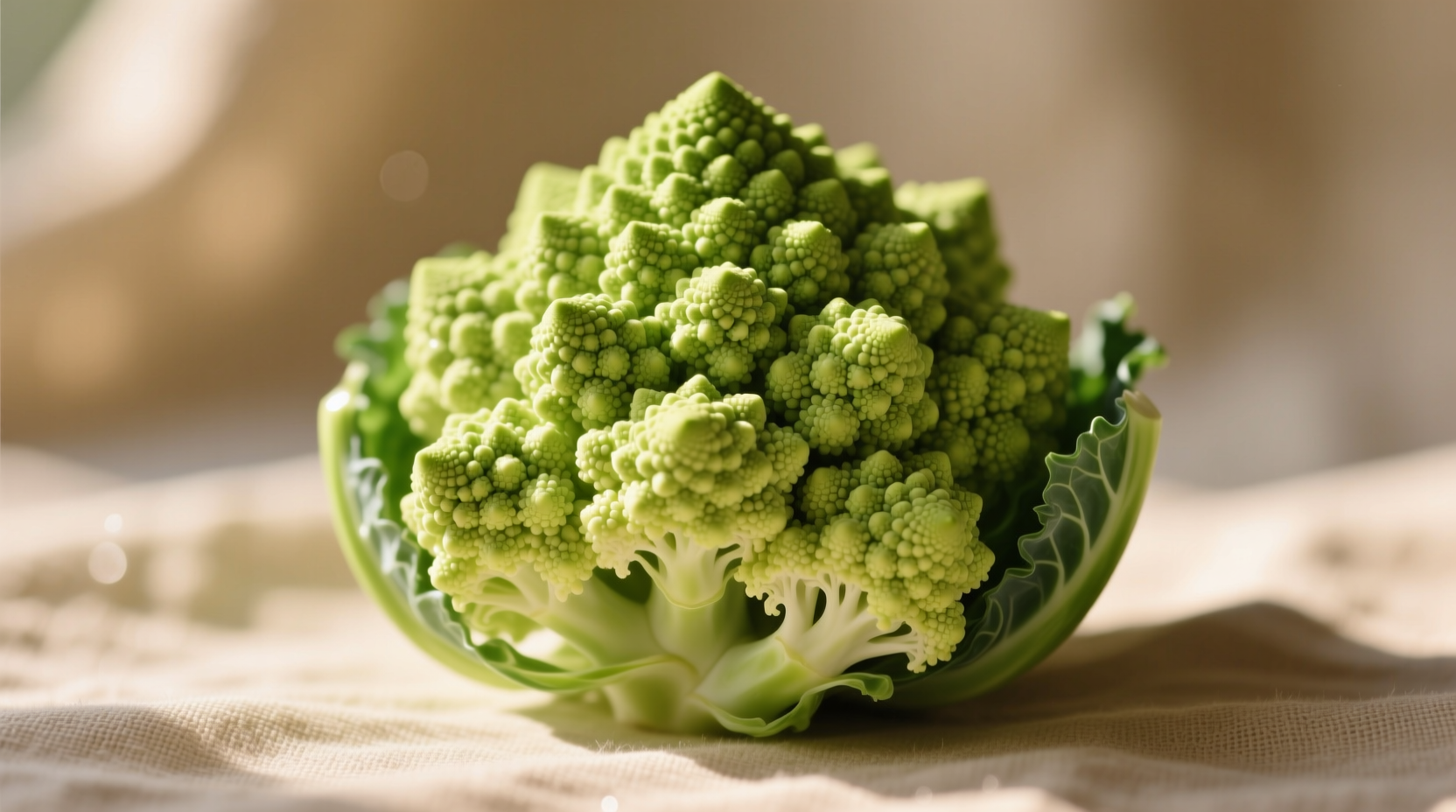
What Makes Romanesco Different From Regular Cauliflower?
While both belong to the Brassica oleracea species, Romanesco (Brassica oleracea var. botrytis) features a mesmerizing fractal geometry that follows the Fibonacci sequence. Unlike regular cauliflower's dense, creamy-white curds, Romanesco displays vibrant lime-green spirals that maintain their striking pattern even after cooking. The flavor profile differs significantly too—Romanesco offers a nuttier, slightly sweeter taste with subtle broccoli-like notes, making it more versatile in culinary applications.
| Characteristic | Romanesco | Regular Cauliflower |
|---|---|---|
| Color | Lime green | Cream white (sometimes purple or orange variants) |
| Pattern | Fractal spirals following Fibonacci sequence | Dense, irregular curds |
| Flavor Profile | Nuttier, slightly sweeter with broccoli notes | Milder, more neutral |
| Vitamin C Content | 100mg per 100g (USDA FoodData Central) | 48.2mg per 100g (USDA FoodData Central) |
| Texture When Cooked | Firmer, holds shape better | Softer, more prone to disintegration |
Your Complete Romanesco Selection Guide
When shopping for Romanesco, look for these quality indicators that professional chefs use to ensure peak freshness and flavor:
- Firmness test: Gently squeeze the head—it should feel solid with no soft spots
- Color assessment: Vibrant lime green without yellowing or browning
- Leaf inspection: Fresh green leaves still attached indicate recent harvest
- Weight check: Heavier specimens contain more moisture and freshness
Seasonality matters significantly—Romanesco reaches peak quality from late summer through fall. During winter months, you'll typically find imported varieties that may lack the intense flavor of locally grown summer produce. The USDA Agricultural Marketing Service confirms that domestically grown Romanesco peaks between August and October in most regions.
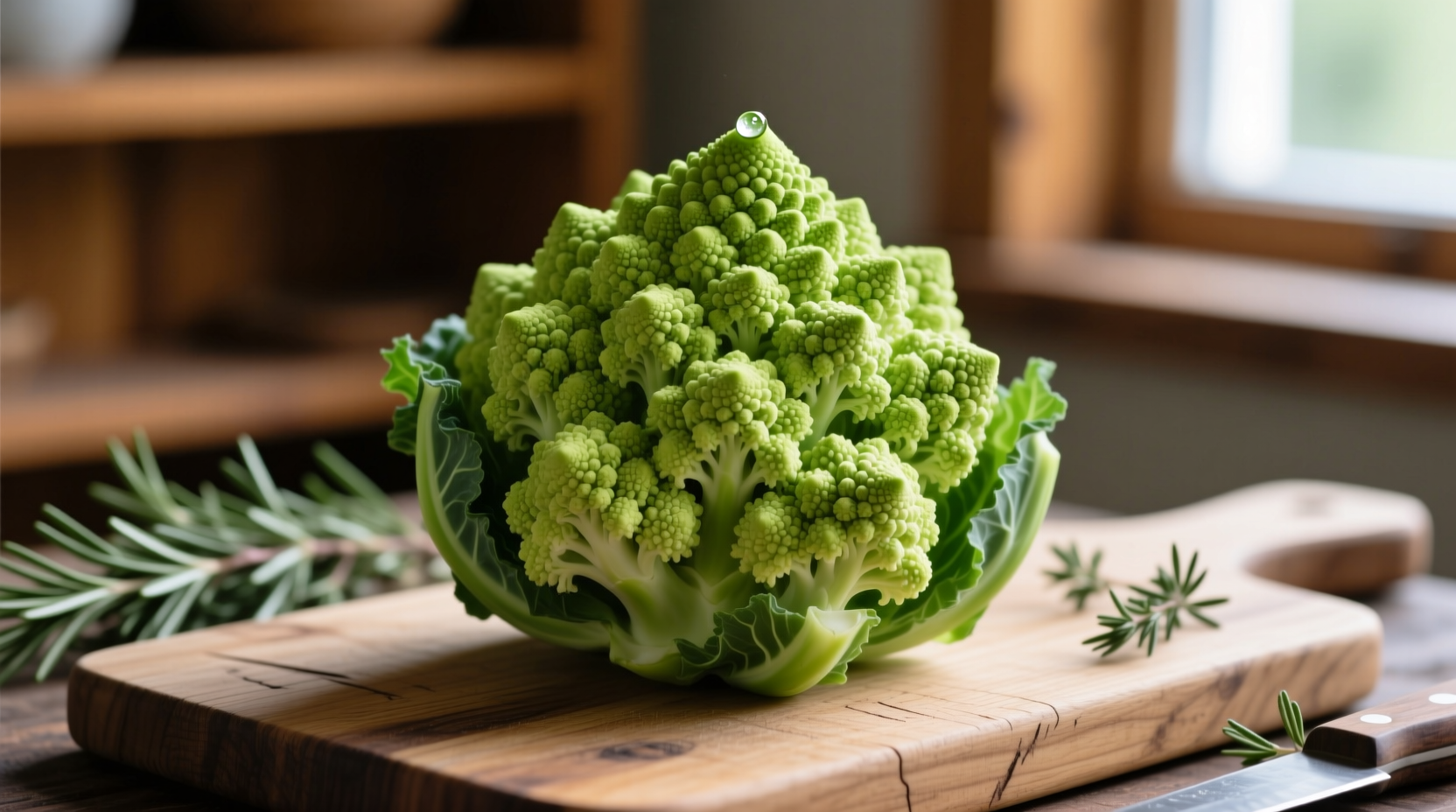
Nutritional Powerhouse: Science-Backed Benefits
Romanesco isn't just visually stunning—it packs impressive nutritional advantages over its cauliflower cousin. According to the USDA FoodData Central database, 100g of raw Romanesco delivers:
- 100mg vitamin C (111% of daily value)—significantly higher than regular cauliflower's 48.2mg
- 1.7g dietary fiber supporting digestive health
- Rich in carotenoids including beta-carotene and lutein
- Contains sulforaphane compounds studied for potential anti-cancer properties
A 2022 study published in the Journal of Agricultural and Food Chemistry confirmed that Romanesco maintains higher levels of beneficial glucosinolates compared to regular cauliflower, particularly when steamed rather than boiled. These compounds support the body's natural detoxification processes and exhibit potent antioxidant activity.
Professional Cooking Techniques That Preserve Flavor & Texture
Master the art of preparing Romanesco with these chef-recommended methods that maximize both nutrition and taste:
Steaming for Nutrient Retention
Place florets in a steamer basket over 1 inch of simmering water. Cook for 5-7 minutes until fork-tender but still slightly crisp. This method preserves 90% of vitamin C content according to research from the University of California's Department of Nutrition.
Roasting for Enhanced Flavor
Toss florets with 1 tablespoon olive oil, 1 minced garlic clove, and sea salt. Roast at 425°F (220°C) for 20-25 minutes, turning once, until caramelized edges develop. The dry heat enhances Romanesco's natural nuttiness while creating delicious textural contrast.
Raw Preparation for Maximum Enzyme Activity
Thinly slice or shave raw Romanesco for salads. Pair with lemon vinaigrette and toasted pine nuts to complement its natural flavor profile. Consuming raw preserves myrosinase enzymes that help activate beneficial compounds when combined with cruciferous vegetables.
Storage Secrets for Extended Freshness
Extend your Romanesco's shelf life with these evidence-based storage techniques:
- Refrigerate whole heads in perforated plastic bags for up to 10 days
- Store cut florets in airtight containers with a damp paper towel
- Blanch and freeze for long-term storage (maintains quality for 10-12 months)
- Avoid washing until ready to use to prevent premature spoilage
The National Center for Home Food Preservation recommends blanching Romanesco in boiling water for 3 minutes before freezing to preserve texture and nutritional value. Properly frozen Romanesco maintains 85% of its vitamin C content for up to one year.
Historical Journey: From Renaissance Gardens to Modern Kitchens
Romanesco's fascinating history reveals why this vegetable remained obscure for centuries:
- 16th century: First documented appearance in Italian Renaissance garden records
- 18th century: Limited cultivation in elite European gardens as a curiosity
- Early 1900s: Nearly disappeared from cultivation due to lower yields than cauliflower
- 1990s: Rediscovered by specialty food producers and chefs
- 2010s: Gained popularity through social media due to its fractal beauty
Unlike regular cauliflower which has ancient origins dating back to 600 BC, Romanesco appears to be a more recent cultivar developed through selective breeding. Its mathematical perfection made it a favorite subject for Renaissance mathematicians studying natural patterns, though it remained a niche vegetable until recent decades.
When to Choose Romanesco Over Regular Cauliflower
Understanding context boundaries helps maximize culinary success:
- Choose Romanesco when: You want visual impact, nuttier flavor, or higher vitamin C content
- Choose regular cauliflower when: Making purees, soups, or dishes requiring neutral flavor
- Substitution ratio: Use 1:1 by volume, but adjust cooking times (Romanesco needs 2-3 minutes less)
- Cost consideration: Romanesco typically costs 20-30% more than regular cauliflower
Professional chefs note that Romanesco's firmer texture makes it superior for grilling and stir-frying, while regular cauliflower performs better in applications requiring complete disintegration like mashed "cauliflower" dishes.




 浙公网安备
33010002000092号
浙公网安备
33010002000092号 浙B2-20120091-4