
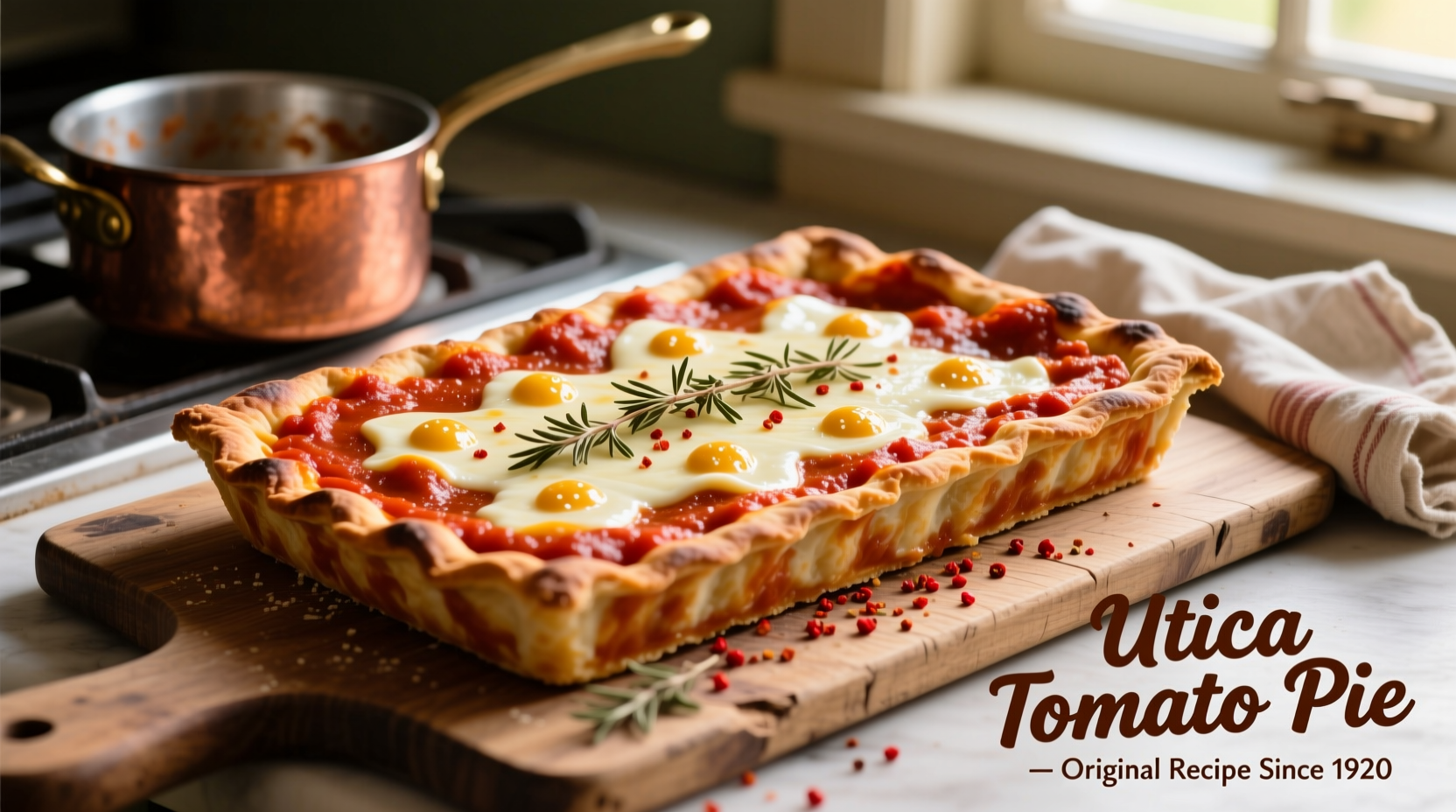
When searching for authentic Utica tomato pie, you're seeking more than just pizza—you're exploring a culinary tradition born from Italian immigrant communities in upstate New York. This regional specialty has developed its own identity through generations of family pizzerias perfecting a technique that flips conventional pizza construction on its head. The result is a dish with distinctive textural contrast and flavor concentration that satisfies both pizza enthusiasts and culinary historians.
The Defining Characteristics of Utica Tomato Pie
Utica tomato pie stands apart through three essential elements that create its signature experience. First, the assembly sequence reverses standard pizza construction: after the dough is stretched, a layer of low-moisture mozzarella goes down first, followed by a generous application of uncooked tomato sauce directly on top. Second, the specific cheese blend typically features a combination of mozzarella and Romano rather than the standard mozzarella-heavy mixtures. Third, the baking process creates a distinctive texture where the sauce caramelizes against the cheese layer, producing pockets of concentrated tomato flavor with a slightly chewy yet crisp crust.
"The magic happens when that tomato sauce hits the hot cheese," explains local pizzeria owner Frank Moretti, whose family has operated Romano's Pizza in West Utica for three generations. "It's not just about ingredients—it's about the chemistry between them during baking. The sauce doesn't just sit on top; it fuses with the cheese in a way that creates entirely new flavor compounds."
Historical Development Timeline
Understanding Utica tomato pie requires examining the migration patterns and culinary adaptations of Italian immigrants who settled in upstate New York. The dish evolved through distinct phases as families adapted their regional Italian cooking traditions to available ingredients in their new homeland.
| Time Period | Key Developments | Cultural Context |
|---|---|---|
| 1890-1920 | Italian immigrants from Southern Italy settle in Utica, bringing regional pizza traditions | Approximately 25% of Utica's population becomes Italian-American by 1920 (Utica City Archives) |
| 1920-1940 | Early pizzerias establish in West Utica neighborhood; recipe experimentation begins | Prohibition era encourages family-run establishments serving food with alcohol alternatives |
| 1940-1960 | "Tomato pie" style emerges as distinctive West Utica variation | Post-WWII economic boom increases restaurant patronage; regional identity strengthens |
| 1960-Present | Recipe standardization occurs; becomes recognized regional specialty | Food media attention grows; preservation efforts emerge as original pizzerias face closure |
How Utica Tomato Pie Differs From Other Regional Styles
While pizza variations exist across America, Utica tomato pie maintains unique characteristics that distinguish it from other regional specialties. Unlike New York-style pizza with its foldable thin crust or Chicago deep-dish with its pie-like construction, Utica tomato pie shares the thin crust approach but with a completely different assembly method.
Food historians note that Utica's version has more in common with certain Italian "pizza rossa" traditions than with mainstream American pizza styles. According to culinary research from the American Food Heritage Project, the technique resembles preparations found in parts of Calabria and Sicily where sauce application methods vary from the Neapolitan standard.
Authentic Preparation Techniques
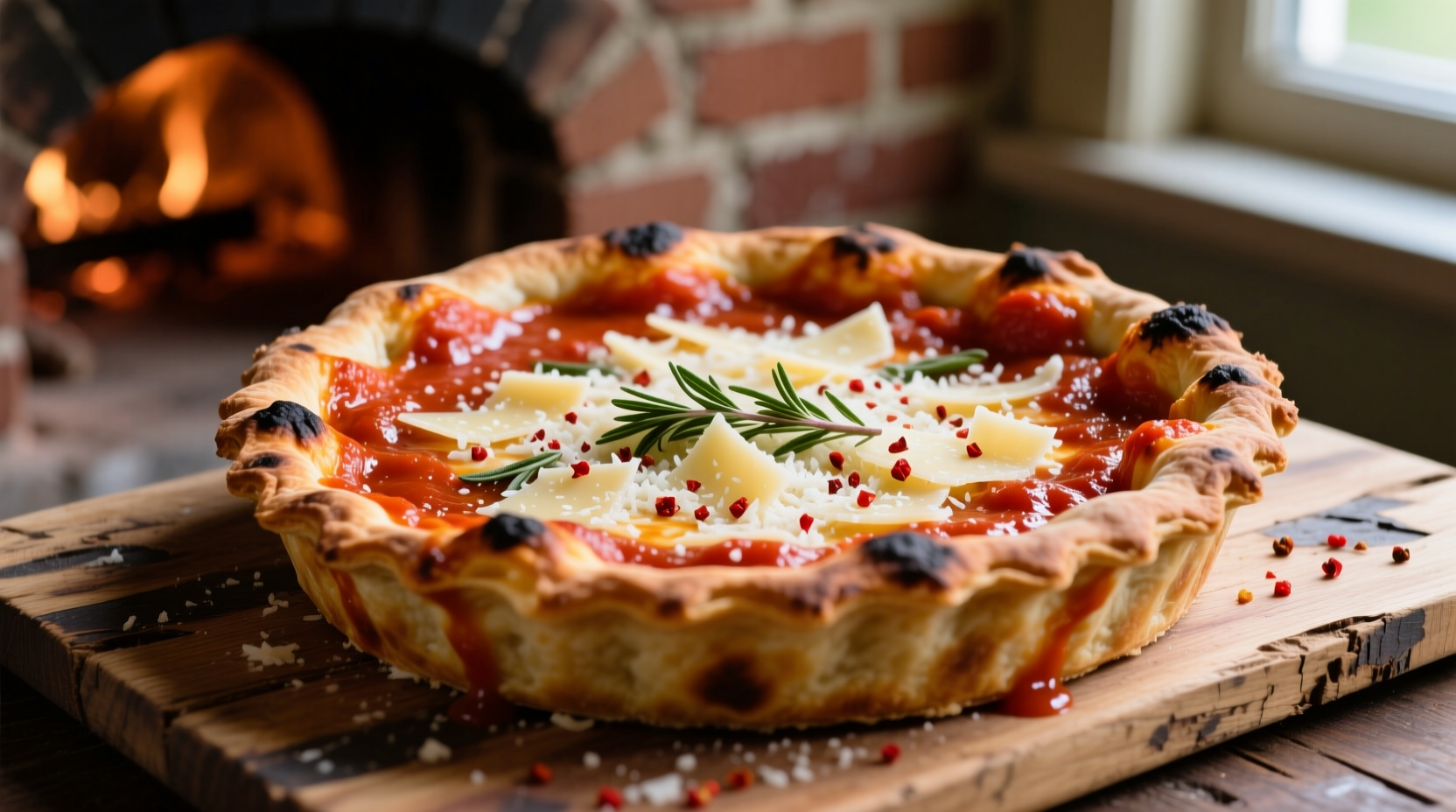
Creating genuine Utica tomato pie requires attention to specific details that casual pizza makers might overlook. The authentic preparation follows a precise sequence that affects both texture and flavor development:
- Dough is stretched thin (approximately 1/8 inch) on a cornmeal-dusted surface
- Cheese blend (typically 60% low-moisture mozzarella, 40% Romano) is applied evenly
- Uncooked tomato sauce (never pre-simmered) is spooned over the cheese in circular pattern
- Baking occurs at high temperature (500-550°F) until edges show caramelization
- Immediate removal from oven prevents sauce from fully incorporating into cheese
The critical factor distinguishing authentic Utica tomato pie is the sauce application. Unlike most pizza styles where sauce goes beneath cheese, here it's applied on top, creating a distinctive textural contrast where the sauce remains slightly separate while fusing with the cheese at the edges. This technique produces pockets of concentrated tomato flavor that characterize the authentic experience.
Where to Experience Authentic Utica Tomato Pie
While Utica tomato pie has gained recognition beyond its hometown, certain establishments maintain the traditional preparation methods that define the style. The West Utica neighborhood remains the epicenter of this culinary tradition, with several family-owned pizzerias operating for multiple decades.
When seeking authentic Utica tomato pie, look for establishments that:
- Mix their own sauce daily from whole peeled tomatoes
- Use specific cheese blends rather than standard mozzarella
- Apply sauce directly over cheese rather than beneath it
- Bake in deck ovens rather than conveyor systems
- Have operated in the same location for multiple decades
Food critics note that the most authentic experiences come from establishments that resist modern pizza trends, maintaining traditional methods despite changing consumer preferences. "The places that have survived aren't chasing trends—they're preserving tradition," observes culinary journalist Michael Ferraro in his regional food studies.
Adapting Utica Tomato Pie for Home Cooking
While nothing replicates the experience of enjoying Utica tomato pie in its hometown establishments, home cooks can approximate the distinctive style with careful attention to technique. The key adaptations focus on recreating the essential sauce-on-cheese construction and achieving proper caramelization.
For best results when making Utica tomato pie at home:
- Use a pizza stone preheated to maximum oven temperature (500-550°F)
- Select low-moisture mozzarella and freshly grated Romano for the cheese blend
- Prepare sauce from whole peeled tomatoes with minimal seasoning
- Apply sauce in dollops over cheese rather than spreading it
- Watch carefully for caramelization at cheese-sauce interface
- Remove immediately when sauce begins to bubble at edges
Home adaptation requires patience, as the distinctive texture develops through precise timing. "Many home cooks miss the mark by baking too long," explains Sarah Johnson, culinary historian specializing in regional American foods. "The magic happens in that narrow window when the sauce begins to caramelize against the cheese but hasn't fully incorporated. That's what creates the signature flavor pockets."
Cultural Significance in Utica's Food Identity
Utica tomato pie represents more than just a pizza variation—it's a culinary artifact reflecting the city's immigrant history and community identity. The dish emerged from the same West Utica neighborhood that became home to successive waves of immigrants, each contributing to the city's evolving food culture.
Local food scholars note that Utica tomato pie gained particular significance during the mid-20th century when it became a unifying food tradition across different immigrant communities. "What's fascinating is how this pizza style crossed ethnic boundaries," observes Dr. Elena Martinez of Syracuse University's Food Studies program. "While originating from Italian-American kitchens, it became embraced by the Polish, German, and later refugee communities that settled in Utica, each adding subtle variations while respecting the core technique."
Today, Utica tomato pie serves as both a regional specialty and a symbol of Utica's culinary heritage. Preservation efforts have increased as original pizzerias face closure, with community groups documenting recipes and techniques to ensure this distinctive food tradition continues. The dish appears regularly in local festivals and has gained recognition through food media, helping to establish Utica's identity beyond its industrial past.




 浙公网安备
33010002000092号
浙公网安备
33010002000092号 浙B2-20120091-4