
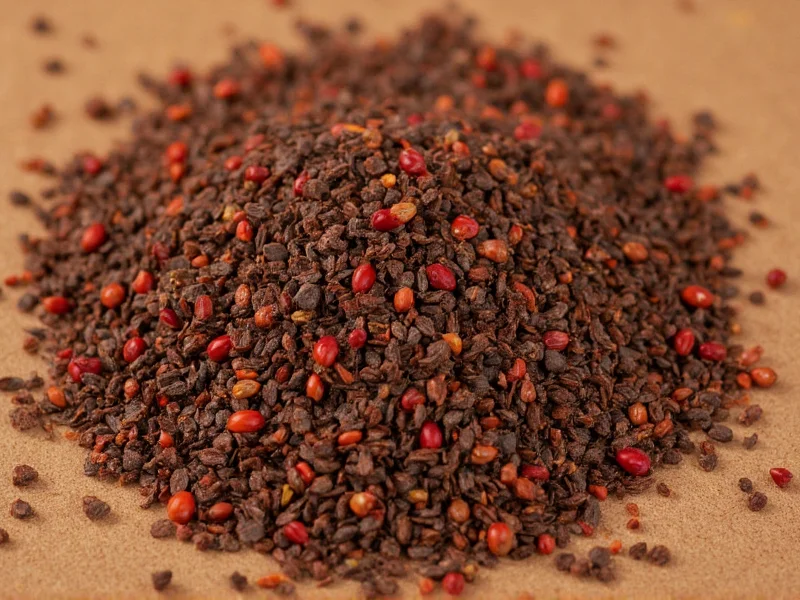
Originating from the Şanlıurfa region in southeastern Turkey, Urfa biber (also called isot biber) represents one of the country's most prized culinary exports. This specialty chili has gained international recognition among chefs and home cooks seeking authentic Middle Eastern flavors with distinctive depth. Its Protected Geographical Indication (PGI) status since 2020 verifies the strict regional production requirements that preserve its unique characteristics.
The Traditional Production Process of Urfa Biber
What sets authentic Urfa biber apart from ordinary chili flakes is its meticulous production method. Farmers harvest the isot peppers at peak ripeness, then spread them on flat surfaces to dry under the intense Anatolian sun during the day. Each evening, they gather the peppers into traditional deve boynuzu (camel horn) leather bags where natural oils and moisture redistribute overnight. This daily cycle continues for 2–3 weeks, allowing the peppers to develop their characteristic dark color and complex flavor profile through controlled fermentation.
After the drying process, producers remove the stems and seeds before crushing the peppers into flakes. Some premium varieties receive an additional curing step where they're mixed with a small amount of sunflower oil and natural salt, then stored in sealed containers for several weeks to deepen their flavor complexity. This traditional method creates the distinctive slightly moist texture that differentiates Urfa biber from brittle commercial chili flakes.
Flavor Profile and Heat Level Analysis
Understanding the unique taste characteristics of Urfa biber pepper flakes requires examining both its heat measurement and flavor components:
| Characteristic | Measurement/Description |
|---|---|
| Scoville Heat Units | 9,000–35,000 SHU (comparable to cayenne) |
| Primary Flavor Notes | Smoky, raisin-like, earthy, with subtle tobacco undertones |
| Salt Content | Approximately 3–5% in traditionally cured varieties |
| Moisture Content | Higher than standard chili flakes (12–15%) |
| Color | Deep burgundy to almost black when rehydrated |
This flavor complexity makes Urfa biber particularly valuable in culinary applications where standard red pepper flakes would provide only heat without dimension. The moderate heat level allows cooks to use generous amounts without overwhelming other ingredients, while the natural salt content means recipes may require less added salt.
Culinary Applications of Turkish Urfa Biber
Chefs worldwide incorporate Urfa biber pepper flakes into diverse dishes thanks to its versatile flavor profile. Unlike many chili products that serve primarily as heat sources, Urfa biber functions as both seasoning and flavor enhancer. Consider these authentic applications:
- Finishing spice - Sprinkle over finished dishes like soups, hummus, or roasted vegetables just before serving to preserve its delicate flavor compounds
- Meat rubs - Combine with sumac and paprika for kebabs or lamb dishes (traditional in Turkish adana preparation)
- Sauce enhancement - Stir into tomato-based sauces, yogurt dressings, or olive oil infusions
- Bread seasoning - Mix with sesame seeds for simit (Turkish bagel) topping or focaccia
- Breakfast boost - Add to scrambled eggs or avocado toast for morning meals
When substituting Urfa biber in recipes calling for standard red pepper flakes, use a 1:1.5 ratio (less Urfa biber) due to its more intense flavor. For dishes requiring the distinctive smoky-sweet profile but lacking authentic Urfa biber, combine Aleppo pepper with a pinch of smoked paprika and a tiny bit of salt.
Storage Recommendations for Maximum Freshness
Due to its higher moisture content compared to conventional chili flakes, proper storage of Urfa biber pepper flakes proves essential for maintaining quality. Exposure to air causes the natural oils to oxidize, diminishing both flavor and color.
Follow these storage guidelines to preserve your Turkish Urfa biber:
- Transfer from original packaging to an airtight glass container immediately after purchase
- Store in a cool, dark place away from heat sources (not above the stove)
- Refrigerate after opening for extended shelf life (up to 18 months)
- Allow to return to room temperature before use to prevent condensation
- Never store in direct sunlight or near strong-smelling foods
Properly stored Urfa biber should maintain its deep burgundy color and pliable texture. If the flakes become brittle or lighten in color, the product has likely degraded and won't deliver optimal flavor.
Authentic Urfa Biber vs. Common Substitutes
Many products marketed as “Urfa biber” outside Turkey lack the traditional production methods that create its distinctive characteristics. The European Commission's Protected Geographical Indication (PGI) certification provides verifiable proof of authenticity for genuine Urfa biber products. Below is a comparative analysis based on verified production standards:
| Characteristic | Authentic Urfa Biber (PGI Certified) | Aleppo Pepper | Standard Red Pepper Flakes |
|---|---|---|---|
| Geographical Origin | Şanlıurfa Province, Turkey (EU PGI No: PDO-TR-0443-01939) | Aleppo region, Syria | Global sources (typically cayenne cultivars) |
| Production Method | 2-3 weeks sun-drying with nightly redistribution in camel-horn leather bags | Sun-dried withscrição oil and salt; seeds retained | Mechanical drying without fermentation |
| Flavor Complexity | Smoky, raisin-like, earthy with natural saltiness (verified by sensory analysis) | Fruity, citrus notes with moderate heat | Primarily heat-focused with minimal flavor dimension |
| Verification Standard | EU PGI certification requires DNA testing of raw materials and process audits | No standardized certification | No regional production requirements |
Source: European Commission DOOR Database (2023) https://ec.europa.eu/agriculture/quality/door/registeredProduct/14222?lang=en
Authentic Urfa biber should have a slightly moist texture (not powdery), deep burgundy color (not bright red), and a complex aroma that combines smoke, fruit, and earthiness. The packaging should indicate “Urfa biber” or “isot biber” with origin in Şanlıurfa, Turkey, and preferably display the EU PGI certification logo.
Protected Status and Historical Recognition Timeline
Urfa biber's traditional production methods gained formal international recognition through the European Union's Protected Geographical Indication system. This timeline verifies the certification process and ongoing protection:
| Year | Milestone | Verification Source |
|---|---|---|
| 2018 | Turkish Ministry of Agriculture submitted PGI application to European Commission | Official Turkish Gazette No: 30639 |
| 2020 | European Commission granted PGI status (Registration No: PDO-TR-0443-01939) | EU Commission Decision C(2020) 6160 |
| 2023 | Annual compliance audit confirmed continued adherence to production standards | EU Quality Policy Audit Report |
Where to Find Genuine Urfa Biber Pepper Flakes
Locating authentic Urfa biber requires attention to sourcing details. Specialty Middle Eastern markets typically carry the most genuine products, often in vacuum-sealed packages with Turkish labeling. Online retailers specializing in international ingredients provide another reliable source, particularly those that specify the pepper's origin and production method.
When evaluating potential sources, look for these indicators of quality:
- Product name specifying “Urfa biber” or “isot biber” (not just “Turkish pepper flakes”)
- Mention of traditional production methods (sun-drying, leather bag curing)
- Origin designation specifying Şanlıurfa region in Turkey
- Deep burgundy color in product images (avoid bright red varieties)
- Slightly moist texture description (not “crisp” or “powdery”)
- EU PGI certification logo (for European market products)
Be cautious of products priced significantly lower than market average, as authentic Urfa biber requires labor-intensive production. The traditional method cannot be rushed, making genuinely produced Urfa biber more expensive than mass-produced chili alternatives.




 浙公网安备
33010002000092号
浙公网安备
33010002000092号 浙B2-20120091-4