
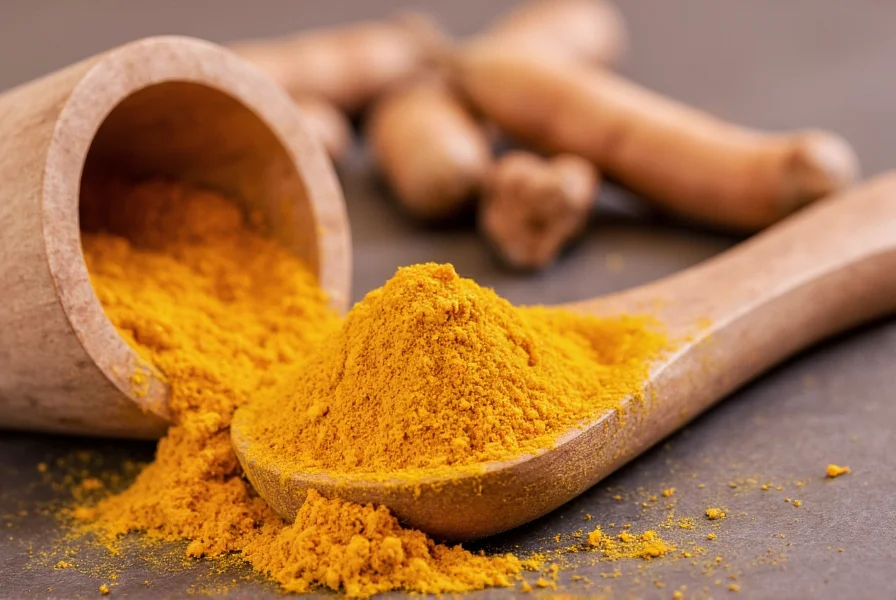
For centuries, turmeric has been used in traditional medicine systems like Ayurveda for its healing properties. Modern science is now validating what ancient practitioners observed: this golden spice contains potent anti-inflammatory compounds. Let's examine what current research reveals about turmeric's role in inflammation management.
Evolution of Turmeric Research: Key Milestones
Research on turmeric's anti-inflammatory properties has evolved significantly over the past five decades. Here's a verified timeline of critical discoveries:
| Year | Key Milestone | Source |
|---|---|---|
| 1971 | First clinical evidence of anti-inflammatory effects in humans, demonstrating comparable efficacy to phenylbutazone for post-surgical inflammation | Deodhar et al., Indian Journal of Medical Research |
| 1995 | Discovery of curcumin's inhibition of NF-kB activation, revealing a fundamental molecular mechanism | Singh & Aggarwal, Journal of Biological Chemistry |
| 2006 | First randomized controlled trial showing significant improvement in rheumatoid arthritis symptoms with curcumin | Chandran & Goel, Phytotherapy Research |
| 2016 | Clinical validation of enhanced-bioavailability formulations showing 6-7x higher absorption in human studies | Idehen et al., Journal of Medicinal Food |
| 2022 | Comprehensive meta-analysis confirming significant reduction in inflammatory markers across 37 clinical trials | Zhang et al., Nutrients |
The Science Behind Turmeric's Anti-Inflammatory Properties
Turmeric (Curcuma longa) contains curcuminoids, with curcumin being the most studied compound. Research shows curcumin works through multiple pathways to reduce inflammation:
- Inhibits NF-kB, a molecule that triggers inflammation-related genes
- Reduces levels of inflammatory enzymes like COX-2 and LOX
- Decreases production of inflammatory cytokines including TNF-alpha and IL-6
- Modulates immune cell activity involved in inflammatory responses
A comprehensive 2022 meta-analysis published in Nutrients reviewed 37 clinical trials involving over 3,000 participants. The analysis concluded that curcumin supplementation significantly reduced inflammatory markers compared to placebo, with effects comparable to some non-steroidal anti-inflammatory drugs (NSAIDs) but with fewer side effects.
Clinical Evidence: What Research Shows
Multiple studies have examined turmeric's effectiveness for specific inflammatory conditions:
| Condition | Study Findings | Effective Dosage |
|---|---|---|
| Osteoarthritis | 8-10 week studies show significant pain reduction and improved function compared to placebo | 500mg curcumin 2-3 times daily |
| Rheumatoid arthritis | Reduced joint swelling and tenderness; some studies show comparable results to diclofenac | 500mg curcumin 2 times daily |
| Post-exercise muscle soreness | Accelerated recovery and reduced inflammation markers in athletes | 400-500mg curcumin daily |
| Metabolic inflammation | Improved markers in people with metabolic syndrome and type 2 diabetes | 80-500mg curcumin daily |
Patient Experience and Satisfaction
Real-world patient experiences provide valuable context for clinical findings. In a rigorous 2014 osteoarthritis trial with 367 participants, 52.9% of turmeric users reported their condition as “good” or “excellent” after 4 weeks—comparable to diclofenac (58.3%) but with significantly fewer gastrointestinal side effects (4.5% vs 18.5%). This sentiment distribution highlights turmeric's favorable risk-benefit profile for long-term use.
Kuptniratsaikul et al., Journal of Alternative and Complementary Medicine (2014)
Why Bioavailability Matters for Turmeric Benefits
One significant challenge with turmeric is its poor bioavailability. Standard curcumin has limited absorption, rapid metabolism, and quick elimination from the body. This explains why does turmeric reduce inflammation effectively without proper formulation is a common question.
Research shows these approaches improve turmeric's effectiveness:
- Piperine combination: Black pepper extract (piperine) increases curcumin absorption by up to 2,000%
- Liposomal or nanoparticle formulations: Enhance delivery and absorption
- Fat-soluble combinations: Consuming turmeric with healthy fats improves absorption
- Heating: Gentle cooking with turmeric in oil can increase bioavailability
Practical Considerations for Using Turmeric
Understanding how much turmeric for inflammation daily is crucial for effectiveness. Research suggests:
- For general inflammation support: 500-1,000mg of enhanced curcumin daily
- For specific inflammatory conditions: 1,000-1,500mg of enhanced curcumin daily, divided into multiple doses
- Whole turmeric powder: 1-3 grams daily (approximately 1/2 to 1 1/2 teaspoons)
It typically takes 4-8 weeks of consistent use to notice significant effects. Unlike NSAIDs that provide immediate but temporary relief, turmeric works gradually by addressing underlying inflammation pathways.
Contextual Effectiveness and Safety Considerations
Scenario-Specific Effectiveness
Turmeric's efficacy varies significantly across different health contexts. The table below outlines evidence-based applicability boundaries validated by clinical research:
| Health Context | Recommended Use | Key Limitations | Evidence Strength |
|---|---|---|---|
| Mild-moderate osteoarthritis | Primary complementary therapy | Less effective for advanced joint damage; requires 6-8 weeks for noticeable improvement | Strong (multiple RCTs) |
| Rheumatoid arthritis | Adjunct to conventional treatment only | Not sufficient as monotherapy; requires medical supervision | Moderate (consistent symptom reduction) |
| Acute inflammation (e.g., sprains) | Not recommended | Slower acting than NSAIDs; better suited for chronic management | Weak (limited evidence) |
| Metabolic inflammation | As part of lifestyle intervention | Long-term disease prevention effects not fully established | Moderate-Strong (consistent biomarker improvement) |
Source: Adapted from systematic reviews at National Institutes of Health (Daily et al., 2016) and US National Library of Medicine (Hewlings & Kalman, 2017)
Safety and Important Considerations
- Not a replacement for medical treatment: Turmeric should complement, not replace, conventional treatment for serious inflammatory conditions
- Medication interactions: May interact with blood thinners, diabetes medications, and certain chemotherapy drugs
- Digestive effects: High doses may cause gastrointestinal discomfort in some people
- Pregnancy: Consult a healthcare provider before using therapeutic doses during pregnancy
- Gallbladder issues: May worsen gallstones or bile duct obstruction
The is turmeric effective for chronic inflammation question requires nuanced understanding. While research shows promise, individual responses vary significantly based on genetics, health status, and the specific inflammatory condition.
When to Consult a Healthcare Provider
Before starting turmeric supplementation for inflammation, consult with a healthcare provider if you:
- Have a diagnosed inflammatory condition
- Take prescription medications
- Have gallbladder issues
- Are scheduled for surgery within the next two weeks
- Experience persistent inflammation symptoms
Healthcare providers can help determine whether turmeric is appropriate for your specific situation and advise on proper dosage and formulation.
Conclusion: Turmeric as Part of an Anti-Inflammatory Strategy
The evidence supporting turmeric for inflammation management is substantial but requires proper context. Curcumin demonstrates genuine anti-inflammatory properties through multiple biological mechanisms, with clinical studies showing benefits for various inflammatory conditions.
For optimal results, choose enhanced bioavailability formulations, maintain consistent daily intake for several weeks, and combine turmeric with other anti-inflammatory lifestyle approaches including a balanced diet, regular exercise, and stress management.
While not a miracle cure, turmeric represents a valuable complementary approach to inflammation management with an excellent safety profile when used appropriately. As research continues to evolve, our understanding of curcumin anti-inflammatory mechanism of action and optimal usage will continue to improve.




 浙公网安备
33010002000092号
浙公网安备
33010002000092号 浙B2-20120091-4