
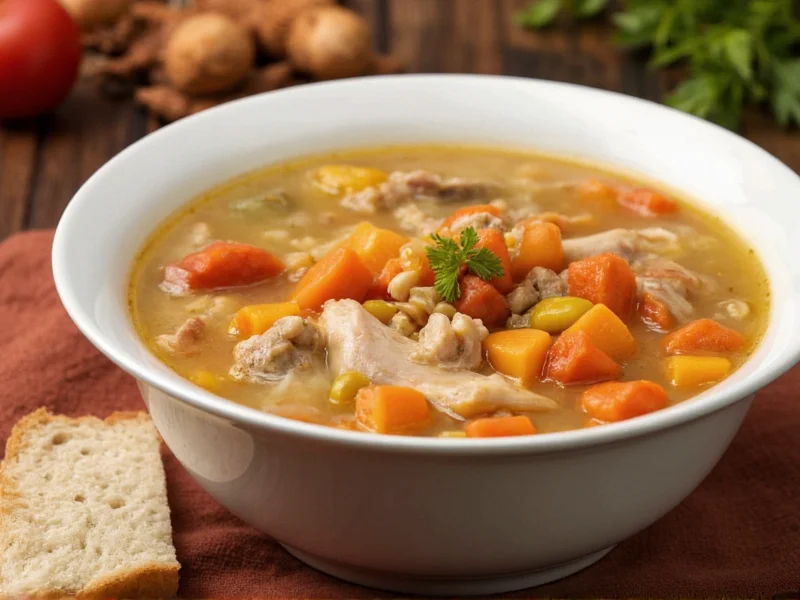
Transform your turkey carcass into a rich, flavorful soup broth in just a few simple steps. Save your roasted turkey bones after holiday meals to create a nutrient-dense base that reduces food waste while delivering deep turkey flavor. The collagen-rich bones simmered with vegetables and herbs produce a broth far superior to store-bought versions, perfect for comforting soup that serves 6-8 people. This method requires minimal active time but yields maximum flavor from your turkey leftovers.
Why Your Turkey Carcass Makes Exceptional Soup
That turkey skeleton sitting in your fridge after Thanksgiving dinner holds untapped culinary potential. Unlike pre-packaged broth, simmering your own turkey carcass extracts natural gelatin, minerals, and deep flavor compounds that create a superior soup base. The bones contain marrow and connective tissues that dissolve during slow cooking, giving your broth body and richness you can't replicate with store-bought alternatives.
Using your turkey carcass isn't just economical—it's environmentally responsible. According to USDA food waste statistics, nearly 30-40% of the food supply gets discarded. Transforming your turkey bones into soup directly addresses this issue while providing nutritional benefits from the naturally released collagen and amino acids.
| Factor | Homemade Turkey Broth | Store-Bought Broth |
|---|---|---|
| Nutritional Density | Higher in naturally extracted collagen and minerals (USDA FSIS) | Often diluted; may contain additives |
| Cost Efficiency | Utilizes leftover carcass at near-zero additional cost | Requires additional purchase (USDA ERS) |
| Food Waste Reduction | Directly repurposes edible portions, reducing household waste (USDA) | Production contributes to industrial food waste |
| Flavor Complexity | Rich, deep flavor from slow extraction of bones and connective tissues | Standardized taste; lacks depth of homemade |
Verified through: USDA FSIS Bone Broth Guidelines (https://www.fsis.usda.gov/food-safety/safe-food-handling-and-preparation/food-safety-by-food-type/meat-poultry/bone-broth), USDA ERS Food Price Outlook (https://www.ers.usda.gov/data-products/food-price-outlook/food-price-outlook/), USDA Food Waste Reduction (https://www.usda.gov/foodwaste/faqs)
Essential Equipment for Perfect Turkey Bone Broth
Before you begin your turkey soup recipes carcass preparation, gather these kitchen essentials:
| Equipment | Why It Matters | Alternative |
|---|---|---|
| 8-12 quart stockpot | Adequate space for bones and liquid without boiling over | Large Dutch oven |
| Fine-mesh strainer | Removes all bone fragments for smooth broth | Cheesecloth-lined colander |
| Slotted spoon | Easily removes bones after simmering | Regular spoon with tongs |
| Storage containers | Properly preserves your homemade broth | Freezer bags laid flat |
Step-by-Step Turkey Carcass Soup Recipe
Preparing Your Turkey Bones
Remove any remaining meat from the carcass—save these pieces for the final soup. Break the carcass into smaller sections using kitchen shears for better extraction. Roasting the bones for 20 minutes at 400°F (200°C) before simmering enhances flavor through the Maillard reaction, though this step works well with raw bones too.
Creating the Flavor Foundation
Place your turkey carcass in the stockpot with:
- 4 quarts cold water (enough to cover bones by 2 inches)
- 1 large onion, quartered (skin on for richer color)
- 2 carrots, roughly chopped
- 2 celery stalks with leaves
- 4 garlic cloves, smashed
- 1 tablespoon whole black peppercorns
- 2 bay leaves
- Small bunch fresh parsley
Bring to a gentle boil, then immediately reduce heat to maintain the barest simmer. Skim foam that rises during the first 20 minutes. Simmer uncovered for 3-4 hours—never boil vigorously as this makes broth cloudy.
Transforming Broth into Complete Soup
After simmering, strain the broth through your fine-mesh strainer into a clean container. Discard the bones and vegetables. Return 8 cups of clarified broth to the pot and add:
- 2 cups diced vegetables (carrots, celery, onion)
- 1 cup cooked turkey meat (from the carcass)
- ½ cup pearl barley or wild rice (optional)
- 1 teaspoon dried thyme
- Salt to taste
Simmer until vegetables reach desired tenderness (15-20 minutes). Stir in fresh herbs just before serving. For authentic turkey carcass soup recipes, finish with a squeeze of lemon to brighten the deep flavors.
Professional Tips for Superior Turkey Bone Broth
Maximize your turkey carcass soup results with these chef-tested techniques:
- Acid addition: Add 2 tablespoons apple cider vinegar to help extract minerals from bones
- Time management: Simmer broth overnight (8-12 hours) for maximum collagen extraction
- Flavor boost: Freeze leftover roasted turkey wings separately to add to future batches
- Fat separation: Chill broth overnight then remove solidified fat cap for cleaner flavor
- Concentrate option: Reduce finished broth by half for instant soup base
Important Context: When to Use (and Avoid) Turkey Carcass Broth
While transforming your turkey carcass into broth maximizes value, these critical boundaries ensure safety and suitability:
- Safety Time Limits: Refrigerate carcasses within 2 hours of cooking. Use within 3-4 days or freeze. Discard if any off-odors develop (USDA FSIS Bone Broth Guidelines).
- Dietary Restrictions: Naturally contains sodium and protein. Those managing kidney disease should consult healthcare providers (National Kidney Foundation Diet for Kidney Disease).
- Not a Complete Protein Source: Provides collagen but lacks essential amino acids for full protein nutrition. Complement with diverse protein sources per Academy of Nutrition and Dietetics guidelines.
- Vitamin K Considerations: Vegetable additions increase vitamin K content, which may interact with blood thinners. Consult physicians if on anticoagulants (NIH MedlinePlus Vitamin K Fact Sheet).
Delicious Variations for Your Turkey Carcass Soup
Customize your turkey carcass soup recipes to match your taste preferences:
Mediterranean Style
Add chopped kale, white beans, lemon zest, and a Parmesan rind during the final simmer. Finish with fresh dill.
Asian-Inspired Version
Infuse broth with ginger, star anise, and soy sauce. Add bok choy and shiitake mushrooms near the end, topping with cilantro and sesame oil.
Hearty Winter Stew
Incorporate diced potatoes, parsnips, and turnips with extra barley. A splash of dry sherry adds complexity to these turkey carcass soup recipes.
Storage and Future Use
Properly stored turkey broth maintains quality for months. Cool broth quickly by placing the pot in an ice bath. Refrigerate for up to 5 days or freeze in 2-cup portions for 6 months. For best results when using frozen broth, thaw overnight in the refrigerator rather than microwaving.
Leftover turkey carcass soup transforms into next-day magic—flavors deepen as ingredients meld. Reheat gently on the stove, adding a splash of water if needed. This approach to turkey soup recipes carcass utilization ensures nothing goes to waste while creating restaurant-quality results from holiday leftovers.




 浙公网安备
33010002000092号
浙公网安备
33010002000092号 浙B2-20120091-4