
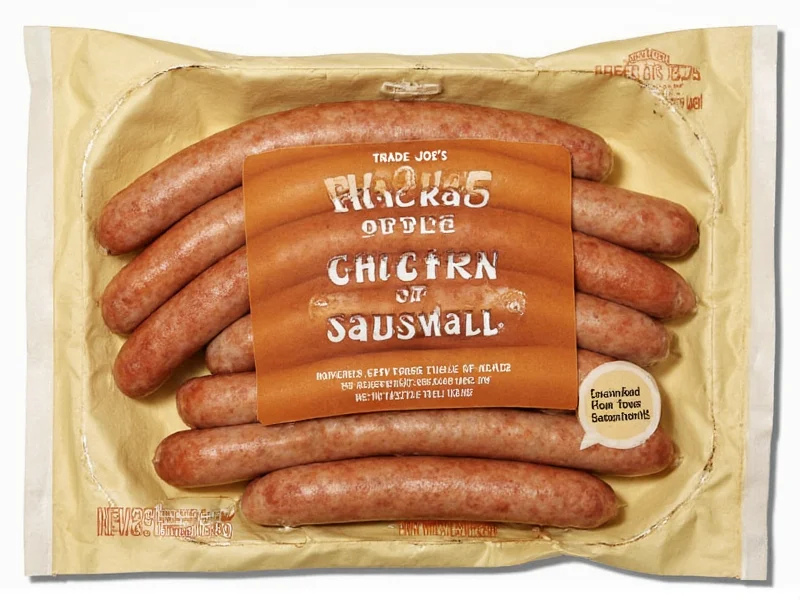
Shoppers consistently praise Trader Joe's Chicken Apple Sausage for its balanced sweet-savory profile that stands out in the frozen and refrigerated sausage market. Unlike many processed meat products, this offering maintains a relatively clean ingredient list while delivering on taste and versatility in the kitchen. The product typically appears in the refrigerated meat section near other sausage varieties, packaged in 12-ounce trays containing either six links or four patties.
Product Composition and Quality Standards
Trader Joe's maintains strict quality control for their Chicken Apple Sausage, sourcing chicken that meets their antibiotic-free standards. The ingredient breakdown reveals a thoughtful formulation:
| Primary Ingredients | Function | Notable Absences |
|---|---|---|
| Chicken (mechanically separated) | Protein base | No pork or beef |
| Water | Moisture retention | No fillers like soy protein |
| Apples (dried) | Natural sweetness | No high-fructose corn syrup |
| Spice blend (including sage) | Flavor complexity | No artificial flavors |
| Vinegar | Natural preservative | No sodium nitrite |
This formulation aligns with current consumer preferences for cleaner meat products. The absence of artificial preservatives and coloring agents distinguishes it from many conventional sausage options. Nutritionally, it provides a moderate protein boost with less saturated fat than pork-based alternatives, appealing to health-conscious shoppers seeking flavorful yet responsible meal components.
Sensory Profile and Culinary Characteristics
When evaluating Trader Joe's chicken apple sausage taste profile, several distinctive qualities emerge. The texture remains moist without being mushy, maintaining structural integrity during cooking. Unlike some poultry sausages that can become dry, this product retains juiciness through a balanced fat content and moisture-retaining ingredients.
The flavor balance deserves particular attention—sweet apple notes complement rather than overwhelm the savory chicken base. Many consumers note the subtle presence of traditional sausage herbs like sage and thyme that create complexity without artificial seasoning aftertastes. This balanced profile makes it exceptionally versatile for various culinary applications beyond simple breakfast preparation.
Optimal Preparation Methods
Proper cooking technique significantly impacts the final quality of Trader Joe's chicken apple sausage. For best results:
- Pan-frying: Heat medium skillet over medium heat with minimal oil. Cook links 10-12 minutes, turning occasionally until internal temperature reaches 165°F
- Baking: Arrange on parchment-lined baking sheet at 375°F for 15-18 minutes
- Grilling: Cook over medium heat for 8-10 minutes, turning frequently
Avoid high-heat methods that can cause the casing to split prematurely. The sausage's lower fat content compared to pork varieties means it benefits from careful temperature monitoring to prevent drying out. Many experienced users recommend finishing with a brief simmer in apple cider or chicken broth to enhance moisture and flavor integration.
Recipe Integration Strategies
While excellent as a standalone breakfast item, Trader Joe's chicken apple sausage shines when incorporated into more complex dishes. Its sweet-savory profile complements various culinary traditions:
- Breakfast applications: Crumble into frittatas or fold into breakfast burritos with sweet potatoes
- Lunch options: Slice into grain bowls with roasted vegetables and maple-tahini dressing
- Dinner transformations: Dice and incorporate into stuffing for roasted chicken or pork loin
- Appetizers: Wrap in puff pastry with brie for elegant party bites
Professional chefs often note how the apple component creates natural pairing opportunities with autumnal ingredients like squash, Brussels sprouts, and root vegetables. The sausage's moderate seasoning level allows it to adapt well to various flavor profiles without dominating other components.
Storage and Shelf Life Considerations
Understanding proper storage extends the usability of Trader Joe's chicken apple sausage. The product typically carries a "sell-by" date approximately 5-7 days from packaging. Once opened, consume within 2 days for optimal quality. For extended storage:
- Refrigerate unopened packages in the coldest part of the refrigerator
- Freeze in original packaging for up to 3 months (thaw in refrigerator before cooking)
- Portion before freezing for convenient single-use quantities
Unlike some processed meats, this product doesn't contain significant preservatives, making proper temperature control essential for food safety and quality maintenance. The absence of sodium nitrite means it has a shorter refrigerator shelf life than conventional sausages.
Comparative Analysis with Similar Products
When evaluating Trader Joe's chicken apple sausage versus competitors, several differentiating factors emerge. Compared to national brands like Aidells or Johnsonville, Trader Joe's version typically contains fewer ingredients and avoids artificial preservatives. Price-wise, it generally falls between conventional grocery store brands and premium specialty market offerings.
Nutritionally, it provides approximately 30% less fat than comparable pork apple sausages while maintaining similar protein content. The chicken base creates a lighter flavor profile that some consumers prefer for weekday meals, while reserving pork varieties for special occasions. Many taste testers note the cleaner aftertaste compared to conventional sausages that often contain more fillers and preservatives.
Seasonal Availability and Product Rotation
Shoppers should note that Trader Joe's occasionally rotates their sausage offerings based on seasonal demand. While Chicken Apple Sausage has maintained consistent availability in recent years, it sometimes disappears from shelves temporarily during spring months before returning for fall and winter seasons. Checking with store staff about expected restocking dates can help plan meals around this popular item.
Unlike some limited-time Trader Joe's offerings, this sausage has demonstrated staying power in their product lineup due to consistent customer demand. However, the company's philosophy of product rotation means availability isn't guaranteed year-round at every location, particularly in regions with different seasonal shopping patterns.
Consumer Feedback Patterns
Analysis of customer reviews reveals consistent praise for the product's balanced flavor profile and versatility. Common positive remarks highlight the "perfect sweet-savory ratio" and "lack of artificial aftertaste" compared to conventional sausages. Some first-time buyers express surprise at how the apple flavor integrates naturally rather than tasting artificially sweet.
Critical feedback typically centers on occasional texture inconsistencies between production batches and the relatively short refrigerator shelf life compared to preserved pork sausages. Longtime customers often develop strategies for immediate freezing of excess packages to extend usability while maintaining quality.
Frequently Asked Questions
Is Trader Joe's chicken apple sausage gluten-free?
Yes, Trader Joe's Chicken Apple Sausage is certified gluten-free. The product contains no wheat, barley, rye, or other gluten-containing ingredients, making it suitable for those following a gluten-free diet. Always check the current packaging for any formulation changes.
How many calories are in Trader Joe's chicken apple sausage?
Each 3-ounce serving of Trader Joe's Chicken Apple Sausage contains approximately 170 calories. This serving size typically equals one link or patty. The sausage provides 13g of protein and 12g of fat per serving, with 2g of saturated fat.
What's the best way to cook Trader Joe's chicken apple sausage?
The optimal cooking method for Trader Joe's chicken apple sausage involves medium-heat pan frying for 10-12 minutes, turning occasionally until reaching 165°F internal temperature. Baking at 375°F for 15-18 minutes or grilling over medium heat also works well. Avoid high heat to prevent casing splitting and drying out due to its lower fat content compared to pork sausages.
Does Trader Joe's chicken apple sausage contain artificial preservatives?
No, Trader Joe's Chicken Apple Sausage does not contain artificial preservatives. The product uses vinegar as a natural preservative instead of sodium nitrite or other synthetic preservatives common in conventional sausages. This contributes to its shorter refrigerator shelf life compared to preserved pork products.
How does Trader Joe's chicken apple sausage compare to pork apple sausage?
Trader Joe's chicken apple sausage offers a lighter flavor profile and contains approximately 30% less fat than comparable pork apple sausages while maintaining similar protein content. The chicken base creates a milder taste that integrates the apple flavor more subtly, whereas pork varieties typically have a stronger, richer flavor profile with more pronounced fat marbling.




 浙公网安备
33010002000092号
浙公网安备
33010002000092号 浙B2-20120091-4